
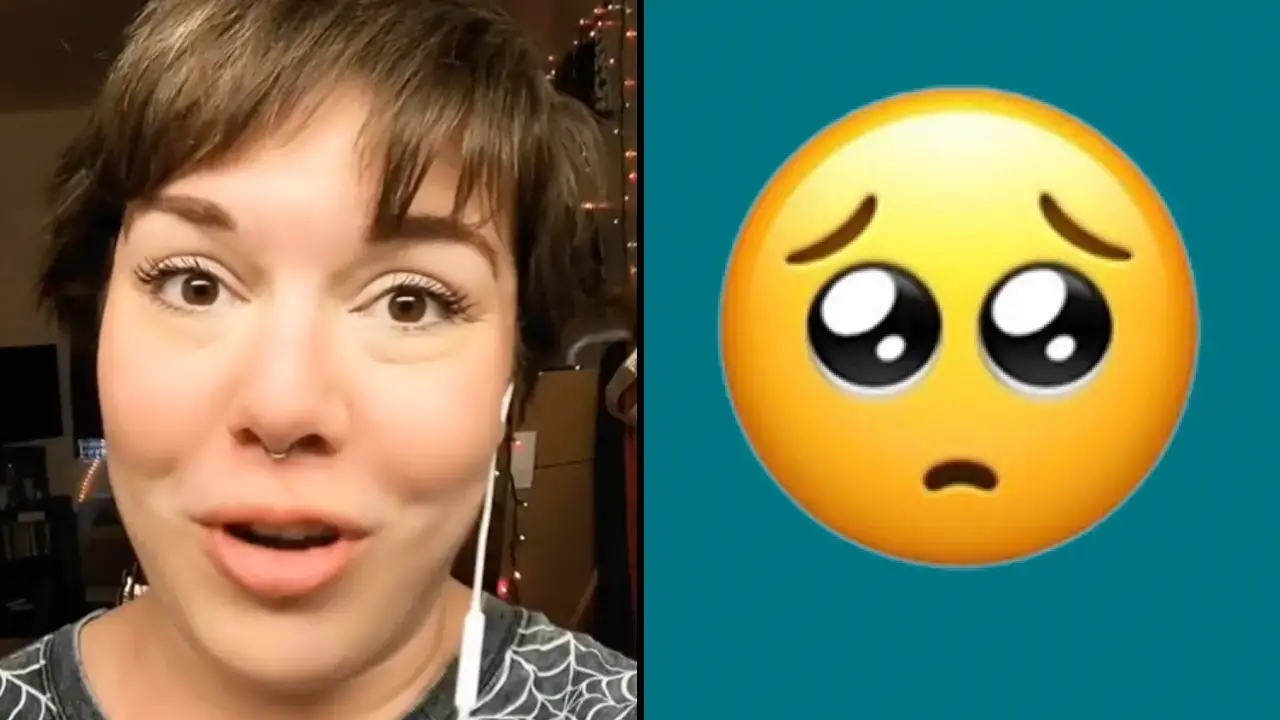
Credit: @genwhyscarlett/TikTok & Apple
People Speechless After Gen-Zers Explain The Real Meaning Of Cute Eyes Emoji
A 30-year-old ‘elderly student’ has shared her experience of sharing a dormitory with Gen-Zers – and how she’s learned the true meaning of some emojis.
If you’ve ever sent an emoji thinking it was harmless only to get a strange reply in return, you’re not alone.
The digital language of emojis might seem universal, but in reality, it’s anything but.
In fact, a growing divide between millennials and Gen Z is making even the simplest symbols feel like a minefield. What one generation sees as friendly or playful, the other might interpret as sarcastic, passive-aggressive… or something far more unexpected.
And nowhere is this confusion more obvious than in group chats, where meanings shift fast, and context is everything.
Lost in translation
Emojis have become a core part of how we communicate. Whether it’s over text, WhatsApp, or DMs, they help convey tone, emotion, and reactions that words alone sometimes can’t.
But here’s the problem: not everyone is speaking the same “emoji language.”
Take the laughing face, for example. For some, it simply means something is funny. For others, it can come across as sarcastic or even dismissive. The crying emoji? That could signal sadness—or uncontrollable laughter.
And then there are the more not-so-innocent symbols (yes, we’re looking at you, aubergine).
Meet the ‘elderly student’ navigating Gen Z culture
Enter Scarlett, a 30-year-old university student who jokingly refers to herself as an ‘elderly student.’
Known online as @genwhyscarlett, she’s gone viral after sharing her experience of living with younger, Gen Z students—and learning their very different approach to communication.
In a TikTok video that’s racked up over 4.5 million views, Scarlett reveals just how shocking it’s been to discover the hidden meanings behind everyday emojis she thought she understood.
Speaking about the experience to Buzzfeed, she said: “Group chats are a big thing with them, so the rapid-fire communication style has been a learning curve for me. Specifically with emojis, memes, and phrases.”
She added: “I’m the first one to laugh at myself for being old and obsolete, so I’m always asking questions—and my Gen Z peers are more than happy to indulge me.”
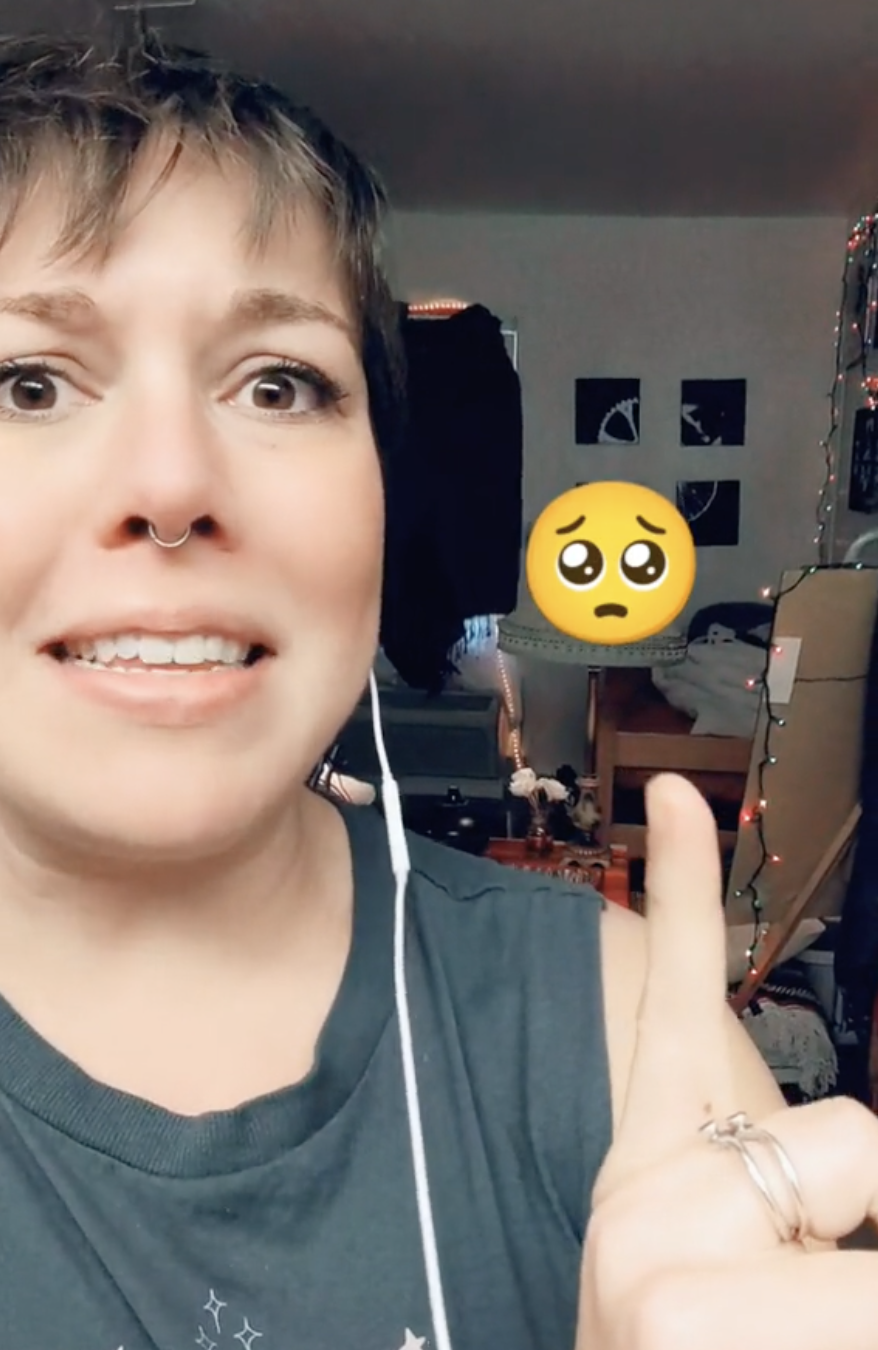
Wait… that emoji means what?!
As Scarlett began trying to understand how Gen Z communicates, she quickly realised she hadn’t been using emojis the way she thought she had.
What she assumed were harmless, everyday responses were actually being interpreted very differently by the people around her.
One of the biggest shocks was the thumbs-up emoji. While she had always seen it as a simple way to acknowledge a message or show agreement, many younger users view it as cold or even passive-aggressive.
The upside-down smiley face also carried a completely different tone than expected, often used to express frustration or a ‘f*** my life‘ kind of mood rather than light-hearted silliness.
Even the cherries emoji turned out to have a meaning far removed from fruit, instead being used in a more suggestive context.
It became clear to her that emojis aren’t as straightforward as they seem. Their meanings are shaped by tone, context, and generational habits, making them far more layered than a quick glance might suggest.
The internet reacts: ‘I’ve been using this wrong?!’
People watching Scarlett’s video were quick to admit they’d made the same mistakes. Many were shocked to realise that emojis they used daily could be interpreted in unintended ways.
One viewer confessed: “This is unfortunate because I use this at work all the time,” referring to the thumbs-up emoji.
Another echoed the concern, writing: “I use the thumbs up non-passive aggressively so uh maybe I need to go apologize to some people.”
Others shared moments where misunderstandings may have already caused confusion.
“That’s why this girl got crazy mad at me when I gave a thumbs-up reaction to a Facebook message?! I respond that way to everything!” one person said.
The upside-down smiley also sparked debate, with one user recalling: “I used to have a coworker who used it to mean deliriously happy and I was so confused.”
When it came to the eyes emoji, opinions were just as mixed. Some felt its newer meanings made sense, while others were still attached to their original interpretations.
One comment read: “Meaning ‘I’m listening’ is actually perfect since you are reading the texts,” while another admitted: “I thought the cute eye emoji meant something was really cute.”
The ‘cute eyes’ emoji confusion explained
Among all the discoveries, the one that stood out the most was the meaning behind the so-called ‘cute eyes’ emoji. Like many others, Scarlett had always assumed it simply highlighted something sweet, adorable, or worth noticing.
That assumption turned out to be completely off.
In her viral video, she explained her confusion, saying: “This, for some godforsaken reason means either ‘innocent’ or ‘h***y’.”
The revelation caught her off guard, especially given how different it is from the soft, wide-eyed meaning she had originally associated with it.
The contrast between expectation and reality highlights just how much emoji meanings can evolve—and how easy it is to get them wrong.
The reality is that the eyes emoji doesn’t have a single, fixed definition. Its meaning depends heavily on context and the way it’s used within a conversation.
Related Article: Gen Z Think That The Thumbs Up Emoji Is Rude And ‘Passive Aggressive
Related Article: Legal Expert Warns To Be Careful Sending Thumbs-Up Emojis After Man Is Ordered To Pay $62,258
Want more stuff like this?
Get the best viral stories straight into your inbox!
