
Credit: Adobe Stock
What Happened During ‘Most Gruesome Death Of All Time’ That Saw Five Men Instantly Killed
Five men were instantly killed in an incident described as the ‘worst death ever.’
In the world of offshore oil drilling, few roles are as dangerous — or as misunderstood — as saturation diving.
These highly trained professionals work hundreds of feet below the ocean’s surface, maintaining pipelines and infrastructure in extreme conditions that push the human body to its limits.
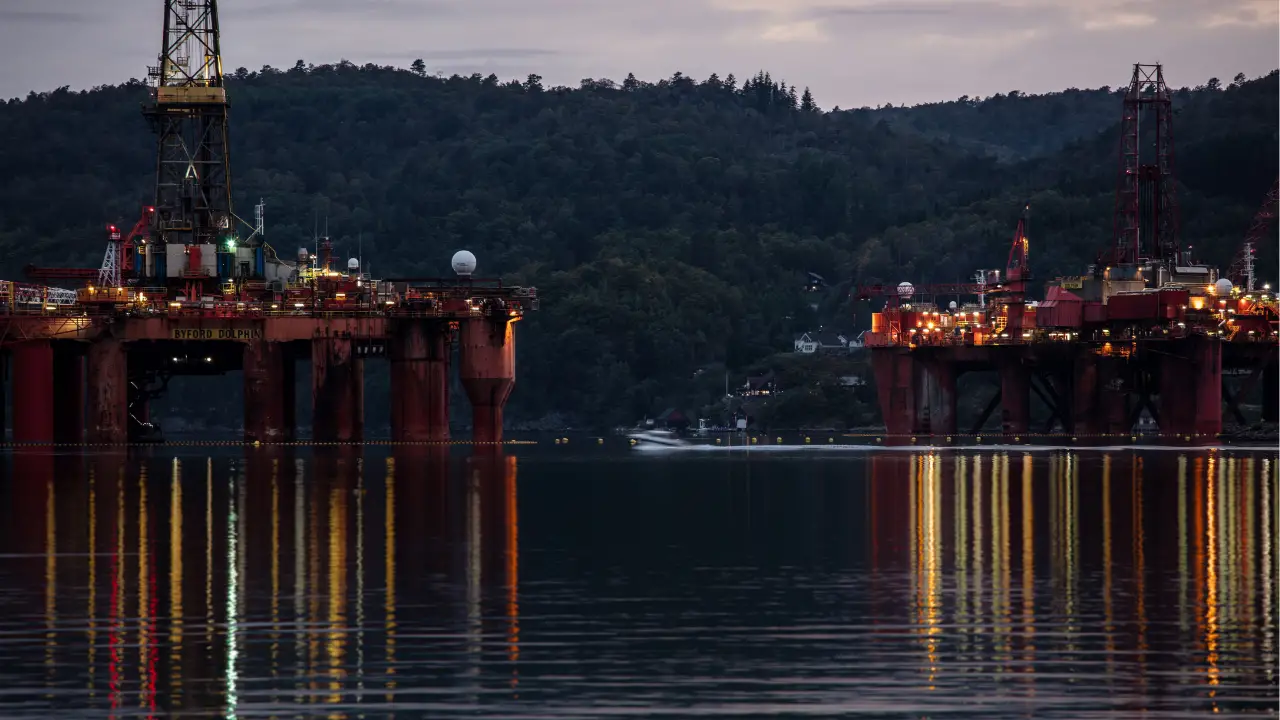
The tragedy aboard the Byford Dolphin in 1983 would go on to become one of the most infamous accidents in industrial history — often described as one of the most gruesome deaths ever recorded.
Saturation divers operate under immense pressure, both physically and mentally. At depths of around 500 feet (152 meters), the pressure underwater is so intense that it fundamentally changes how gases behave inside the body. To survive, divers live in pressurized environments for extended periods, sometimes up to 28 days at a time.
Instead of returning to the surface after each dive, they remain in specialized chambers where pressure is carefully controlled. This allows them to work repeatedly at depth without constantly decompressing — a process that would otherwise take days.
But while this system makes deep-sea work possible, it also introduces enormous risk. Any sudden change in pressure can be catastrophic.
The science behind a deadly risk
To understand what went wrong, it’s important to grasp the science of pressure and the human body.
When divers descend deep underwater, nitrogen from the air they breathe dissolves into their bloodstream due to the increased pressure. This in itself is not dangerous — the real threat comes when pressure changes too quickly.
If a diver ascends too fast, the dissolved nitrogen forms bubbles inside the body, a condition known as decompression sickness, or “the bends.” These bubbles can block blood flow, damage tissues, and even cause death.
In saturation diving, this risk is managed by keeping divers under constant pressure. They only decompress once — at the very end of their assignment — in a slow, controlled process that can take several days.
To move between the ocean floor and their living quarters, divers use a pressurized diving bell, which acts like an elevator between the depths and the chamber system.
It’s a delicate and highly coordinated operation involving multiple crew members, including life support technicians, dive controllers, and tenders who assist with equipment and safety procedures.
On November 5, 1983, this complex system failed in the worst possible way.
The moment everything went wrong
On that day, a routine transfer was taking place aboard the Byford Dolphin.
Four saturation divers — Edwin Coward, Roy Lucas, Bjørn Giæver Bergersen, and Truls Hellevik — were inside the pressurized chamber system. Two had just been returned from a dive, while the others were resting inside.
Crew member William Crammond was working as a tender, assisting with the operation of the diving bell — a standard procedure he had performed many times before.
But during the process, something went catastrophically wrong.
Before the chamber door had been fully sealed, the diving bell was suddenly detached. This created an instant and violent pressure imbalance between the chamber — which was at nine atmospheres — and the outside environment at normal atmospheric pressure.
What followed is known as explosive decompression.
In a fraction of a second, the pressurized air inside the chamber rushed outward with devastating force. The pressure dropped instantly from extreme levels to normal, giving the human body no time to adapt.
The result was immediate and fatal.
A death described as ‘instant and unimaginable’
The effects of the decompression were unlike anything most people could comprehend.
William Crammond, who was nearest to the opening, was killed instantly by the force of the escaping air. Another crew member, Martin Saunders, survived but suffered severe, life-altering injuries.
Inside the chamber, the four divers experienced an even more horrifying fate.
The sudden drop in pressure caused the nitrogen dissolved in their bodies to expand explosively. In simple terms, their blood and tissues rapidly filled with gas bubbles, effectively causing their bodies to “boil” from the inside.
Medical reports later confirmed that this process happened almost instantly, leaving no chance of survival.
One diver, Truls Hellevik, was positioned closest to the partially opened door. The force of the decompression pulled him toward the opening with extreme violence.
He was forced through a narrow gap, a process so severe that it resulted in catastrophic physical trauma, with parts of his body ejected onto the deck outside the chamber.
While experts believe the deaths were likely instantaneous, the aftermath was described as deeply disturbing by those who witnessed it.
It remains one of the most extreme examples of what rapid pressure change can do to the human body.

The aftermath and lasting impact
In the years that followed, the Byford Dolphin disaster became a turning point for the commercial diving industry.
Investigations into the incident revealed that the tragedy was not caused by human error alone, but by failures in equipment and safety systems. Procedures that should have prevented the diving bell from detaching prematurely were either insufficient or not properly enforced.
The incident exposed critical flaws in safety protocols, prompting sweeping changes across the industry.
New regulations were introduced to ensure stricter controls, better fail-safes, and improved training for personnel involved in saturation diving operations. The goal was clear: to prevent anything like this from ever happening again.
Despite these changes, it took decades for the victims’ families to receive formal recognition and compensation. In 2009, the Norwegian government agreed to provide restitution, acknowledging the role systemic failures played in the disaster.
Today, the Byford Dolphin incident is still studied as a stark reminder of the dangers associated with deep-sea work.
It highlights not only the risks faced by those in high-pressure environments but also the importance of rigorous safety systems in industries where even the smallest mistake can have catastrophic consequences.
More than four decades later, the story continues to resonate — not just because of the scale of the tragedy, but because of how quickly it unfolded.
In just a split second, five lives were lost in one of the most harrowing industrial accidents ever recorded — a chilling reminder of how unforgiving extreme environments can be.
Related Article: Harrowing Final Words Of Man Before He And Girlfriend Were Eaten Alive By Bear On Camera
Related Article: Pet Chimp Owner Screams ‘He Ripped Her Face Off’ In Harrowing 911 Call
Want more stuff like this?
Get the best viral stories straight into your inbox!
