
Credit: Alamy
NASA Astronaut Reveals Whether S** In Space Is Possible
A NASA astronaut has revealed whether it’s possible to have s** in space.
Ever since humans first ventured beyond Earth’s atmosphere, one question has lurked beneath the surface of every serious conversation about life in space — unspoken in press conferences, unaddressed in mission briefings, but quietly on everyone’s mind.
What about s**? It sounds flippant, but it is actually a question with real scientific, physiological, and logistical dimensions that space agencies will have to grapple with as humanity’s ambitions push further into the cosmos.
And now, a retired NASA astronaut has given the most candid answer anyone in her position ever has.
Life on the International Space Station
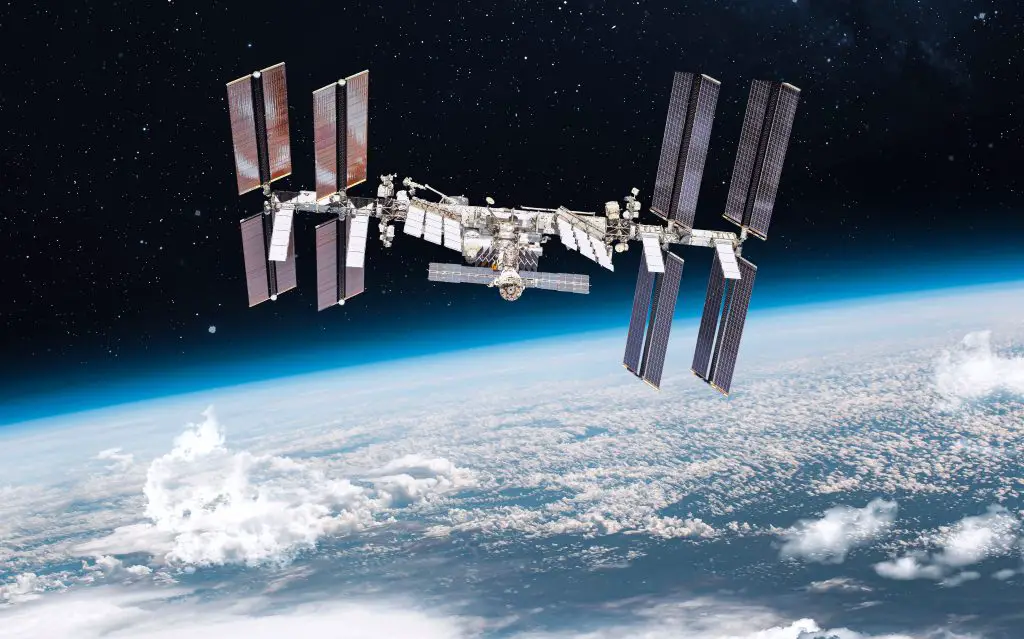
Before getting to the main event, it is worth understanding just how profoundly different daily life is aboard the International Space Station.
Astronauts exist in a state of constant freefall, floating effortlessly around the planet in microgravity. Nothing stays still. Every action — eating, sleeping, exercising, using the bathroom — requires careful adaptation and specific equipment designed to compensate for the absence of gravity.
Even something as routine as going to the toilet is a significant operation. The ISS’s latest space toilet cost a staggering $23 million to develop.
Astronauts must complete what is known internally as ‘potty 101’ — a training course with a practical exam — before they are cleared to go to space, per IFL Science.
Former NASA astronaut José Moreno Hernández has spoken about it candidly. “I kid you not, there’s a class — we take potty 101,” he told Metro. “You take a class on going to the restroom and they won’t check you off until you can do a number one and number two.”
In microgravity, liquids and solids float freely rather than dropping away, requiring a vacuum-based system with a notably small target area. “You better have good aim,” Hernández noted.
Sleeping is no more straightforward. Without gravity to hold them in place, astronauts must strap themselves down to avoid drifting through the cabin while unconscious.
Even simple movements require anchoring. Everything, from the mundane to the medical, is more complicated 250 miles above Earth’s surface.
Against that backdrop, the question of whether any kind of physical intimacy is possible becomes less prurient and more genuinely fascinating.
What the experts say
Scientists and former astronauts have weighed in on the topic over the years, and the picture they paint is one of possibility hedged by significant practical difficulty.
Physicist and astronomer John Millis has described the challenge as comparable to trying to have intercourse while skydiving, per the New York Post.
“Every push or thrust will propel you in opposite directions,” he explained. “Even the lightest touch can make it difficult to stay in contact if both persons are not properly anchored.”
The key issue, multiple experts agree, is that without gravity providing a counterforce, any physical movement between two people will tend to push them apart rather than together.
Solutions have been proposed. Paul Root Wolpe, a former NASA bioethicist, has pointed out that the walls of the ISS are covered in Velcro — which could, in theory, be repurposed.
“Everything on the walls of the space station is covered in Velcro, so you could take advantage of that by velcroing one partner to the wall,” he told MailOnline.
“We don’t realize how much gravity assists us in the act of intercourse. S** involves pressure. In space, without any counterforce, you end up constantly pushing your partner away from you.”
NASA technician Harry Stine has similarly suggested that a third person assisting by holding one of the participants in place — or some kind of strap system — could theoretically address the problem.
German astronaut Ulrich Walter has pointed to the animal kingdom for inspiration, noting that dolphins sometimes enlist a third individual to keep a mating pair together in water.
He suggested that, with sufficiently open-minded participants, a similar arrangement might work in orbit.
Then there are the physiological complications. Microgravity causes blood to migrate toward the head rather than distributing normally around the body, which creates problems for arousal in both men and women.
Dr Adam Watkins, associate professor in reproductive and developmental physiology at the University of Nottingham, has noted that maintaining an e***tion in space is more difficult than on Earth due to the blood pressure changes involved.
Some research on rats has found that simulated microgravity leads to long-term impairment of erectile function. Hormonal cycles are also disrupted, with reduced oestrogen levels leading to lower libido. The environment, in short, is not particularly conducive to desire.
That said, some former astronauts have pushed back on the more pessimistic assessments.
Former NASA astronaut Ron Garan, asked directly on Reddit whether erections were possible in space, replied simply: “I know of nothing that happens to the human body on Earth that can’t happen in space.”
Astronaut Mike Mullane was rather more graphic in his memoir Riding Rockets, writing that he experienced an e***tion in space so intense it was painful.
He added, memorably, that he ‘could have drilled through kryptonite.’ It is not clear whether this is the image NASA would choose to lead its public communications with, but it addresses the question definitively.
Beyond personal discomfort, the biggest practical concern is pregnancy. Space agencies have no contraception aboard the ISS, given their official position that s**ual activity does not occur.
The risks of pregnancy in space are largely unknown and potentially serious — astronauts are exposed to radiation equivalent to roughly 1,000 chest X-rays over six months, and studies in mice have produced contradictory findings on embryo development in microgravity, with some showing no cell damage and others finding severe DNA disruption.
Has anyone actually done it?
NASA’s official position is that no human has ever had s** in space, and there is little reason to doubt it.
Astronauts are highly trained professionals operating in an extraordinarily high-stress environment with virtually no privacy. The ISS is constantly monitored, crew quarters are tiny, and the professional culture of space agencies does not lend itself to experimentation of that kind.
There is, however, one tantalizing historical footnote. In 1992, the Space Shuttle Endeavor launched with Mark Lee and Jan Davis aboard — a couple who had secretly married the year before and had not disclosed their relationship to NASA.
Both deny that anything happened, and there is no reason to disbelieve them. But NASA subsequently made a formal ruling that married couples could not fly together, which has been interpreted as the agency’s way of closing a door it didn’t want left open.
Since 2010, NASA has had an explicit policy against s**ual activity between astronauts.
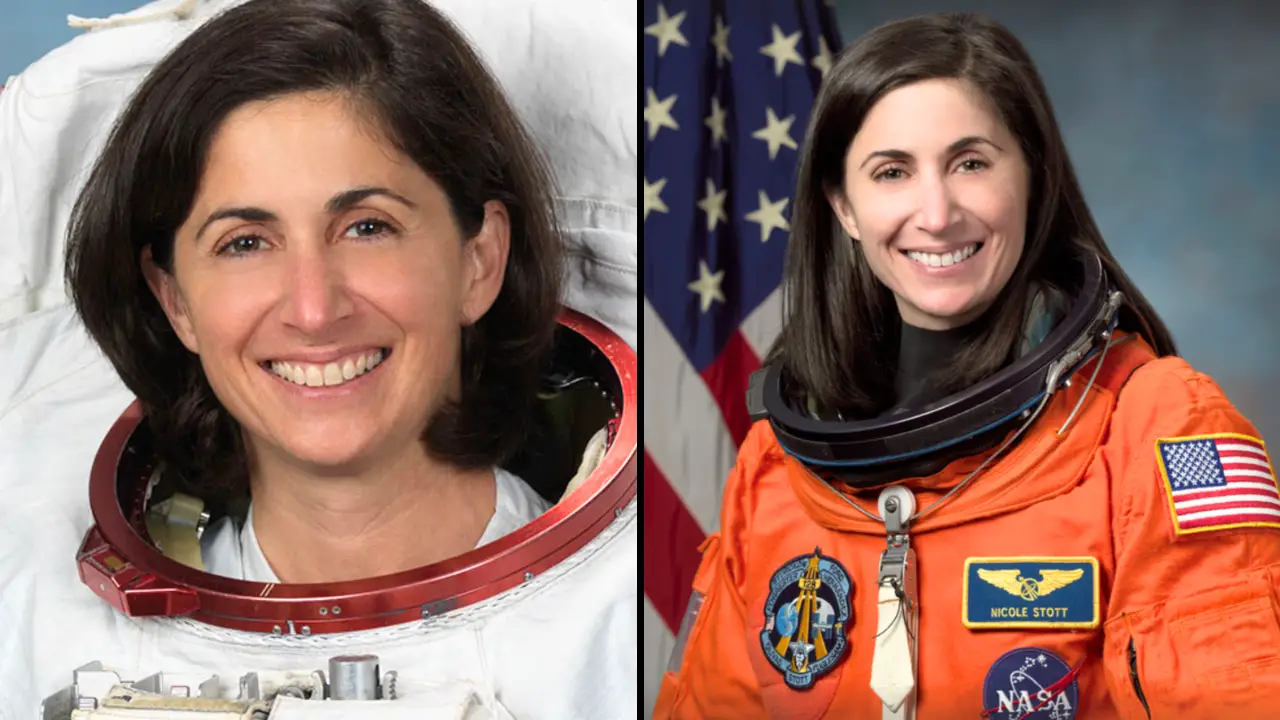
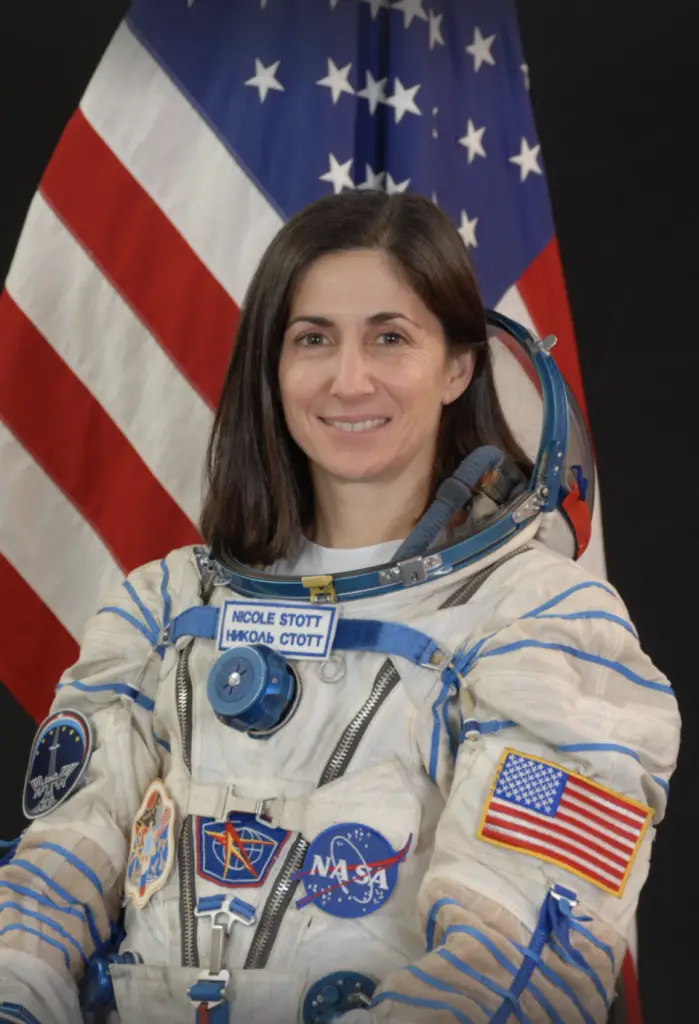
Which brings us to Nicole Stott — retired NASA astronaut, engineer, and aquanaut, who has spent over 100 days in space including a three-month stint aboard the ISS. As part of LADbible‘s Honesty Box series, she was asked the question directly.
Her answer was, refreshingly, a straight one.
“Probably,” she said. “I don’t think there’s anything that would physically prevent you from having s** in space. I don’t know that anybody has while they were there. I did not. And if somebody wants to have s** in space, I think they’ll figure out how to have s** in space.”
She drew a comparison to water, suggesting people should think about floating in a pool — noting that if human ingenuity can solve that particular challenge, it can probably solve this one too.
Related Article: NASA Astronaut Reveals The Shocking Truth He Learned After Seeing Earth From Space
Related Article: Astronaut Who Spent 178 Days In Space Shares The Big ‘Lie’ He Realized After Seeing Earth
Want more stuff like this?
Get the best viral stories straight into your inbox!
