
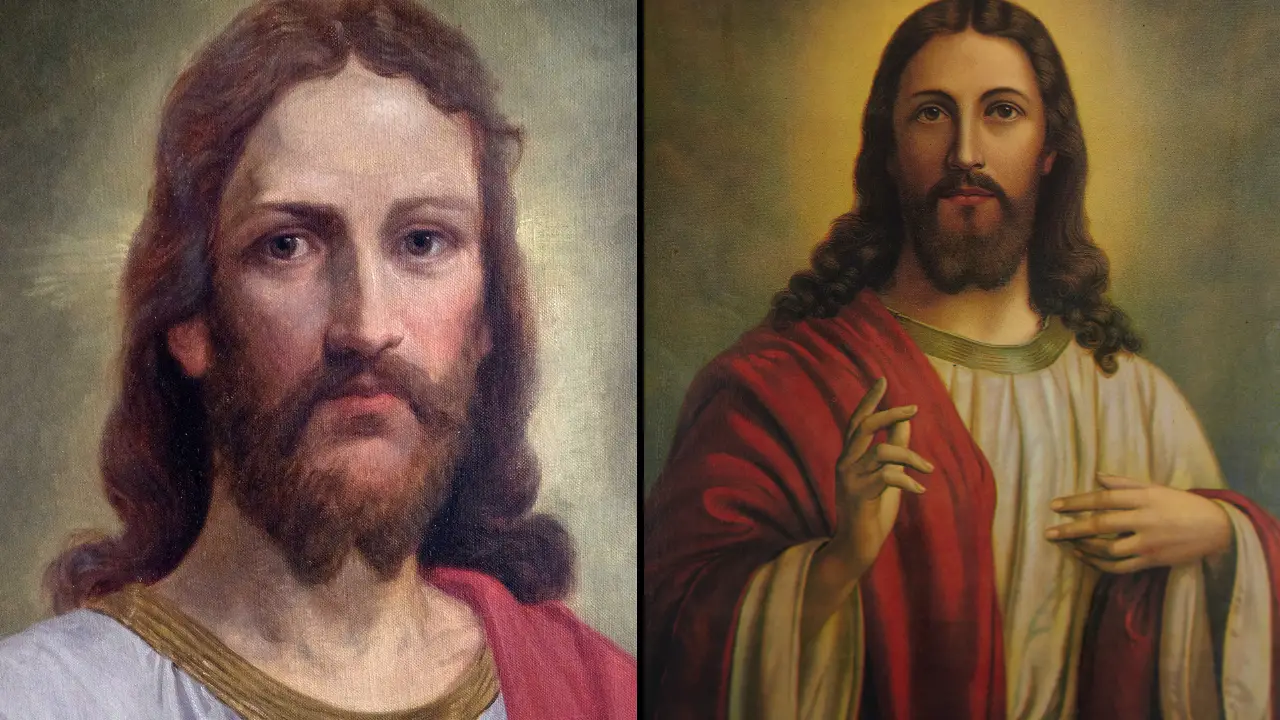
Credit: Adobe Stock
New Evidence Proves Jesus Was A Real Person
New evidence offers definitive proof that Jesus was a real person.
For more than 2,000 years, one question has divided believers, sceptics, historians and theologians alike: did Jesus of Nazareth really exist?
Whether Jesus was the Son of God, performed miracles, or rose from the dead remains one of history’s biggest debates, but the question of whether he lived as a real historical figure is something scholars have spent decades investigating.
While no single discovery has ever settled the discussion, renewed attention is being given to several ancient texts which historians believe provide some of the strongest non-biblical evidence that Jesus was a real person.
Rather than relying solely on the New Testament, researchers have long examined Roman and Jewish historical records written within decades of Jesus’ reported lifetime.
According to Biblical Archaeology, these independent writings remain some of the most significant pieces of evidence supporting the existence of Jesus as a historical figure.
Meanwhile, fresh archaeological discoveries have also added another intriguing layer to the debate, with researchers uncovering evidence that appears to align with details described in the Bible.
Although none of this proves Jesus was the Son of God, historians say it strengthens the historical case that a Jewish preacher named Jesus lived in Roman Judea around 2,000 years ago.
Why historians believe Jesus existed
Unlike modern historical figures, there are no photographs, government records or birth certificates documenting Jesus’ life.
Instead, historians reconstruct ancient history by comparing surviving manuscripts written by different authors, often decades after the events themselves.
This is standard practice when studying the ancient world.
Many famous figures from antiquity are known only through texts written long after their deaths, with historians comparing independent accounts to establish what is most likely to have happened.
Jesus is unusual because references to him appear not only in Christian scripture but also in writings produced by Roman and Jewish historians who had no interest in promoting Christianity.
That distinction is particularly important because historians generally place greater weight on sources that were written independently of the movement they describe.
Roman historian had no reason to support Christianity
One of the most significant historical references comes from Tacitus, a Roman senator and historian widely regarded as one of the greatest chroniclers of the Roman Empire.
Born around 56 AD, Tacitus wrote his famous work Annals around 116 AD, while documenting the reigns of several Roman emperors.
Tacitus described Emperor Nero’s persecution of Christians following the Great Fire of Rome and explained that the religious movement took its name from ‘Christus,’ who had been executed during the reign of Emperor Tiberius under the authority of Pontius Pilate, the Roman governor of Judea.
Historians have long considered Tacitus’ account especially compelling because he was openly hostile towards Christianity.
Rather than praising Christians, Tacitus reportedly described their religion as an ‘evil’ and ‘deadly superstition.’
This hostility actually strengthens the credibility of his testimony because Tacitus had no religious motivation to invent Jesus or exaggerate his significance.
Instead, historians believe he simply referred to Jesus as part of explaining the origins of the Christian movement that Nero later sought to suppress.
For many scholars, that makes Tacitus one of the strongest non-Christian witnesses to Jesus’ existence.
Jewish historian also referenced Jesus
Another key source comes from Flavius Josephus, a Jewish aristocrat and historian born in Jerusalem only a few years after Jesus is believed to have died.
Josephus wrote Jewish Antiquities around 93–94 AD, a work widely regarded as one of the most important surviving accounts of life in first-century Judea.
Josephus mentions Jesus on two separate occasions.
The first reference appears while discussing the execution of James, whom Josephus identifies as ‘the brother of Jesus who was called Messiah.’
Although brief, historians consider the passage significant because Josephus appears to assume readers already knew who Jesus was, suggesting he was already a recognised historical figure.
The second reference, often known as the Testimonium Flavianum, describes Jesus as a wise teacher who attracted followers before being condemned by Pontius Pilate.
Scholars have debated this passage for centuries because parts of it appear unusually favourable towards Christianity.
However, Biblical Archaeology reports that while many experts believe later Christian scribes added certain phrases to the text, the majority also believe Josephus originally wrote about Jesus and that an authentic historical reference remains beneath those later additions.
Together, the two references are widely regarded as another important independent source supporting Jesus’ existence.
Why these ancient writings matter
One of the reasons historians place so much importance on Tacitus and Josephus is that neither writer was attempting to defend Christianity.
In fact, both came from completely different backgrounds.
Tacitus was a Roman politician who openly criticised Christians.
Josephus was a Jewish historian writing for a Roman audience.
Neither had any obvious reason to invent a historical figure who would later become central to Christianity.
Historians often regard hostile or neutral witnesses as particularly valuable because they are less likely to include information designed to strengthen a movement they neither belonged to nor supported.
The writings also independently agree on several important details.
Both identify Jesus as a real individual. Both place him in first-century Judea. Both associate him with Pontius Pilate.
And both indicate that his followers continued spreading his teachings after his death.
For historians, this kind of independent agreement is one of the strongest tools available when studying the ancient world.
It does not prove every claim made about Jesus. However, it does strengthen the argument that he existed as a historical person.
Archaeology has added another fascinating clue
Ancient writings are not the only evidence attracting renewed attention.
According to Bored Panda, archaeologists from Sapienza University of Rome have recently been excavating beneath Jerusalem’s Church of the Holy Sepulchre, traditionally believed by many Christians to be the site of Jesus’ crucifixion and burial.
Researchers reportedly uncovered evidence of ancient cultivated garden beds, seeds and soil layers dating to approximately 30–33 AD.
The findings align closely with the Gospel of John’s description of a garden located beside Jesus’ tomb.
Archaeologists are careful to stress that the discovery does not prove Jesus was buried there.
Instead, Bored Panda reports that it demonstrates the biblical description accurately reflects what the area looked like during the period.
The publication also notes that archaeology has repeatedly confirmed numerous places, officials and settlements mentioned throughout the New Testament, helping historians better understand the historical setting in which Jesus is believed to have lived.
History can answer some questions, but not all
While historians believe the evidence supporting Jesus’ existence has become increasingly persuasive, they also emphasise that history has its limits.
The writings of Tacitus and Josephus support the conclusion that Jesus lived, gathered followers and was executed under Pontius Pilate.
They do not prove that he performed miracles, walked on water, rose from the dead or was the Son of God.
Those questions remain matters of religious faith rather than historical investigation.
Similarly, while archaeological discoveries may corroborate locations and historical settings described in the Bible, they cannot confirm supernatural events.
That distinction is one scholars are keen to make.
Ultimately, the renewed focus on Tacitus, Josephus and recent archaeological discoveries has not uncovered a single dramatic new piece of evidence.
Instead, it has reminded historians why these ancient sources continue to matter.
Two independent historians writing within decades of Jesus’ lifetime, neither of whom had any reason to promote Christianity, both acknowledged the existence of a man whose execution under Roman authority gave rise to one of the world’s largest religions.
Combined with archaeological discoveries that continue to support aspects of the historical setting described in the New Testament, many experts believe the case for Jesus’ existence has rarely looked stronger.
Whether he was also divine, however, remains a question that history cannot answer, and one that continues to rest on faith rather than evidence alone.
Related Article: Scientists Find Evidence That Confirms Adam And Eve ‘Actually Existed’
Related Article: Scientists Say Son Of God Wasn’t Actually Called Jesus And Had A Completely Different Name
Want more stuff like this?
Get the best viral stories straight into your inbox!
