
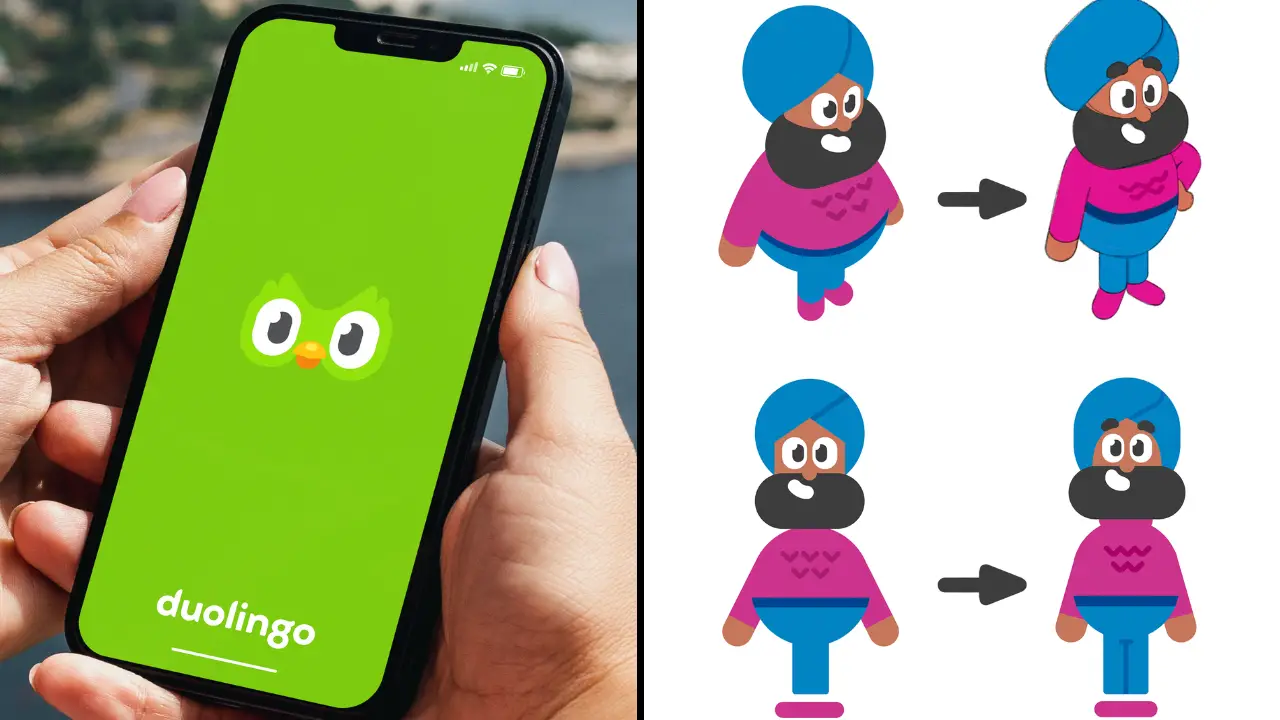
Credit: Adobe Stock & Duolingo
Duolingo Redesigns Character After Backlash: ‘We Apologize To Anyone We’ve Offended’
Duolingo has redesigned one of its characters and issued an apology after its design prompted a huge backlash.
The educational technology company had come under fire for how it portrayed one of its characters, and has now addressed the controversy by saying sorry.
Duolingo’s core cast of characters
Duolingo took to its website to reveal that it had redesigned one of its most beloved characters two years ago.
The company specializes in helping users learn an almost countless number of new languages and, in doing so, utilizes virtual characters to help with each lesson.
There are 10 core characters within Duolingo. Each character comes complete with their own unique personality and custom text-to-speech voices to further aid with the learning of a new language.
Duolingo’s main cast of characters are Duo the owl, Lily, Zari, Bea, Lin, Lucy, Eddy, Junior, Oscar, Vikram, and Falstaff.
Lin, Bea, and Oscar are also representatives of the LGBTQIA+ community, to further bring inclusivity to Duolingo’s offerings.
One Duolingo character sparked backlash
Despite Duolingo’s efforts, it admitted in 2024 that it had received feedback regarding one of its characters and how they had been represented.
Taking to the blog page of its website, the Duolingo team explained: “When it comes to character design, it is important to consider how a character may be perceived by a global audience.”
When negative feedback about one of the core characters reached Duolingo, they explained how they set about changing the character’s appearance so as not to further lean into offensive and problematic stereotypes regarding the character’s ethnicity.
Going into detail about the decision-making that goes into the character design process, Duolingo’s team explained: “When designing a character, it’s important to know that certain shapes can suggest details about a character’s personality, for better or for worse. For example, large, blocky arms might imply that a character is strong, but it could also imply that a character is rigid or unmoving.”
In a recent post on LinkedIn, Duolingo further explained: “Everybody makes mistakes, and we’re not afraid to admit that we messed up.
“When you’re teaching more than 40 languages to millions of people around the world, representation is everything.
“When we realized we slipped up, we had two choices:
• Get defensive and tell our employees that our intentions were good.
• Listen, learn, and take accountability to make sure it doesn’t happen again.
There’s really only one right answer. (Hint: it’s #2.)”
The LinkedIn post continued: “Building a global product means constantly learning and being willing to admit when you’ve fallen short. Shoutout to the employees who spoke up (even when it was uncomfortable) and to our design team for putting in the work to make this right.
“We know representation isn’t a checkbox. It’s a commitment, and we’re committed to doing it right.”
Which character sparked backlash?
The character which caused the concern was Vikram, Duolingo’s Sikh character.
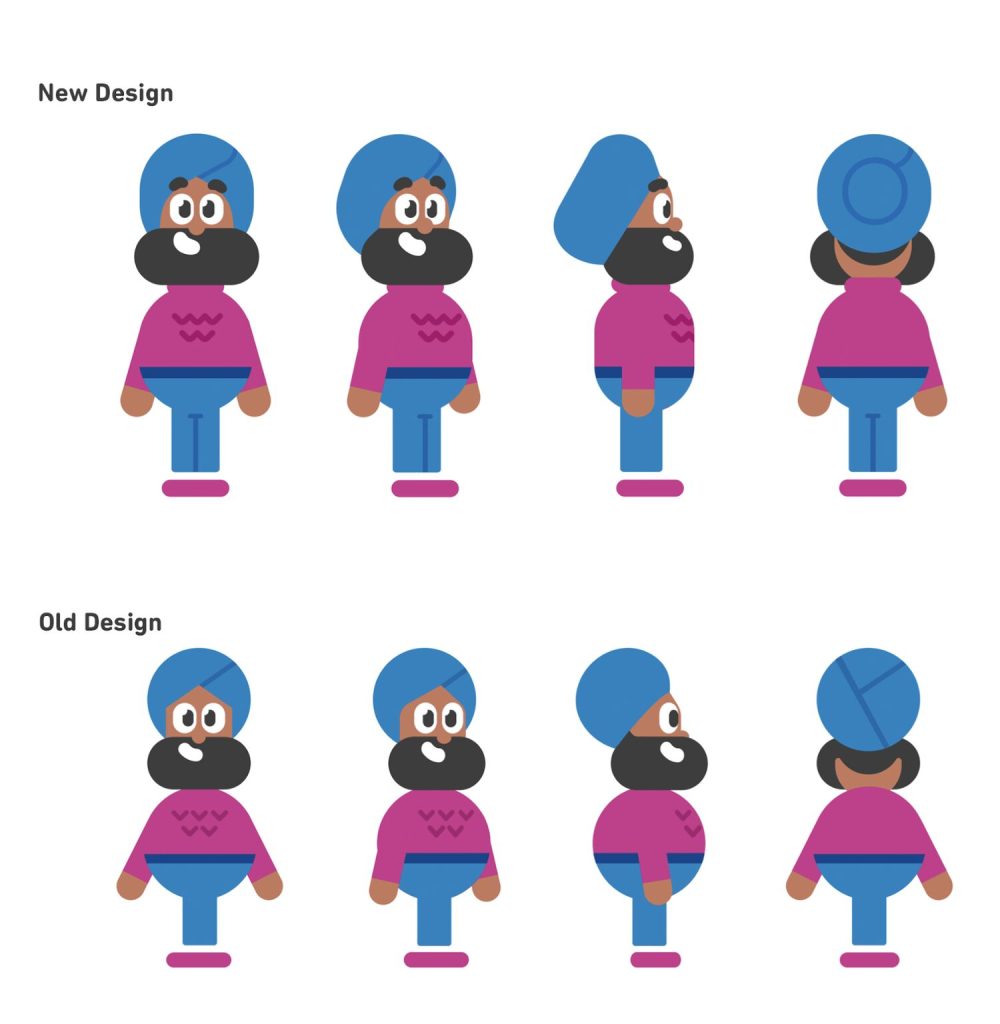
In the post, entitled, ‘Vikram’s redesign: From negative stereotypes to authentic representation,’ the Duolingo team explained: “Our goal for Vikram’s redesign is to make the Sikh community feel seen by improving his look to feel more authentic, and to refine his shape design language to be more on brand with our style.”
It was then revealed what negative aspects of Vikram’s appearance had been highlighted and how Duolingo had sought to change these.
“We received feedback that Vikram’s torso, which is basically a sphere, was evoking a ‘jolly and big belly’ feeling similar to Santa Claus. This, combined with his illustrations often being food-related, resulted in a Sikh stereotype perceived as harmful in South Asian media.
“We met with a Sikh sensitivity consultant as well as a committee of South Asian Duolingo employees who volunteered their time to help bring to our attention some problematic stereotypes in Vikram’s existing design.”
The Duolingo team then further explained how they had taken inspiration from Sikh celebrities when redesigning Vikram.
“Our committee of South Asian Duos helped us find examples of Sikh men in popular media who are portrayed as confident, hardworking, academic, and capable.
“Having these positive examples of Sikh men was very helpful in redesigning Vikram to feel more authentic to real life. We loved finding inspiration from our favorite Sikh celebrities, like Diljit Dosanjh and Waris Ahluwalia!”
The blog post also delved into the shape change of Vikram and how his previous look may have been perceived.
“When we first designed Vikram, we used a lot of circles to imply that he is friendly and approachable because circles are soft. However this also may have given the impression that he is big bellied, jolly, or lazy.
“Keeping this in mind, we altered some of Vikram’s shapes, like his turban and his torso, to achieve a more inclusive design while also staying true to our design language.”
Reactions to Duolingo’s posts have been positive and appreciative. One LinkedIn user commented: “At first, I looked at the images and didn’t notice a significant difference.
“The changes are really subtle, but the article is excellent and makes it clear that subtly is the point. A great job of keeping to what made the previous idea strong while recognising the unintended consequences and addressing them.”
Another user added: “Very interested to read the article to understand more about what was wrong with his original design.
‘Through your transparency, many of us are probably learning about a culture about which we are less familiar. Thank you for sharing.”
A third commenter replied: “A great lesson to young cartoonists! It’s easy to fall into the trap of leaning on stereotypes in cartoons. Taking ownership of a mistake and fixing it is the way to address and correct it quickly.”
Related Article: Walmart Removes ‘Offensive’ T-Shirt Featuring Hidden Swear Word
Related Article: Wednesday Fans Outraged Over Rude Doll And Demand It’s Pulled From Shelves
Want more stuff like this?
Get the best viral stories straight into your inbox!
