
Credit: How To Survive via YouTube
Chilling Video Shows Moments Before SeaWorld Orca Killed Its Trainer During Show
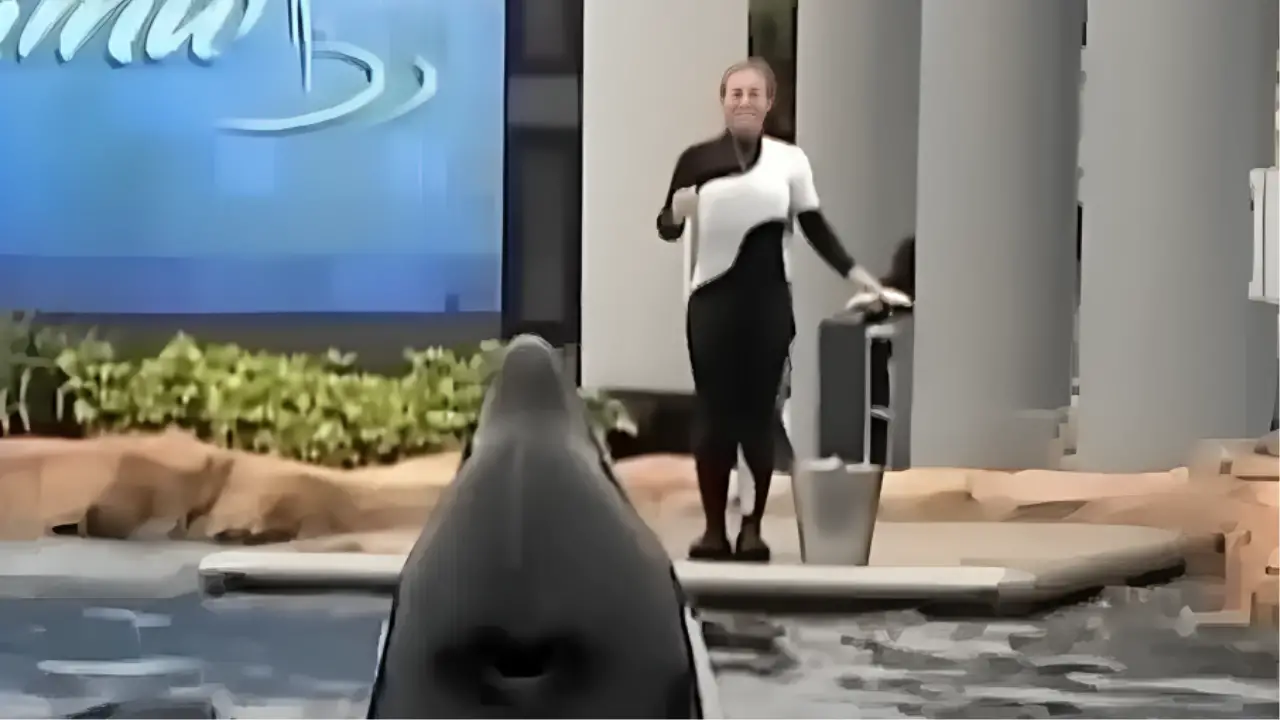
A chilling video shows the moments before a SeaWorld Orca killed its trainer during a live show.
The resurfacing of chilling footage showing the final moments before a fatal orca attack has once again reignited global debate about marine parks, animal captivity, and the risks faced by trainers.
The tragic death of Dawn Brancheau remains one of the most shocking incidents in the history of animal entertainment—and years later, it continues to haunt viewers who witness the events leading up to that day.
A tragedy that still resonates
On February 24, 2010, audiences gathered at SeaWorld Orlando for what they believed would be a routine performance.
Brancheau, a highly experienced trainer, was performing alongside Tilikum—a massive orca known for his size and previous involvement in fatal incidents.
At 40 years old, Brancheau was one of SeaWorld’s most respected trainers. She had spent years working closely with killer whales and was widely admired for her confidence, skill, and deep connection with the animals.
To the audience, the show appeared seamless—an example of harmony between human and animal.
But beneath the surface, the risks were always present.
Footage and eyewitness accounts reveal a calm and almost joyful atmosphere in the minutes leading up to the attack. Brancheau could be seen interacting with Tilikum—feeding him, communicating through gestures, and even appearing to laugh as she engaged with the orca.
Nothing seemed out of the ordinary.
As part of the show’s finale, Brancheau lay beside the pool, interacting closely with the whale. This was a familiar routine, performed countless times before. However, within seconds, the situation took a devastating turn.
Tilikum suddenly grabbed Brancheau—reportedly by her ponytail—and pulled her into the water.
What followed was a prolonged and horrifying ordeal.

Chaos in front of a live audience
The attack unfolded in full view of stunned spectators. At first, some believed it was part of the performance. But it quickly became clear something was terribly wrong.
Tilikum began thrashing violently, dragging Brancheau through the water. Trainers and staff rushed to respond, attempting to distract the orca using food and nets. Emergency procedures were initiated, and crowds were quickly ushered away from the scene.
Despite desperate efforts, there was little anyone could do.
The attack reportedly lasted around 45 minutes. During that time, Brancheau was repeatedly pulled underwater, leaving rescuers unable to reach her safely.
By the time Tilikum released her body, it was too late.
An autopsy later confirmed that Brancheau died from drowning and blunt force trauma. She had suffered catastrophic injuries, including fractures to her jaw, ribs, and vertebrae.
The scale and brutality of the attack shocked even seasoned professionals.
For many, the most disturbing aspect was not just the violence—but the unpredictability. Brancheau and Tilikum had worked together extensively. There had been no obvious warning signs that such an attack would occur that day.
Tragically, this was not the first fatal incident linked to Tilikum.
The orca had previously been involved in two other deaths, including that of a trainer at a different marine park and a man who had entered his enclosure illegally.
These incidents had already sparked concern about the risks associated with keeping such powerful animals in captivity.
Following Brancheau’s death, scrutiny intensified.
The 2013 documentary Blackfish brought global attention to the issue, examining Tilikum’s life and the broader ethics of keeping orcas in marine parks.
The film argued that captivity could lead to psychological stress in whales, potentially contributing to aggressive behavior.

The debate over captivity
In the years since the incident, Brancheau’s death has become a focal point in the ongoing debate about animal welfare.
Supporters of marine parks argue that facilities like SeaWorld play an important role in education, conservation, and research. They maintain that trainers are highly skilled professionals who understand the risks involved.
Critics, however, see the situation differently.
They argue that keeping highly intelligent, wide-ranging animals like orcas in confined spaces is inherently harmful.
In the wild, orcas can travel vast distances and live in complex social groups. In captivity, their environment is drastically limited.
Many believe this mismatch can lead to stress, frustration, and unpredictable behavior.
The fallout from the tragedy led to significant changes at SeaWorld.
The company was fined by safety regulators and faced increased pressure to improve working conditions. One of the most notable changes was the decision to end water-based interactions between trainers and orcas during performances.
Additionally, SeaWorld eventually announced it would end its orca breeding program, marking a major shift in its business model.
Today, performances have been replaced with more educational presentations focused on conservation and natural behaviors.
The legacy of Dawn Brancheau
Despite the controversy surrounding the incident, those who knew Brancheau remember her as passionate and deeply committed to her work.
Colleagues described her as someone who genuinely loved the animals she worked with. Her dedication to marine life was evident in every aspect of her career.
Even in the wake of such a tragic event, many former trainers have emphasized the bond she shared with Tilikum—highlighting the complexity of human-animal relationships in these environments.

The footage that still haunts viewers
Years later, the footage of Brancheau’s final moments continues to circulate online, leaving viewers shaken.
What makes it particularly unsettling is how normal everything appears just moments before the attack. There are no obvious warning signs—no clear indication that disaster is imminent.
That contrast between calm and chaos is what makes the video so deeply disturbing.
It serves as a stark reminder of the unpredictable nature of wild animals, even those raised in captivity and trained extensively.
The tragedy fundamentally changed how many people view marine parks.
Attendance patterns shifted, public scrutiny increased, and conversations about animal welfare became more mainstream. The incident—and the attention it received—played a key role in reshaping the industry.
For some, it marked the beginning of the end for traditional orca shows.
For others, it reinforced the need for stricter safety measures and better understanding of animal behavior.
Perhaps the most haunting aspect of the tragedy is that no one can say for certain why it happened.
Experts have proposed various theories—from stress and frustration to learned behavior—but there is no definitive answer.
As one former trainer put it, even the strongest bonds between humans and animals cannot eliminate risk entirely.
And that uncertainty is what continues to linger.
Related Article: SeaWorld Orca Who Killed Trainer And ‘Played With His Body’ Dies At 29
Related Article: Zookeepers Finally Solve Mystery Of Female Monkey Who Got Pregnant While Alone In Her Cage
Want more stuff like this?
Get the best viral stories straight into your inbox!
