
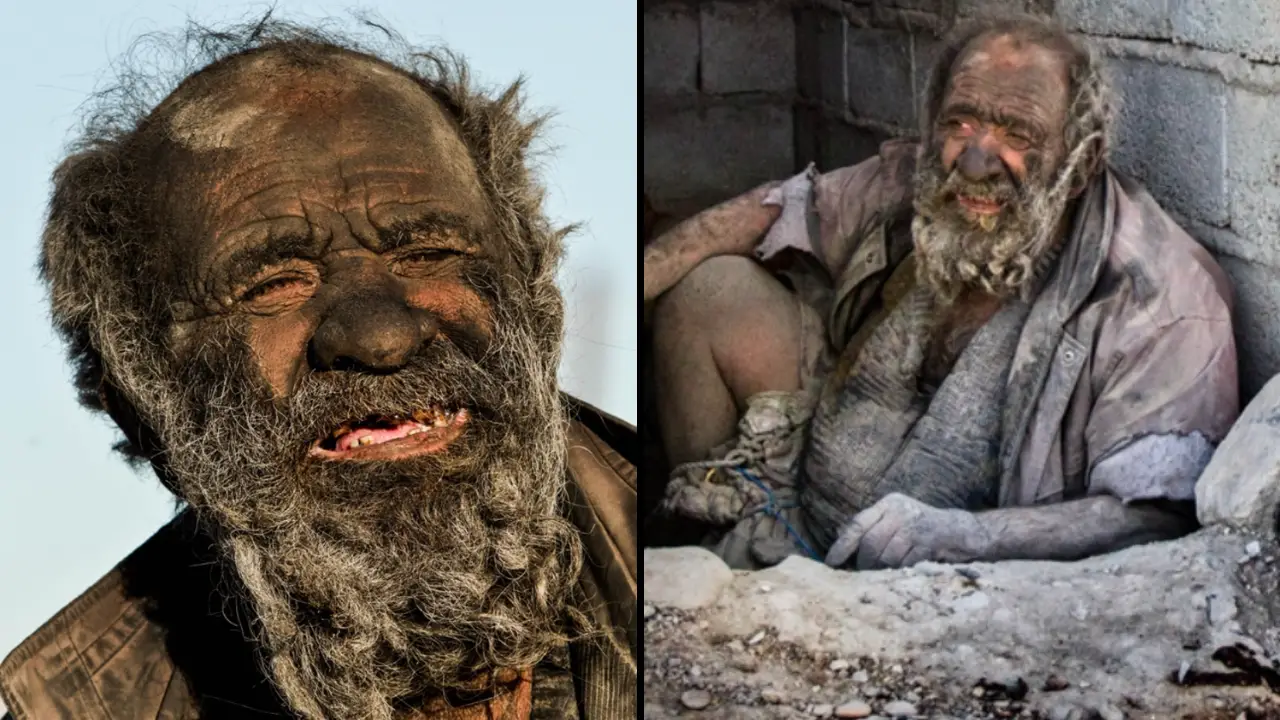
Credit: IRNA
‘World’s Dirtiest Man’ Didn’t Wash For 60 Years And Died Shortly After His First Bath
The ‘world‘s dirtiest man’ didn’t wash for 60 years and died shortly after having his first bath.
For most people, taking a shower is a daily routine, but one man became famous around the world for doing the exact opposite.
Known as the ‘world’s dirtiest man,’ Amou Haji spent more than six decades avoiding soap, water, and virtually every modern hygiene practice imaginable.
His extraordinary lifestyle baffled scientists, fascinated journalists, and turned him into an unlikely global celebrity.
Yet despite refusing to bathe for over 60 years, Haji lived well into his nineties.
His remarkable story has continued to capture attention years after his death, especially because of the eerie timing of what happened after he finally agreed to wash.
The man who feared cleanliness
Amou Haji was born on August 20, 1928, in Iran’s southern Fars province.
Despite becoming internationally known as Amou Haji, the name wasn’t actually his real one.
‘Amou’ is an affectionate Persian nickname often given to elderly men and roughly translates to ‘uncle’ or ‘old-timer,’ per USA Today.
According to local reports, Haji chose a life of isolation after suffering what he described as emotional setbacks and heartbreak during his younger years.
Over time, he withdrew from society almost entirely.
He settled in the rural village of Dezh Gah, where residents would occasionally look after him while respecting his unusual lifestyle choices.
One of the most striking aspects of his life was his refusal to bathe.
For more than six decades, Haji reportedly avoided washing because he believed that soap and water would make him ill.
His fear became so strong that he actively resisted attempts by others to help him clean himself.
On one occasion, local villagers reportedly tried to force him into a shower, but he escaped before they could wash him.
A lifestyle unlike any other
As the years passed, Haji’s appearance became increasingly extraordinary.
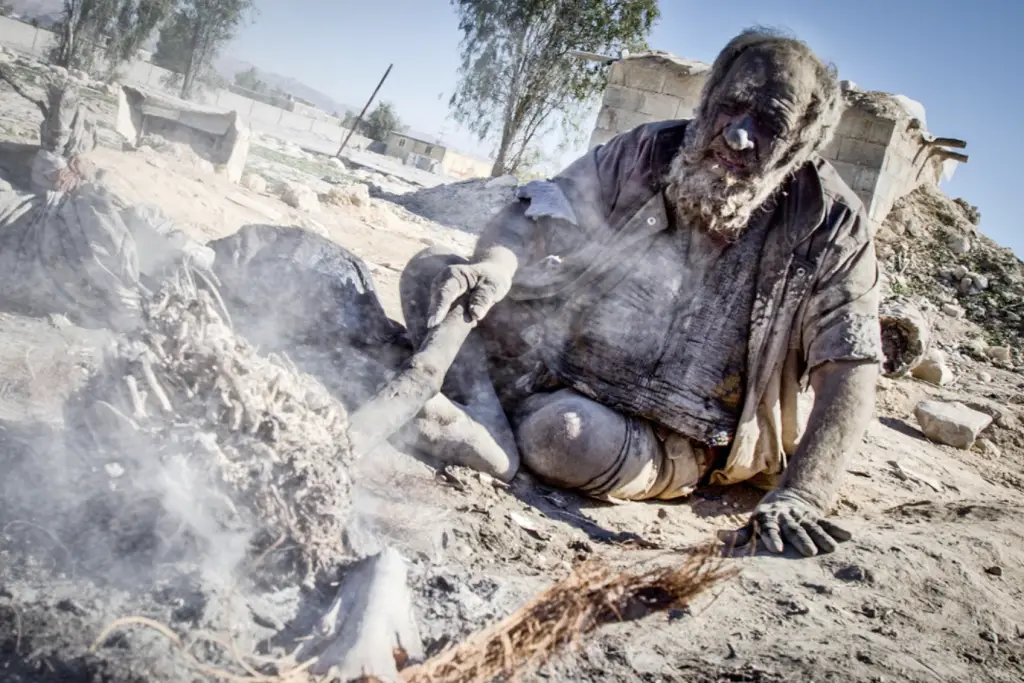
His skin became coated in layers of soot, dirt, and ash, causing him to blend into the desert landscape around him.
Author Claudia Hammond once described him as looking so similar to the barren terrain of southern Iran that when he sat still, he resembled a rock.
Rather than bathing with water, Haji reportedly believed smoke helped keep him clean.
He often sat near fires, allowing soot to accumulate on his skin.
His living conditions were equally unusual. For much of his life, he lived in a hole dug into the ground, the BBC reports.
Later, concerned villagers constructed a simple cinder-block shelter where he occasionally stayed.
Food was another area where Haji rejected convention.
According to reports, one of his favorite meals was rotting porcupine.
He regularly ate roadkill and carrion, preferring meat that most people would consider inedible, per the Guardian.
He also drank water from puddles and rusty oil cans.
Perhaps most bizarrely, he was known to smoke animal dung using an old pipe.
Photographs of Haji frequently showed him puffing on multiple cigarettes at once.
When his hair became too long, he didn’t visit a barber.
Instead, he reportedly singed the excess off with an open flame.
Scientists became fascinated by him
Given his lifestyle, many assumed Haji would be plagued by disease.
Surprisingly, research suggested otherwise.
In 2014, medical experts reportedly conducted examinations on Haji to better understand how his body had adapted to decades without modern hygiene.
According to reports, they found that he was generally healthy despite his unconventional habits.
Scientists were particularly interested in how he had avoided serious illnesses despite regularly consuming contaminated food and water.
His case challenged assumptions about cleanliness, immunity, and long-term health.
Although no one was suggesting people abandon hygiene altogether, Haji’s survival became a source of fascination among researchers.
He became a global phenomenon
As news of his lifestyle spread, Haji became something of an international curiosity.
Media outlets from around the world traveled to Iran to document his life.
His story was even turned into a documentary called The Strange Life of Amou Haji, released in 2013.
Photographs of the elderly hermit circulated widely online, with many people struggling to believe the stories were real.
Some were fascinated by his independence.
Others were horrified by his living conditions.
Either way, Haji became one of the most recognizable figures associated with extreme lifestyles.
Despite his fame, those who met him described him as a relatively peaceful and solitary man who preferred to be left alone.
Villagers often attempted to help him by offering food, water, and other necessities, but he frequently refused their assistance.
According to local reports, such efforts sometimes made him upset because they interfered with the way he had chosen to live.
Villagers finally convinced him to wash
For decades, Haji remained firm in his refusal to bathe.
However, as he entered his nineties, local residents became increasingly concerned about his wellbeing.
Eventually, after years of persuasion, they succeeded in convincing him to do something he had avoided for most of his adult life.
In 2022, Haji reportedly took his first bath in more than 60 years.
For many people in the village, it was seen as a positive step.
After decades of avoiding soap and water, the man known as the world’s dirtiest person had finally agreed to wash.
No one could have predicted what happened next.
How he died
Just a few months after taking that first bath, Amou Haji became ill.
According to Iran’s state-run IRNA news agency, the 94-year-old died on October 23, 2022, in the village of Dezh Gah.
Reports stated that he fell sick not long after finally washing himself.
His death quickly reignited global interest in his story, with many people speculating whether there was a connection between the bath and his passing.
However, there is no evidence that bathing itself caused his death.
At 94 years old, Haji had already exceeded the average life expectancy in many parts of the world.
Still, the timing led to countless headlines noting the remarkable coincidence that the man who spent six decades avoiding soap and water died only months after finally taking a bath.
Whether connected or not, the strange sequence of events added one final chapter to one of the most unusual lives ever documented.
See more images of Amou Haji at IRNA here.
Related Article: Mom Horrified To ‘Discover Son’s Dead Body’ On Display At Museum
Related Article: Haunting Final Post Of Teenager Found Dead On Cruise Ship
Want more stuff like this?
Get the best viral stories straight into your inbox!
