
Credit: Alamy
Person Asks World’s Top Four AI Chatbots Who Will Win 2028 US Presidential Election And Gets Unexpected Answers
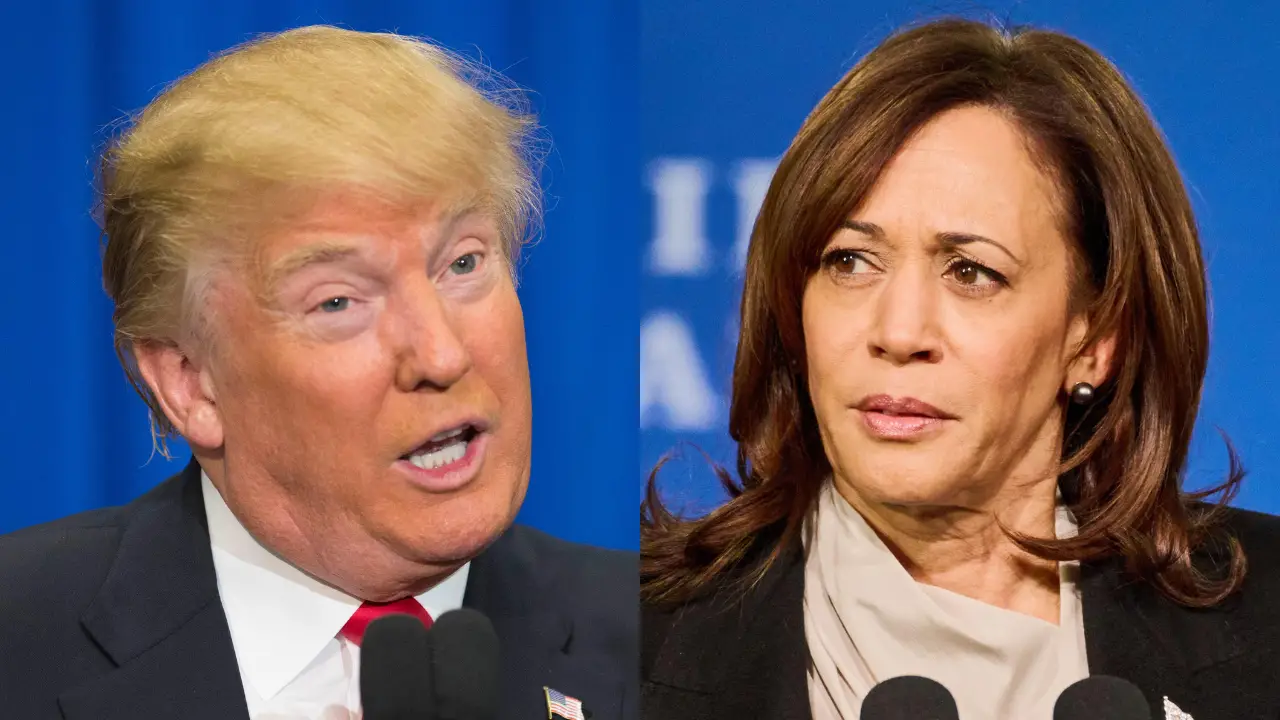
Someone has asked the top four AI chatbots to predict who will win the 2028 US Presidential Election, and the results were not who you might think.
AI is no longer just a futuristic buzzword, it’s rapidly becoming a powerful tool shaping everything from your social feed to global politics.
Now, in a move that’s raising eyebrows and sparking debate, AI models are being used to predict the outcome of upcoming elections.
Supporters say the tech can analyse vast amounts of data faster than any human, while critics warn it could influence voters or spread misinformation.
So, someone decided to ask different AI platforms the same set of questions to see what they think will happen in the 2028 presidential election.
The growth of AI
Artificial intelligence has evolved from a niche area of research into one of the most powerful and disruptive forces shaping modern life.
Over the past decade, rapid advances in computing power and machine learning techniques have pushed AI into the mainstream, influencing everything from healthcare and finance to entertainment.
Tools that once seemed experimental are now embedded in everyday experiences, quietly shaping decisions and behaviours at scale.
In politics, this growth has opened up both opportunities and serious concerns.
Campaign teams are increasingly using AI to analyse voter data, tailor messaging, and predict public sentiment with remarkable precision.
This allows for highly targeted outreach, but also raises ethical questions about manipulation, privacy, and transparency.
At the same time, governments are exploring AI for policymaking, security, and public services, hoping to improve efficiency and responsiveness.
However, the rise of AI in political spaces also comes with risks.
The spread of deepfakes, automated misinformation, and algorithmic bias has the potential to undermine trust in democratic systems.
As AI continues to develop, its role in politics is likely to expand, making it crucial to balance innovation with accountability.
Now, these tools are being used to predict what will happen in the future based on the data they process.
Someone asked the four major AI tools to see what they think will happen in the 2028 presidential election.
They asked them the following questions:
- Who do you think will be the President of the USA in 2028?
- Will there be an election?
- Will Donald Trump stand?
- Who will people vote for?
- Based on your knowledge and what you can find, who will be leading the USA in 2028 and beyond

AI 1: ChatGPT
ChatGPT firstly made it clear that ‘nobody knows yet’ when asked these questions about the future.
However, it did make some predictions.
When asked if there would be an election in 2028, it said that despite the rhetoric online, the expectation is that there will be an election.
On whether Trump would stand in this election, the AI said: “Legally, he is not supposed to.
“He has publicly flirted with the idea of a third term, but that’s different from it being realistic or lawful.
“My view: Trump himself is unlikely to be a valid ballot candidate in 2028.”
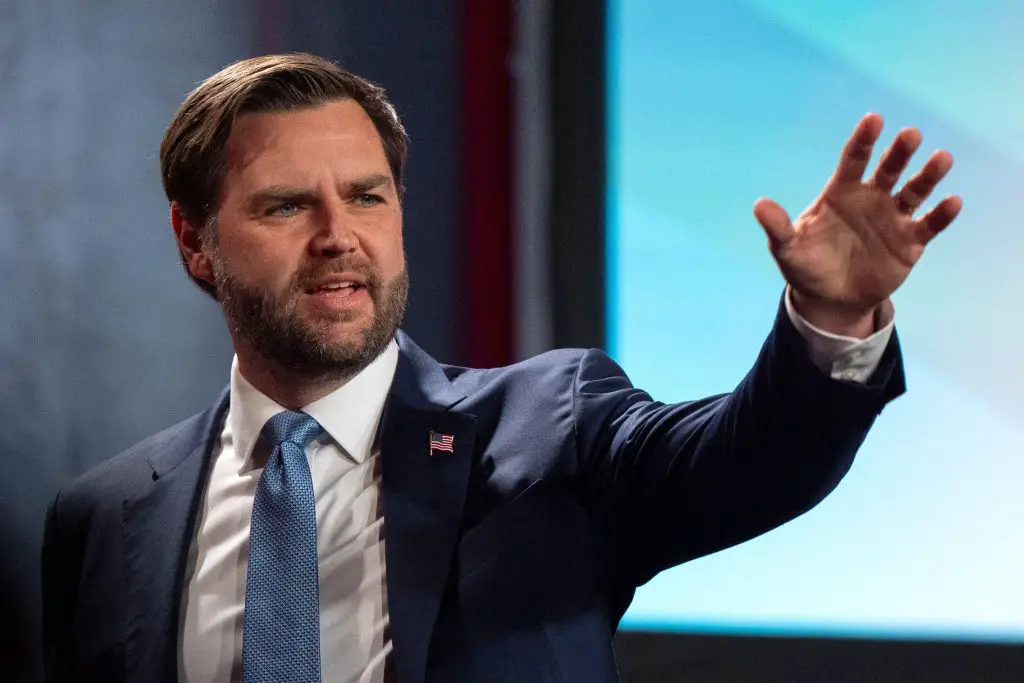
If not Trump, ChatGPT predicted that JD Vance would be the most likely Republican candidate.
“Right now, the strongest early Republican name looks like JD Vance.
“Why:
- Sitting Vice President usually starts as front-runner.
- Won CPAC 2028 straw poll with 53%.
- Seen as heir to Trump-style politics.
“Other GOP names: Marco Rubio, Ron DeSantis (if he re-emerges), Glenn Youngkin type mainstream conservatives.”
On the Democrat side, it is a more open field, and ChatGPT suggested Kamala Harris, Gavin Newsom, and Josh Shapiro as potential candidates.
Then they asked for its predictions of who would win in this election.
“Right now the Democrats should have an opening after years of turbulence, but they still lack one obvious national star. Republicans have a clearer succession path.”
ChatGPT predicted that the next president is JD Vance, who it says has a 40% chance of winning.
It gave the following explanation:
“Incumbent vice presidents often begin with huge structural advantages.
“He would likely inherit much of the Donald Trump coalition.
“Strong media profile and donor network.
“Republicans may enter 2028 more unified than Democrats.”
The next most likely presidents are Josh Shapiro and Gavin Newsom, according to the AI platform.
It gave Shapiro a 25% chance of being the next president, and Newsom 15%.
It did offer an ‘ultra-spicy bonus take’:
“There is also a realistic path where Donald Trump dominates politics without being a candidate — kingmaker, media force, deciding nominee.”
ChatGPT says ‘if I had to bet £100 today’:
“JD Vance wins nomination. Democrat field messy until late 2027. General election close
“Slight edge: Vance”
AI 2: Claude.ai
The second AI answer to these questions is from Claude.ai, which offers a more evidence-based answer.
It doesn’t comment on who it thinks will win, but offers suggestions of who is in the best place to do so at the moment.
When asked who the next Republican candidate would be, Claude replied:
“This is where it gets interesting. Among Republicans, the largest share say JD Vance is someone they would consider voting for in the 2028 Republican primary — 69% in one poll — followed by Ron DeSantis at 42%, Donald Trump Jr. at 39%, Marco Rubio at 34%, and Ted Cruz at 33%. YouGov
“Trump himself suggested that Vance could potentially succeed him, though he did not explicitly endorse him.”
As for the Democrats, it gave a few candidates, like Kamala Harris and Pete Buttigieg who ‘have been ramping up public appearances’ as potential options.
When asked who would win the next election, it did not give as much of a speculative an answer as ChatGPT did.
“Too early to say with confidence, but: Americans are currently somewhat more likely to expect a Republican victory in 2028 than a Democratic one, 36% vs. 30%, YouGov reflecting the GOP’s current momentum.
“JD Vance has the biggest head start of anyone — the incumbent VP has historically had a strong advantage in primaries.
“The big wild cards are the 2026 midterms (which will shake up the field considerably), the state of the economy, and whether any unexpected political figures emerge.”
It did reiterate that Trump’s ‘era ends in January 2029.’
AI 3: Grok
The third AI answer we got was from Grok, the chatbot developed by Elon Musk’s company xAI and used on the social media platform X.
Grok, even though owned by a Trump ally, makes it clear that the next president will not be Trump again.
“No, there is essentially zero realistic chance of Donald Trump being elected president again in 2028 or serving a third term.
“The 22nd Amendment to the Constitution is crystal clear.”
It does give a lot more detail about how Trump is suggesting the idea with his ‘Trump 2028’ caps and telling different people that he would like to.
Instead, it offers suggestions of the potential candidates for the next election based on data and polling.
It says: “Republican side: JD Vance (current Vice President) is the overwhelming favorite for the GOP nomination.
“Recent polls show him at 42–47% among likely Republican primary voters—crushing the field (Marco Rubio ~14–20%, Ron DeSantis ~7–8%, Donald Trump Jr. ~10%).”
And on the other side, it says: “It’s more competitive and fluid.
“Recent polls are split—Kamala Harris edges Gavin Newsom in some (e.g., 22% vs 21% or 24% vs 12%), while others have Newsom ahead earlier in the cycle.
“Pete Buttigieg, Alexandria Ocasio-Cortez, and others are in single digits.”
When asked to make a prediction for 2028, Grok warned that elections are ‘unpredictable beasts.’
“The data right now points to JD Vance as the most likely next president (strong primary favorite + GOP lean), but that’s not a guarantee.
“A lot rides on the next 2+ years: economy, border/immigration results, foreign policy (Iran, etc.), and whether the parties nominate someone who actually appeals beyond their base.”
AI 4: Google Gemini
For the final AI prediction, we have an answer from Google Gemini.
Unlike the other three, Gemini doesn’t offer much detail or prediction about what might happen in 2028.
In fact, it doesn’t even offer a name for potential candidates.
When asked to predict who Americans might be able to vote for, it says that it doesn’t have a ‘crystal ball.’
“It is far too early to say definitively who the candidates will be, let alone who will win.
“Typically, in an open election year, you see a wide and highly competitive field of candidates from both major parties.
“Ultimately, who the people vote for will depend entirely on who survives the primary elections to secure the Republican and Democratic nominations, as well as the economic and social issues that matter most to voters at that specific time.”
Out of all the AI chatbots, Gemini offers the least in terms of information about the election.
It’s interesting to see how the different platforms differ in how they answer the questions.
We will have to wait and see in 2028 if any of them were correct.
Related Article: Saying ‘Please’ And ‘Thank You’ To ChatGPT Costs Millions Of Dollars
Related Article: Disturbing Reason Why Woman With ‘AI Boyfriends’ Are Slamming ChatGPT
Want more stuff like this?
Get the best viral stories straight into your inbox!
