

Credit: Murderpedia
This Baby Grew Up To Be One Of The Most Evil Men In History
The cherubic baby pictured here would grow up to become one of the most notorious and feared criminals in modern history.
People referred to him, not fondly, as a ‘walking brain.’ He played trombone in his school marching band.
He skipped multiple grades. At just 16 years old, he was accepted to Harvard. Neighbors remembered his parents as people who ‘sacrificed everything they had for their children.’
By nearly every measure, he appeared to be a child blessed with remarkable intelligence and exceptional opportunity.
What he ultimately chose to do with those advantages horrified the world and left behind a legacy of violence, suffering, and fear that stretched across almost twenty years.
A gifted child with an extraordinary future
Theodore John Kaczynski was born on May 22, 1942, in Chicago, Illinois, to Polish-American working-class parents. His father made sausages for a living, while his mother devoted herself entirely to helping her children succeed.
He also had a younger brother, David, who would later play a crucial role in ending his reign of terror.
Teachers and administrators at Sherman Elementary School described young Ted as healthy, intelligent, and socially well-adjusted.
After the family moved to Evergreen Park, Illinois, testing revealed he had an IQ of 167. School officials decided to advance him past the sixth grade, a move Kaczynski would later claim had profound and damaging consequences.
Before being accelerated, he had friends and was viewed as something of a leader among his peers. Afterward, placed among older students who relentlessly mocked and bullied him, he became increasingly isolated. The nickname ‘walking brain’ followed him.
His academic acceleration continued. At Evergreen Park Community High School, he skipped the eleventh grade, graduated at only 15 years old, and earned a scholarship to Harvard University.
One former classmate later said Kaczynski was ’emotionally unprepared’ for such a dramatic transition.
“They packed him up and sent him to Harvard before he was ready,” the classmate said. “He didn’t even have a driver’s license.”
From Harvard prodigy to Berkeley professor
At Harvard, Kaczynski lived in a residence hall intended for exceptionally young and gifted freshmen. Fellow students remembered him as brilliant but distant and introverted.
He completed a Bachelor of Arts degree in mathematics in 1962. Yet his years at Harvard were marked by more than academic success.
During his sophomore year, he participated in a controversial psychological experiment overseen by researcher Henry Murray. Participants were subjected to what Murray himself described as ‘vehement, sweeping, and personally abusive’ attacks on their deeply held beliefs, with the goal of creating emotional stress and psychological pressure.
Kaczynski spent roughly 200 hours in the study. Years later, his defense attorneys argued that the experience may have contributed to his deep hostility toward authority and perceived efforts at psychological control.
Following Harvard, he enrolled at the University of Michigan, where he earned both a master’s degree and a doctorate in mathematics.
His doctoral dissertation, focused on geometric function theory, received the university’s award for the year’s best mathematics dissertation. His advisor described it as ‘the best I have ever directed.’ Another professor remarked ‘it is not enough to say he was smart.’
By late 1967, at just 25 years old, Kaczynski had become an assistant professor of mathematics at the University of California, Berkeley, the youngest person ever appointed to the position there. His academic career appeared destined for success.
Then, unexpectedly, everything changed. On June 30, 1969, he resigned without warning.
The department chairman later wrote that the departure was ‘quite out of the blue.’ He also noted that Kaczynski had ‘seemed almost pathologically shy’ and had never developed close relationships within the department.
Attempts to draw him into university life had quietly failed.
The isolated life that fueled a dangerous ideology
After leaving Berkeley, Kaczynski briefly returned to live with his parents in Illinois before making a decision that would shape the rest of his life.
In 1971, he relocated to a small cabin he had constructed near Lincoln, Montana. The structure had no electricity or running water. Inside were only basic necessities: a bed, two chairs, a gas stove, several trunks, and countless books.
His ambition was to live independently and self-sufficiently. He cycled into town when necessary, cultivated his own food, and spent hours reading classic literature in original languages at the local library.
For a period, he seemed simply like a man pursuing an unconventional lifestyle.
But the landscape around him was changing.
During the summer of 1983, Kaczynski revisited a remote plateau he had long cherished and discovered that a road had been carved directly through it.
In later interviews, he described the experience as a defining moment. He concluded that peaceful coexistence with modern industrial society was impossible and became convinced that retaliation against the technological system responsible for environmental destruction was necessary.
“It was from that point on I decided that, rather than trying to acquire further wilderness skills, I would work on getting back at the system,” he said.
By then, he had already spent years carrying out acts of vandalism and sabotage near his property, including arson and the use of booby traps aimed at developments he opposed.
He had also immersed himself in sociology and political philosophy. Among the writers who most influenced him was French philosopher Jacques Ellul. According to David Kaczynski, Ellul’s book The Technological Society became his brother’s “Bible.”
What followed was not impulsive violence but a carefully planned and steadily escalating campaign.
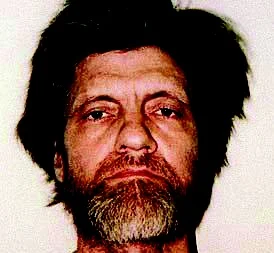
The Unabomber murders and the investigation that ended them
Between 1978 and 1995, Kaczynski either mailed or personally delivered sixteen bombs to targets across the United States.
His victims were selected through extensive research. He targeted individuals and institutions he believed were contributing to technological progress and, in his view, the destruction of the natural world.
Universities, airlines, computer businesses, and advertising executives all became targets.
His first bomb exploded in 1978 at the University of Illinois at Chicago, injuring a campus police officer. A second device detonated at Northwestern University the following year, wounding a graduate student.
In 1979, a bomb placed aboard American Airlines Flight 444 filled the aircraft with smoke and forced an emergency landing. Investigators later concluded that the device had the potential to bring down the plane entirely.
Among the most severely injured victims was graduate student and Air Force captain John Hauser, who lost four fingers and sight in one eye after a 1985 attack.
In 1993, Yale computer science professor David Gelernter suffered devastating injuries, including the loss of sight in one eye, hearing in one ear, and the use of his right hand. That same year, geneticist Charles Epstein lost several fingers when a bomb arrived at his home.
Three victims were killed during the campaign.
Computer store owner Hugh Scrutton died in Sacramento in 1985. Advertising executive Thomas Mosser was killed at his New Jersey home in 1994. In April 1995, Gilbert Brent Murray, president of the California Forestry Association, was killed when he opened a package bomb addressed to a former association president.
The FBI investigation became the longest and most costly in bureau history up to that point, eventually exceeding $50 million and involving more than 150 full-time investigators.
For years, authorities struggled to identify the bomber. The devices were constructed from common materials. Fingerprints yielded no matches. Misleading evidence had been deliberately planted. Kaczynski was meticulous about leaving no trace.
The breakthrough came in 1995.
That year, he demanded that a major newspaper publish his 35,000-word manifesto, Industrial Society and Its Future, in its entirety, promising to “desist from terrorism” if the request was granted.
Despite concerns about giving a terrorist a platform, FBI Director Louis Freeh and Attorney General Janet Reno supported publication in the hope that someone would recognize the author.
The Washington Post printed the manifesto in September 1995.
Thousands of tips followed. One proved decisive.
After reading the document, David Kaczynski noticed familiar patterns in the writing — the arguments, the language, and the style of reasoning. He compared it with old letters his brother had written decades earlier and found striking similarities.
After wrestling with the decision, he contacted the FBI.
Linguistic expert James Fitzgerald analyzed the manifesto alongside earlier writings and concluded they were almost certainly written by the same person.
Combined with an existing geographic profile that connected the suspect to Chicago, Berkeley, and Salt Lake City, the evidence was enough to obtain a search warrant.
On April 3, 1996, federal agents arrested Theodore Kaczynski at his Montana cabin.
Inside, investigators discovered bomb-making materials, improvised weapons, a live bomb prepared for mailing, and approximately 40,000 pages of handwritten journals documenting his crimes.
The journals were extraordinarily detailed.
He cataloged his attacks as experiments, referring to the bombing that killed Hugh Scrutton as “Experiment 97” and the attack that killed Thomas Mosser as “Experiment 244.”
The entries included technical observations, chemical formulas, design modifications, and reflections on the effectiveness of each device. He expressed disappointment when bombs failed to kill and satisfaction when they succeeded.
One journal entry from 1971 laid out his motivation in stark terms:
“My motive for doing what I am going to do is simply personal revenge.”
In January 1998, Kaczynski pleaded guilty and received multiple life sentences without the possibility of parole. He was incarcerated at ADX Florence, the federal supermax prison in Colorado.
While imprisoned, he developed an unusual friendship with Ramzi Yousef and Timothy McVeigh, the men responsible for the 1993 World Trade Center bombing and the 1995 Oklahoma City bombing.
In 2021, he was diagnosed with rectal cancer. After months of chemotherapy and a bleak outlook, he chose to stop treatment in March 2023. Two months later, a prison oncologist reported that he was “depressed.”
During the early morning hours of June 10, 2023, prison staff found him unresponsive in his cell after he had hanged himself using a shoelace attached to a handicap rail.
Despite efforts to revive him, he was later pronounced dead at Duke University Hospital in North Carolina at 8:07 a.m. He was 81 years old.
The baby in the family photographs, the brilliant child from a working-class Chicago household, the Harvard mathematics prodigy, and the youngest assistant professor in Berkeley history were all the same person: Theodore “Ted” John Kaczynski, better known to the world as the Unabomber.
Related Article: This Little Girl Grew Up To Be The Most Evil Woman In History
Related Article: This Little Boy Grew Up To Be One Of The Most Famous Actors In The World
Want more stuff like this?
Get the best viral stories straight into your inbox!
