
Credit: Social Media & Adobe Stock
Boy, 14, Dies After ‘Injecting Himself With Butterfly’ In Horror ‘Online Challenge’
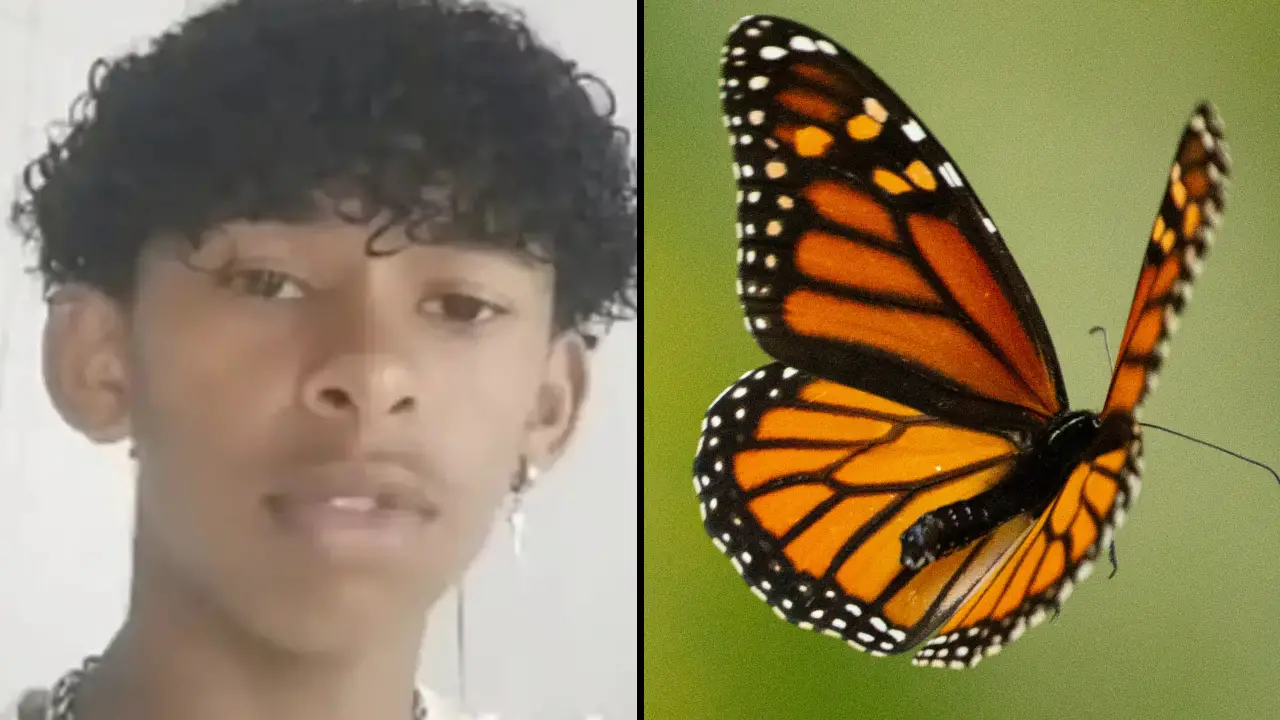
A 14-year-old boy tragically died after allegedly injecting himself with a butterfly in a case that has shocked Brazil and sparked fears over dangerous online trends targeting teenagers.
Davi Nunes Moreira, from the town of Planalto in Bahia, Brazil, reportedly spent seven agonising days in hospital before dying from complications linked to the bizarre incident.
Authorities are now investigating exactly what happened in the lead-up to the teenager’s death, while medical experts continue to warn about the potentially fatal consequences of injecting unknown substances into the human body.
The disturbing case has generated widespread attention across Brazil and internationally, particularly after reports suggested Davi may have copied an experiment or viral challenge circulating online.
However, conflicting reports remain over whether the teenager was directly influenced by social media before his death.
Police say the official cause of death has still not been fully confirmed, with autopsy results expected to provide more answers as the investigation continues.
Teen’s condition rapidly deteriorated after injection
According to local reports, Davi initially told his father he had injured himself while playing after he began limping and complaining of pain.
But his condition reportedly worsened rapidly over the following days.
The teenager allegedly started vomiting and struggling to walk before eventually being rushed to hospital for emergency treatment.
As doctors attempted to determine what was causing the mysterious symptoms, Davi later admitted he had injected a homemade substance into his leg.
Brazilian media reports claim the teen told medics he had mixed the remains of a dead butterfly with water before injecting the liquid using a syringe.
His father later reportedly discovered the syringe hidden underneath the boy’s pillow while cleaning the house.
Davi was first treated at a hospital in Planalto before being transferred to a larger medical facility in Vitória da Conquista as his health continued deteriorating.
Despite receiving specialist care for around a week, doctors were ultimately unable to save him.
Reports state the 14-year-old died in February 2025 after suffering severe complications linked to the injection.
The Civil Police of Bahia confirmed an investigation had been launched into the teenager’s death.
“The autopsy results will help clarify the cause of death,” a spokesperson said.
“The investigation is designed to clear up what happened.”

Doctors warn of deadly medical complications
Medical experts have since spoken out about the potentially catastrophic dangers linked to injecting foreign biological material into the bloodstream.
Doctors believe several different medical complications may have contributed to Davi’s death, including infection, embolism, allergic reaction, or septic shock.
Dr Luiz Fernando D. Relvas told Brazilian outlet VivaBem that investigators still do not fully understand how the mixture was prepared or what exactly entered the teenager’s bloodstream.
“We don’t know how he prepared this mixture or the size of the fragments he managed to inject into the body,” the doctor explained.
“There may have been air left inside, which could lead to an embolism.”
An embolism occurs when a blood vessel becomes blocked, potentially cutting off blood flow to vital organs and causing sudden death.
Doctors are also examining whether bacteria, toxins, or contaminants from the butterfly remains may have triggered a severe infection that overwhelmed the teenager’s body.
Some investigators reportedly suspect Davi may have gone into septic shock — a life-threatening condition caused by the body responding aggressively to infection.
Medical professionals say injecting non-sterile substances can be extremely dangerous because it bypasses many of the body’s natural defenses.
Public health experts have also warned that even substances which appear harmless externally can become highly toxic once introduced directly into the bloodstream.
Professor Marcelo Duarte, director of São Paulo University’s Zoology Museum and a butterfly specialist, said scientists still know relatively little about how butterfly fluids may affect humans if injected.
“Butterflies have a complex biology, and the fluids present in their bodies have not been studied in depth in terms of their toxicity to humans,” he explained.
Some butterfly species also naturally carry toxic compounds designed to deter predators in the wild.
Fears grow over dangerous social media trends
The shocking death has reignited concerns about the growing number of dangerous online “challenges” and viral stunts circulating across social media platforms.
Several Brazilian outlets reported that investigators were exploring whether Davi may have copied an experiment he saw online before injecting himself.
Some reports described the incident as potentially linked to a bizarre internet craze involving homemade injections and risky dares shared privately between teenagers.
However, there are conflicting claims about whether Davi actually participated in any challenge.
According to some local media reports, the teenager denied being influenced by social media before his death.
Authorities have not officially confirmed any direct connection to a viral trend, and investigators are continuing to examine the circumstances surrounding the case.
Still, the incident has prompted renewed warnings from health professionals and child safety experts about the risks posed by online content encouraging dangerous behavior.
Experts say teenagers can be particularly vulnerable to peer pressure, internet trends, and attempts to gain attention or validation online without fully understanding the consequences.
Dr Jagadish Hiremath, a public health expert quoted by Indian media following the case, warned that injecting crushed insects or untested substances can expose the body to dangerous bacteria, toxins, and pollutants.
He explained that introducing contaminated material directly into the bloodstream can lead to severe immune reactions, widespread infection, organ failure, and death.
The expert added that adolescents may also delay seeking help because of fear, embarrassment, or panic after participating in risky online behavior.
Investigation continues as family mourns teenager’s death
As police continue investigating Davi’s death, many questions remain unanswered.
Authorities are still waiting for full forensic and toxicology reports to determine precisely what caused the teenager’s condition to deteriorate so rapidly.
So far, investigators have not publicly confirmed whether the butterfly mixture itself directly caused the fatal complications or whether other factors may have contributed.
The tragedy has nevertheless sparked widespread discussion in Brazil about internet safety, parental awareness, and the extreme risks associated with viral challenges.
It has also highlighted how quickly curiosity or experimentation can turn deadly when dangerous substances are involved.
Professor Marcelo Duarte, director of Sao Paulo University’s Zoology Museum and a butterfly specialist, said (per MailOnline): “Butterflies have a complex biology, and the fluids present in their bodies have not been studied in depth in terms of their toxicity to humans.”
Some Brazilian media outlets are openly speculating that Davi picked up on an experiment he saw online, however, the teen is said to have denied this allegation before his death.
Related Article: Teenager Almost Dies After Sharing Vapes And Drinks With Friends On Night Out
Related Article: Teenager Dies After Dropping Her Phone In Bathtub While On A Call With Her Friend
Want more stuff like this?
Get the best viral stories straight into your inbox!
