
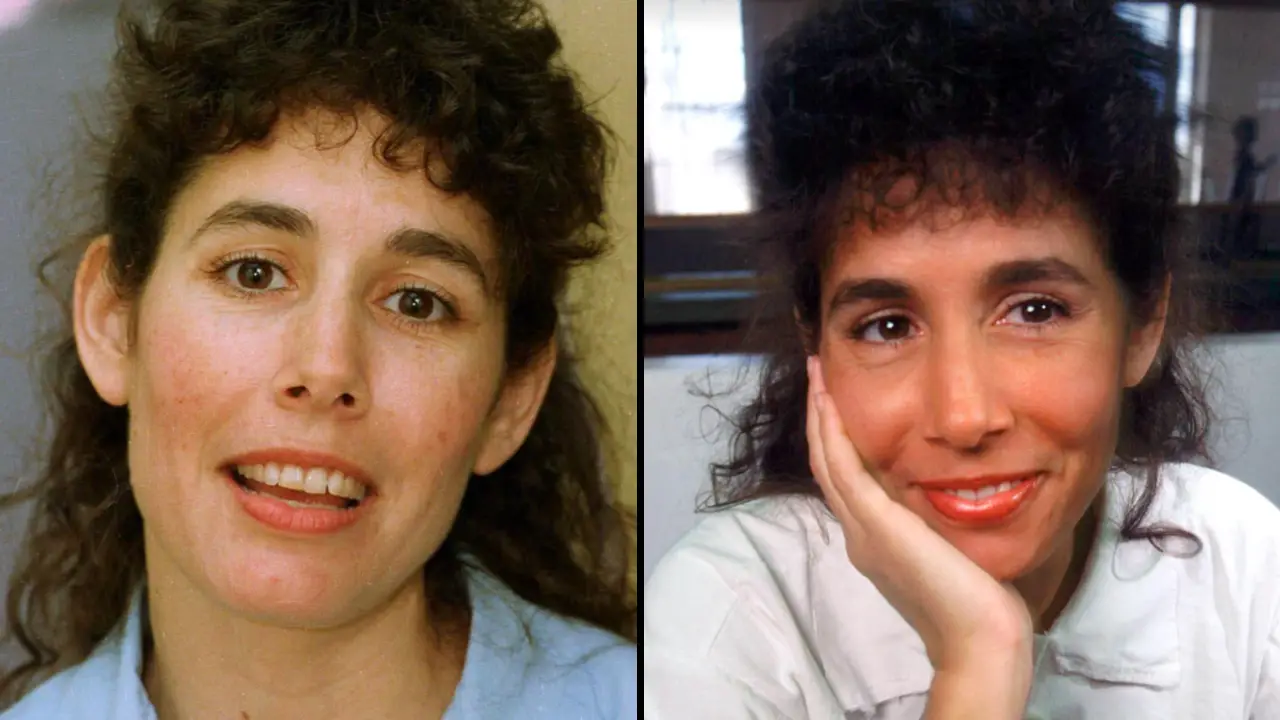
Credit: Alamy
Death Row Inmate’s Disturbing Confession Still Haunts FBI Agent
Death row inmate Karla Faye Tucker made a disturbing confession that still haunts an FBI agent.
Few criminal cases in modern American history have provoked as much moral anguish, public debate, and genuine soul-searching as that of Karla Faye Tucker.
A pickax murderer who found God behind bars, she became the unlikely face of the debate over capital punishment in the 1990s — drawing support from Pope John Paul II, evangelical Christians, and death penalty abolitionists alike.
Now, more than 25 years after her execution, a retired FBI agent has revealed that one deeply disturbing detail from Tucker’s case has never left her — a confession so chilling it arguably sealed Tucker’s fate before any appeals court ever could.
A childhood that offered no solid ground
To understand what Karla Faye Tucker became, you first have to understand what she was born into.
Born in Houston, Texas, on November 18, 1959, she was the youngest of three sisters raised in a household defined by instability and dysfunction.
Her parents divorced when she was 10, and the family structure that followed offered her almost nothing in the way of protection or guidance.
By the age of eight, Tucker had already begun using drugs.
According to journalist Beverly Lowry, who interviewed Tucker extensively in prison, she was using h****n by the age of 11 and had become s**ually active around the same time.
By 12, she was accompanying her mother — a groupie who followed rock bands across the country — and had herself become a s** worker. She was regularly using h****n, c*****e, and speed.
The family dynamic was staggering in its dysfunction. In a letter Tucker later wrote to the Texas Board of Pardons and Paroles, she described her relationship with her mother in terms that spoke volumes about the environment she grew up in.
By the early 1980s, Tucker had drifted into the world of Texas biker culture, where she began dating Daniel Garrett, a man more than a decade her senior.
It was a world of drugs, violence, and few boundaries — and it was here that the events leading to June 13, 1983 began to take shape.

A night that ended in double murder
Tucker and Garrett had been on a multi-day drug binge when they arrived at the Houston apartment of Jerry Lynn Dean in the early hours of that June morning.
The stated intention was theft — they planned to steal motorcycle parts. Dean had been a source of tension for Tucker; he had beaten her friend Shawn and had reportedly left a leaky motorcycle in her living room.
What happened next was beyond brutal. Garrett began attacking Dean with a hammer. Tucker grabbed a 15-pound pickax and joined in, striking Dean repeatedly. She later said she did so to stop him making a gurgling noise.
Dean and a woman named Deborah Ruth Thornton — who had met Dean only hours earlier and had the profound misfortune of being present that night — were both killed. Each suffered more than 20 blows. Tucker left the pickax embedded in Thornton’s chest.
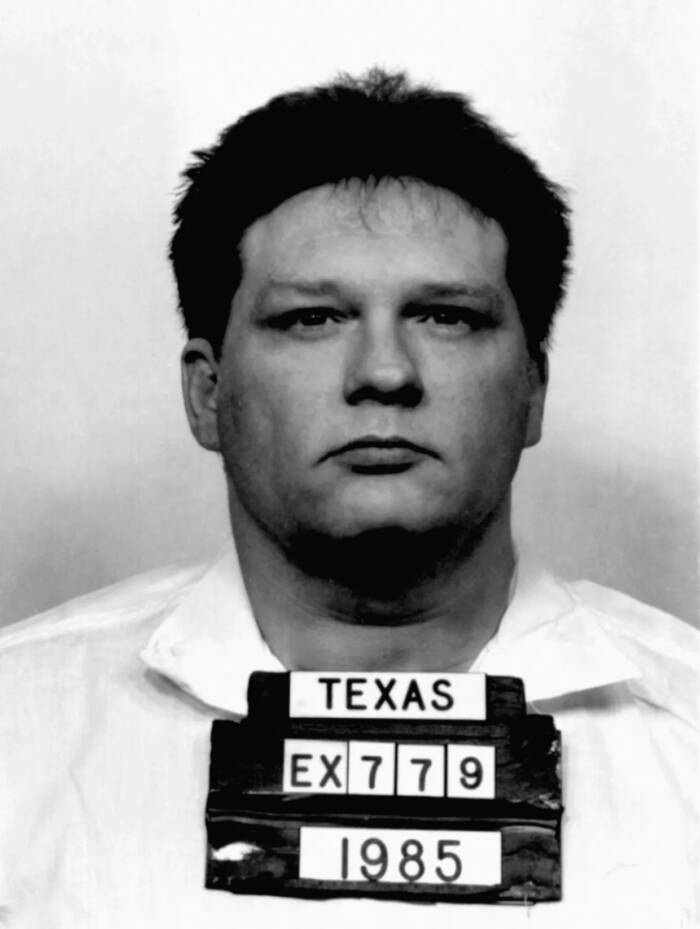
The two fled. The scene was discovered shortly after. Five weeks later, both Tucker and Garrett were arrested. At trial in April 1984, both were convicted. Tucker was sentenced to death by lethal injection.
From death row to born-again Christian
What happened next is what made Tucker’s case extraordinary. Shortly after arriving at the Texas State Penitentiary, Tucker — sober for the first time in years — picked up a Bible.
She later described finding herself on her knees on her cell floor, asking God for forgiveness. She converted to Christianity in October 1983, and in 1995 married her prison minister, Reverend Dana Lane Brown.
The transformation, by all visible accounts, was total. She was soft-spoken in interviews, remorseful in her public statements, and became an active advocate for other prisoners.
Her story attracted enormous attention as her execution date approached. Pope John Paul II, the European Parliament, televangelist Pat Robertson, Speaker of the House Newt Gingrich, and even Ronald Carlson — the brother of victim Deborah Thornton — called for her sentence to be commuted.
In January 1998, just days before her scheduled execution, Tucker appeared in a nationally broadcast interview with CNN’s Larry King, per the BBC.
She was composed, warm, even at peace. Asked whether the approaching date was getting harder to face each day, she said it was becoming ‘a little more exciting.’
She spoke of God’s plan unfolding and said she was ‘not down. A little tired sometimes, but not down. Never pessimistic.’
She was direct about her past, telling King that at first she had felt no guilt. In fact, she said, she had been proud of what she had done and had enjoyed the violence.
But she maintained she was now an entirely different person — one who posed no threat to anyone — and she held onto the belief that God might yet change the hearts of those with the power to spare her life.
Governor George W. Bush rejected her appeals, EBSCO reports. His spokeswoman stated repeatedly that the gender of the murderer made no difference to the victims.
On February 3, 1998, Tucker was executed by lethal injection at the Huntsville Unit in Texas, becoming the first woman executed in the state since 1863. Her last words were addressed to the people she loved, telling them she would wait for them.
Thornton’s husband, watching from the viewing gallery, addressed his late wife as the execution was carried out. “Here she comes, baby doll,” he said. “She’s all yours. The world‘s a better place.”

The FBI agent who can’t forget
Decades on, Tucker’s case continues to provoke strong reactions — none more arresting than those of retired FBI agent and criminal profiler Candice DeLong, who recently revisited the story on her true-crime podcast Killer Psyche, per Fox News.
DeLong, who spent 20 years on the front lines of some of the FBI’s most complex cases, has examined the psychology of countless violent offenders. But Tucker’s case, she says, has stayed with her in a way that others haven’t.
She is thoughtful about Tucker’s upbringing, acknowledging the almost impossible circumstances the young girl was placed in.
“Karla never stood a chance, a chance of having a normal life, in my opinion,” DeLong said. “She didn’t get what she needed, and she got a lot of bad stuff from someone who was supposed to take care of her.”
DeLong also points to the neurological impact of early drug use, noting that scientific consensus holds that the human brain isn’t fully developed until the mid-twenties, and that substance use during childhood can cause lasting damage — potentially including a predisposition toward violence and self-destructive behavior.
On Tucker’s religious conversion, DeLong is measured but skeptical. She notes that many prisoners find religion, and that the context of imminent execution makes sincerity difficult to verify.
“She found God, she found Jesus, so the thought among her supporters was ‘spare her,'” DeLong said. “The thing about finding God, though — I don’t think so.” She reflected that Tucker’s conversion did help her reconstruct a stable identity after a life of chaos — but whether it represented genuine transformation is a question she cannot definitively answer.

The confession that changed everything
But it is one specific detail from Tucker’s own admissions that DeLong says she has never been able to shake — and which, in her view, fundamentally shaped the public and judicial response to Tucker’s case.
Tucker admitted to police that she had experienced s**ual arousal during the killings — that she had derived pleasure from each swing of the pickax.
It was a statement she later appeared to distance herself from, but the damage, in terms of public perception, was done.
For DeLong, this single confession transformed Tucker from a troubled woman capable of redemption into something that provoked a far more visceral reaction.
“Karla was doomed from the beginning, once people found out what she did,” DeLong said. “And the worst thing she did, and she did not help herself by telling people this, was that she had an orgasm when she was killing, while she was stabbing someone.”
The implication, DeLong explained, was one that no jury, no governor, and no parole board could easily reason past. “It raises the thought of, ‘If she could do that once, could she do it again?'” she said. “What if she got out?”
In DeLong’s assessment, Tucker was ‘everybody’s worst nightmare’ — not simply a person who had committed terrible acts, but one who had taken pleasure in them, and said so.
Related Article: Chilling Reason Death Row Inmate Chose A Single Olive For His Final Meal
Related Article: Death Row Inmate Suffered ‘Excruciating’ Execution After Making Last Meal ‘Mistake’
Want more stuff like this?
Get the best viral stories straight into your inbox!
