

Credit: Facebook & www.foto-webcam.eu
Man Who Left Girlfriend To Freeze To Death On Mountain Reveals Her Final Words
The man who left his girlfriend to freeze to death on a mountain has revealed her final words.
The death of 33-year-old Kerstin G on Austria’s highest peak has become one of the most haunting mountaineering cases in recent memory — a tragedy that unfolded in darkness, freezing winds, and under the watchful eye of distant cameras.
Annie Walton-Doyle [11:33 AM]In January 2025, Kerstin set out with her boyfriend, identified only as Thomas P under Austrian privacy laws, to climb the Grossglockner, a formidable alpine giant rising nearly 3,800 metres above sea level.
What began as a shared ambition ended in catastrophe, with Kerstin dying of hypothermia just metres from the summit.
By February 2026, the case had reached a courtroom in Innsbruck, where Thomas P was found guilty of gross negligent manslaughter.
He received a five-month suspended sentence and a €9,600 fine — a verdict that ignited fierce debate across Europe and beyond.
At the heart of the case lies a chilling question: why did he leave her behind? And perhaps even more haunting — what were her final words?
The final hours on the mountain
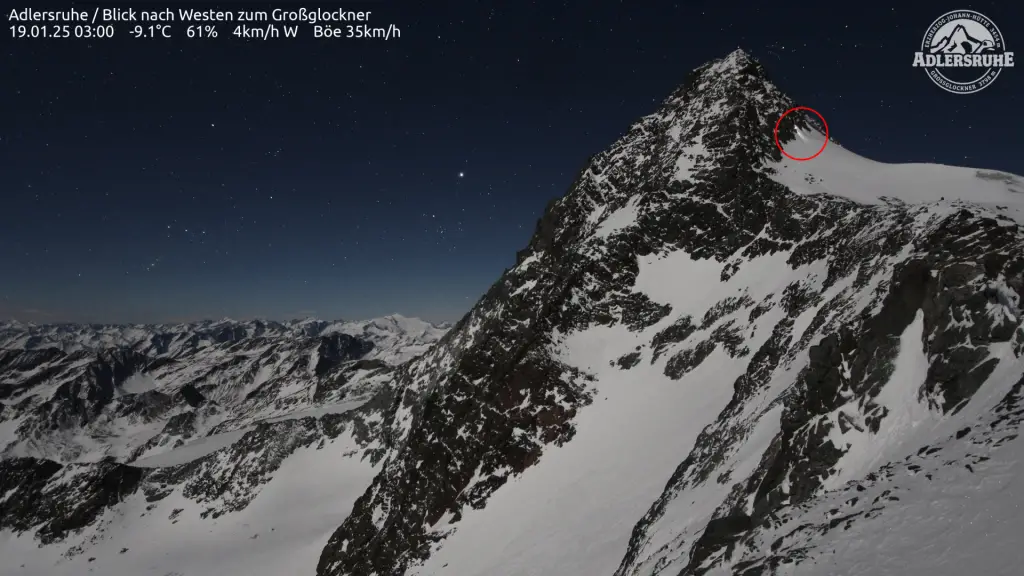
The timeline of that fatal night has been reconstructed through testimony, rescue reports, and eerie webcam images that captured the couple’s ascent in real time, per CNN.
At around 21:00 on 18 January, flickering lights from their headlamps could be seen inching up the mountainside — two small signals of life against an immense, frozen landscape. Hours later, only one light would be seen descending.
Conditions had deteriorated rapidly. Winds reached up to 74 km/h, and temperatures dropped to -8°C, with a windchill of -20°C. Prosecutors argued the couple should never have continued in such weather.
By late evening, Kerstin was struggling.
According to the defence, per the BBC, her condition suddenly worsened near the summit. She became exhausted, disoriented, and unable to continue. It was at this critical moment, Thomas P told the court, that she made a decision that would define the case.
“She told me to go,” he said during testimony. “Go on your own and save your own life.”
He claimed he stayed with her for around 90 minutes before leaving. Prosecutors, however, painted a starkly different picture — one of abandonment.
They argued that Kerstin was left ‘defenceless, exhausted, hypothermic and disoriented’ approximately 50 metres below the summit, without adequate protection from the elements.
No bivouac shelter was set up. No emergency blanket was used. No secure, wind-protected position was found.
And crucially, no immediate distress signal was sent.
The missed chances to save her
One of the most damning aspects of the case revolves around what did not happen.
At around 22:30, a police helicopter flew overhead. Video footage later shown in court confirmed the couple was still climbing at that time.
“They did not send any distress signals,” the judge noted.
Prosecutors argued that this was a critical missed opportunity — one that could have saved Kerstin’s life.
Even later, when Thomas P finally contacted the mountain police at 00:35, the nature of the call remains disputed.
Rescuers claimed it ‘wasn’t an emergency call.’ His lawyer insisted otherwise, saying he had requested help ‘as soon as possible.’
Adding to the confusion, Thomas P allegedly failed to answer return calls from rescue teams, with claims his phone had been set to silent. By around 02:00, he left Kerstin behind.
Rather than turning back immediately, he continued to the summit before descending on the other side — a decision that stunned observers and became central to the prosecution’s case.
When rescuers eventually reached Kerstin hours later, it was too late. Her body was found in a shocking position — hanging upside down from a rock face.
“We were amazed that she remained in that position,” one rescuer told the court. “If the wind had been any stronger, she would have fallen over the south face.”
A disturbing pattern emerges
As the trial unfolded, it became clear that this was not the first time Thomas P had left a partner behind on the same mountain.
An ex-girlfriend testified that during a 2023 climb, he had abandoned her in darkness after an argument.
“I was crying and screaming,” she said. “My headlight had gone out… and he just disappeared.”
This testimony cast a long shadow over the defence’s argument that the incident was a tragic accident.
Judge Norbert Hofer, himself an experienced climber, acknowledged Thomas P’s skill — calling him an ‘excellent Alpinist’ — but sharply criticised his judgment.
“Kerstin G was light-years behind him in terms of her climbing abilities,” he said. The judge concluded that the couple should have turned back much earlier.
However, he stopped short of calling the act intentional. “I don’t see you as a murderer,” Hofer told the defendant. “I don’t see you as cold-hearted.”
The letter, the obituary, and public outrage
In the aftermath of Kerstin’s death, Thomas P wrote a tribute that has since been widely scrutinised, per the Guardian.
“I miss you so much. It hurts so incredibly much. Forever in my heart. Without you, time is meaningless.”
He also co-signed her obituary with her parents — a gesture that some saw as sincere, while others viewed as deeply unsettling given the circumstances.
The case sparked intense public reaction, particularly online, where many questioned whether justice had truly been served.
Some pointed to the relatively light sentence. Others focused on the contradictions in his account.
Why didn’t he call for help sooner? Why ignore the helicopter? Why continue to the summit? And most hauntingly — why leave her at all?
A case that raises bigger questions
Beyond the tragedy itself, the case has triggered a wider debate about responsibility in extreme environments.
Prosecutors argued that Thomas P, as the more experienced climber, was effectively ‘the responsible guide for the tour.’
His defence rejected this, insisting the couple made decisions jointly.
Kerstin’s parents also stood by him, writing: “Our daughter takes responsibility for her own actions… we can’t blame her boyfriend.”
Her mother later spoke out against what she called a ‘witch hunt,’ insisting Kerstin was not naïve and had chosen to undertake the climb.
Yet a message Kerstin sent weeks before the trip complicates that narrative. In it, she admitted: “I completely lack experience when it comes to winter tours.”
The truth may lie somewhere in between — a combination of ambition, misjudgment, and rapidly changing conditions.
The final words that still echo
In the end, the case may always be defined by a single moment — a brief exchange on a freezing mountainside.
“She told me to go,” Thomas P said. Whether those words were an act of selflessness, desperation, or something else entirely may never be fully understood.
What is certain is that Kerstin G spent her final hours alone, in darkness, clinging to life in brutal conditions.
By morning, she was gone. And the image of two lights climbing a mountain, followed by only one returning, remains an enduring symbol of a tragedy that continues to raise more questions than answers.
Related Article: Death Row Inmate Suffered ‘Excruciating’ Execution After Making Last Meal ‘Mistake’
Related Article: Woman Who ‘Died And Came Back To Life’ Explains What Afterlife Is Like
Want more stuff like this?
Get the best viral stories straight into your inbox!
