
Credit: Alamy
Map Shows Hantavirus Spread As Suspected Cases Confirmed Across Continents
A map has been created showing how the deadly hantavirus outbreak has spread.
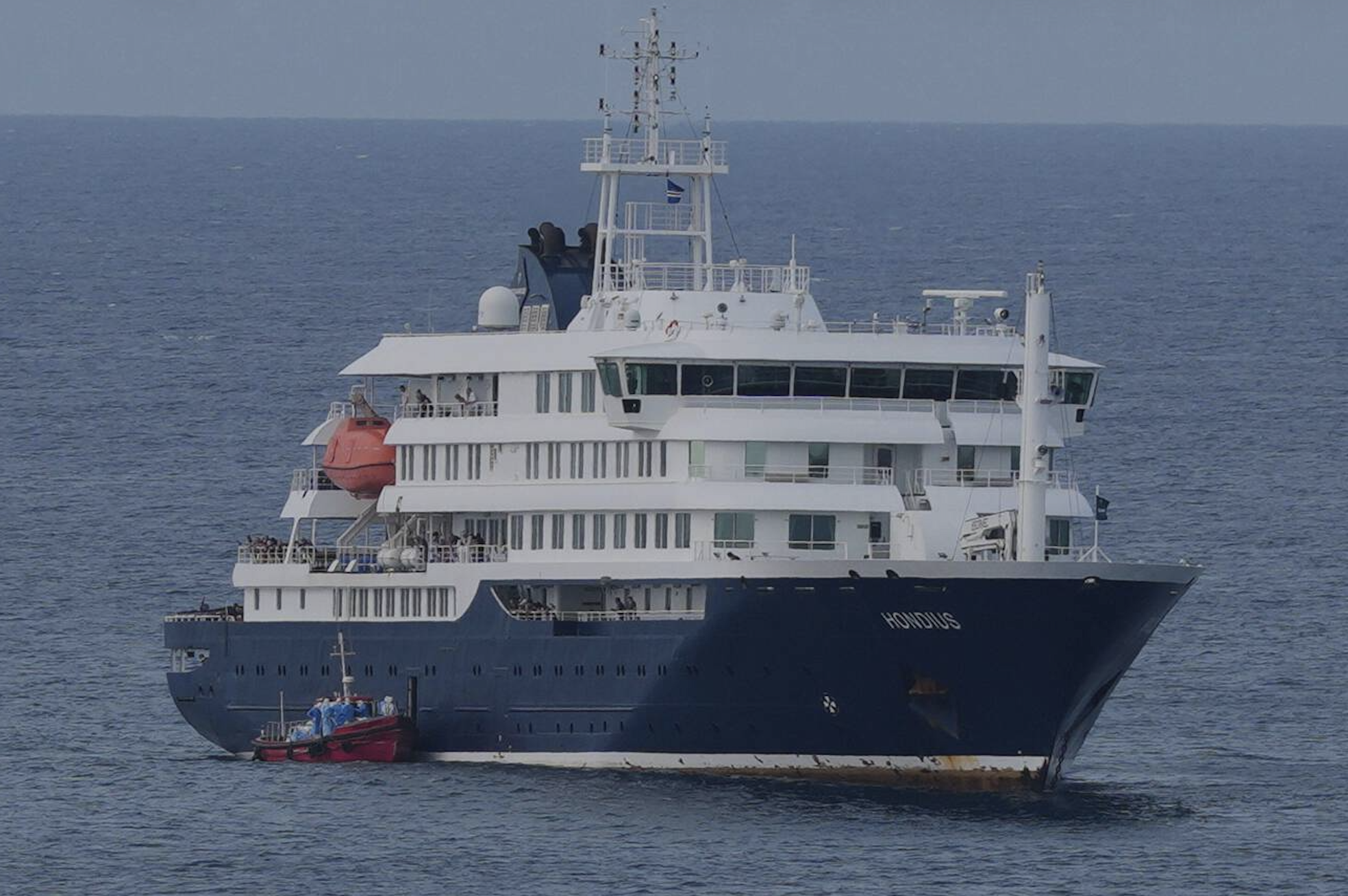
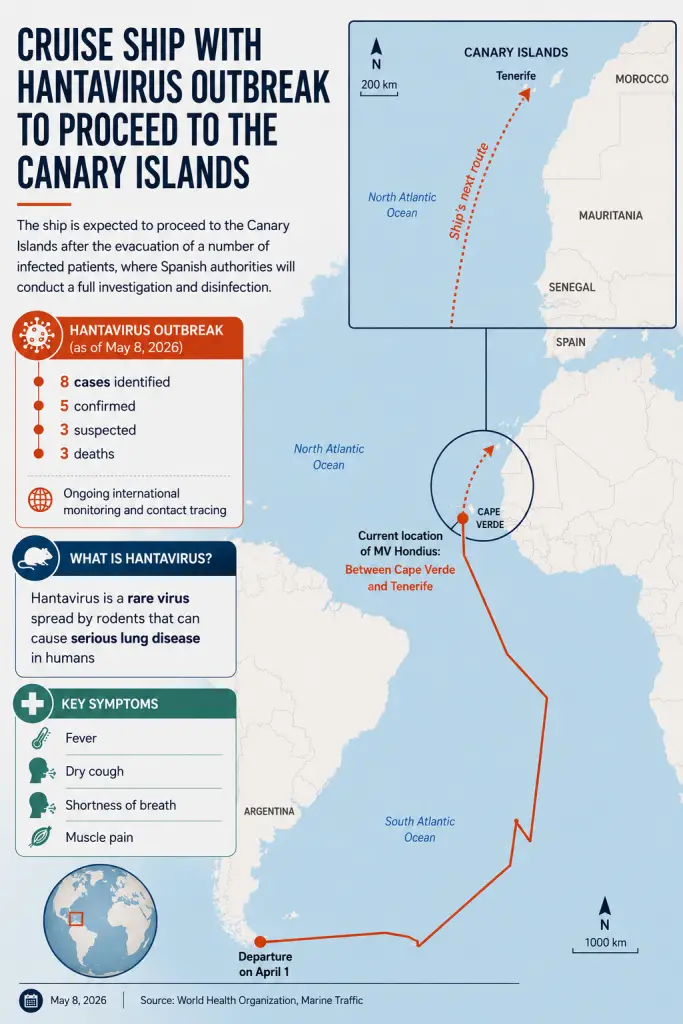
Dutch cruise liner, the MV Hondius, set sail from Ushuaia, Argentina, on April 1 for its weeks-long ‘Atlantic Odyssey’ voyage before the suspected hantavirus outbreak turned fatal.
Health officials had reported eight suspected cases by May 7, including three deaths, and had confirmed five.
Currently, passengers and crew are still aboard the cruise liner as it heads for Spain’s Canary Islands.
Oceanwide Expeditions reported that 149 people from 23 nationalities remain on board.
The luxury ship originally hoped to dock in Cape Verde on Monday to enable local health authorities to assist with the latest death.
However, Cape Verde authorities refused the request.
The country, which has a population of 500,000, said officials made this decision as a precaution, with the ‘aim of protecting national public health.’
So far, authorities have not allowed anyone to leave the boat unless they need urgent medical care.
What caused the current hantavirus outbreak?
Health officials believe they may have found the source of the current hantavirus outbreak in humans.
Rodents typically spread hantavirus through urine, droppings or saliva, often when people inhale contaminated airborne particles.
Authorities are investigating whether a birdwatching trip near Ushuaia may have been the source.
They visited a landfill site near Ushuaia in mid-March, shortly before they boarded the expedition cruise ship.
What are the symptoms of hantavirus?
Symptoms can vary depending on the strain of hantavirus, but the early signs often resemble the flu, which can make doctors struggle to identify the illness unless they know someone has been exposed to the virus.
Common early symptoms include fever, chills, muscle aches and headaches.
Symptoms may also include shortness of breath, coughing and fluid buildup in the lungs.
Other early signs of HPS can include fatigue, dizziness, nausea, vomiting and diarrhoea.
Hantavirus can also cause Haemorrhagic Fever with Renal Syndrome (HFRS), which typically presents differently.
During the first one to two weeks, symptoms may include severe headaches, back and abdominal pain, fever, chills, nausea and blurred vision.
As the illness progresses, it can lead to low blood pressure, internal bleeding, and acute kidney failure.
Dr Tedros Adhanom Ghebreyesus, WHO Director-General, said on May 7: “While this is a serious incident, WHO assesses the public health risk as low.”
He added that because of the incubation period, ‘more cases could emerge.’
How has hantavirus spread?
The cruise liner departed Ushuaia, Argentina, on April 1 for a voyage that included Antarctica and several South Atlantic islands.
On April 6, a 70-year-old Dutch passenger developed fever, headache, and diarrhoea after travelling through Argentina and Chile with his wife before boarding, according to the WHO.
He developed severe respiratory distress and died on board on April 11, although the cruise company could not determine the cause of death at the time.
Six more passengers joined the cruise at Tristan da Cunha on April 15, while crew members kept the Dutch man’s body onboard until they removed it at St Helena on April 24.
His wife and more than two dozen passengers also left the ship there and traveled to at least 12 countries before authorities started contact tracing.
The Dutch woman developed symptoms on April 25 and flew from St Helena to South Africa on a flight carrying 88 passengers and crew members.
She collapsed at the airport and died the following day.
A British passenger then developed severe respiratory symptoms on board on April 27.
Authorities evacuated him to South Africa, where doctors admitted him to intensive care.
Another passenger, a German woman, fell ill on April 28 as the ship sailed towards Cape Verde.
On May 2, the German passenger died onboard, becoming the third fatality, while South African officials confirmed the first positive hantavirus case after testing the British passenger.
WHO announced on May 3 that it was responding to a suspected outbreak aboard the ship before officially classifying it as an outbreak the following day, after South African authorities confirmed the Dutch woman had also tested positive posthumously.
Cape Verde authorities later refused to let passengers disembark as more crew members, including the ship’s doctor, became seriously ill.
On May 6, medical teams evacuated three sick people to Europe, while Swiss authorities confirmed another positive case in a former passenger who had left the ship in St Helena, bringing confirmed cases to five.
Health officials identified the strain as the Andes virus – the only hantavirus known to spread between humans – and by May 7, authorities across multiple countries had started tracing passengers and isolating close contacts linked to the cruise.
Related Article: Officials Reveals Origin Of Hantavirus Outbreak On Cruise Ship That Killed Three
Related Article: Haunting Final Post Of Teenager Found Dead On Cruise Ship
Want more stuff like this?
Get the best viral stories straight into your inbox!
