
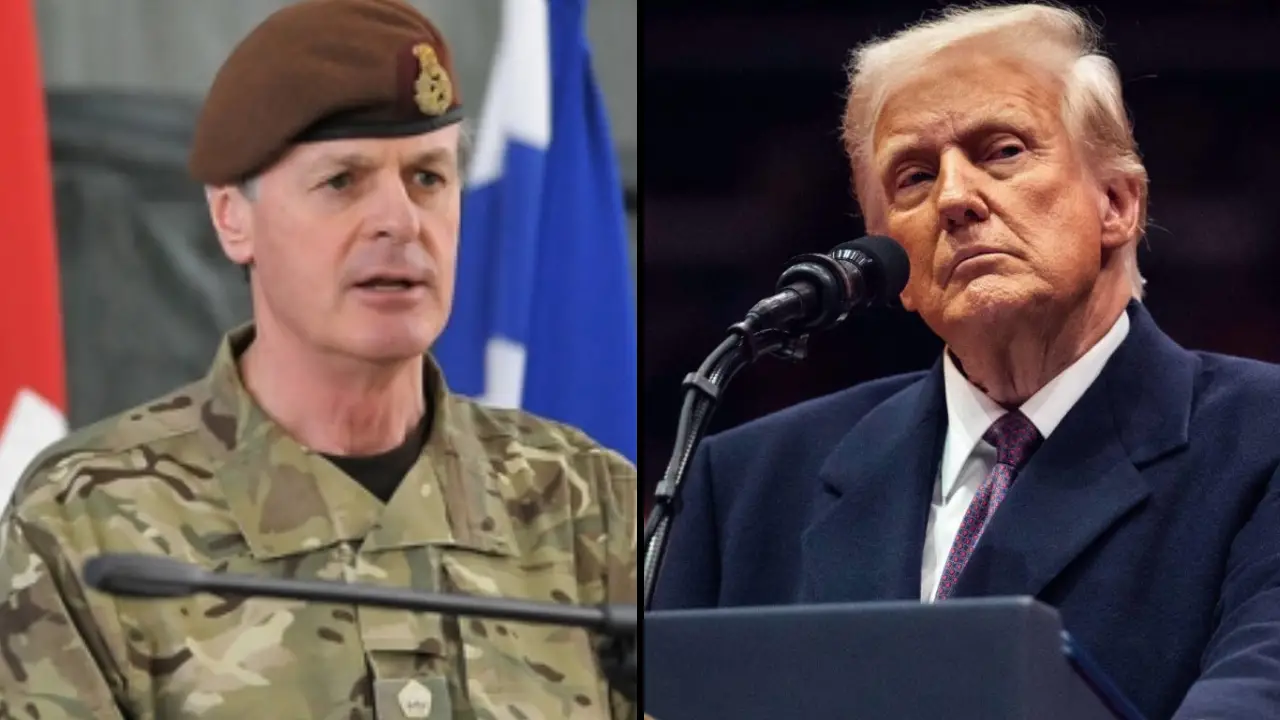
Credit: BBC & Alamy
NATO Commander Issues Chilling WW3 Warning As Threat Grows
Richard Shirreff, the former deputy supreme allied commander of NATO in Europe, has issued a chilling warning about WW3.
The United States, under President Donald Trump, has embarked on one of the most aggressive and controversial foreign policy campaigns in modern American history — and the consequences, according to some of the West’s most senior military minds, could be catastrophic.
From coordinated airstrikes on Iran to strained alliances with longtime partners, Trump’s administration has upended decades of diplomatic norms in a matter of weeks.
And now, a former NATO commander is sounding the alarm in the starkest terms possible.
How Trump’s aggressive foreign policy is shaking the world
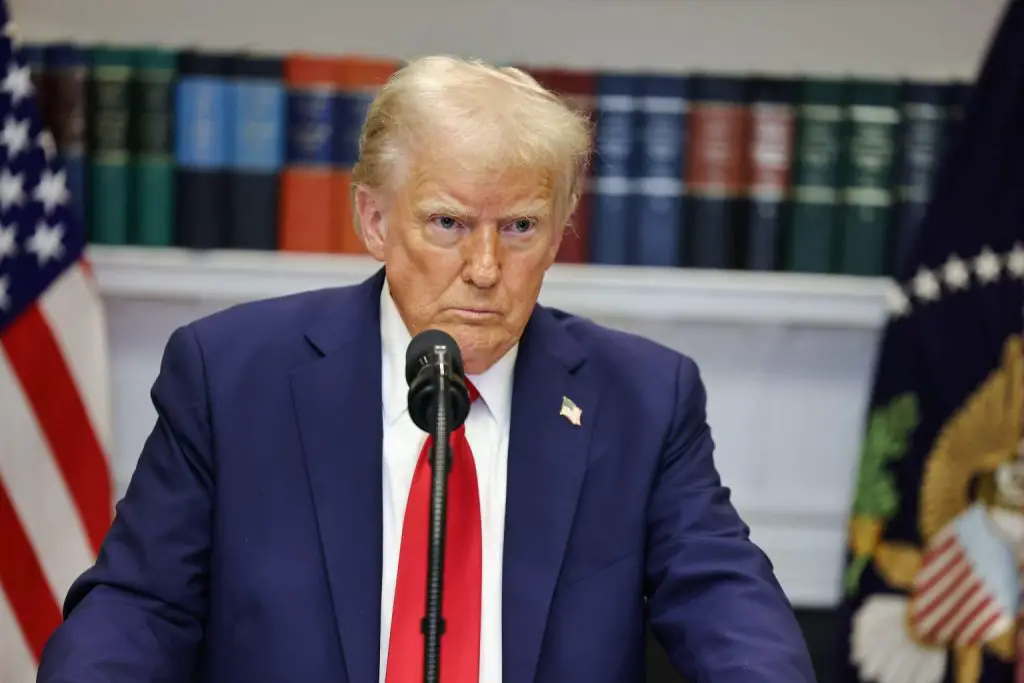
Donald Trump has never been a president who plays it safe, but his second term has taken American unilateralism to an entirely new level.
On Saturday, February 28, 2026, the United States and Israel launched coordinated military airstrikes against Iran in a mission that was, by any measure, extraordinary in its ambition and its audacity.
The stated goals were sweeping: eliminate Iran’s Supreme Leader, Ayatollah Ali Khamenei, and permanently dismantle the country’s nuclear program and long-range missile capabilities, capabilities that Washington and Jerusalem have long described as an existential threat to the Western world.
Trump confirmed the outcome in a post on Truth Social, announcing Khamenei’s death and declaring, with characteristic bravado, that ‘monumental damage’ had been done to all Iranian nuclear sites.
But Trump’s aggressive posture has not been limited to Iran, per The Week. Across Latin America, Eastern Europe, and the broader Middle East, the administration has pursued a strategy that critics describe as reckless regime change dressed up as national security.
Russia’s deputy security council chairman Dmitry Medvedev has already characterized Trump’s actions as ‘a war by the US and its allies to preserve global dominance,’ warning that if Trump ‘continues his insane course of criminally changing political regimes, it will undoubtedly begin’ — referring, of course, to World War Three.
The fractures within NATO are deepening
Perhaps just as alarming as Trump’s military adventurism abroad is what his administration is doing to NATO from within.
Relations between Washington and its European allies have deteriorated sharply, with European officials growing increasingly exasperated by what they see as an American president more interested in cozying up to adversaries than defending the alliance that has kept the peace for eight decades.
Trump’s notably soft approach toward Moscow has been a particular source of tension.
European officials are deeply concerned that the administration’s reluctance to hold Russia accountable is emboldening Vladimir Putin, and that any territorial concessions made to end the war in Ukraine will set a dangerous precedent for authoritarian regimes worldwide.
The fear, expressed openly in European capitals, is that Putin’s ambitions do not end with Ukraine — and that a distracted, transactional America will not be there when the next crisis hits.
NATO Secretary General Mark Rutte has already warned that the West ‘must be prepared for the scale of war our grandparents and great-grandparents endured.’
UK Prime Minister Keir Starmer echoed that sentiment at the Munich Security Conference in February, declaring that Europe ‘must be ready to fight’ Russia ‘if necessary,’ per Gov.uk.
The Iran war: what has actually happened?
The conflict with Iran has escalated with breathtaking speed. What began as coordinated US-Israeli airstrikes on February 28 quickly spiraled into something far more complex and dangerous.
The US military says it has struck around 1,700 targets since the conflict began, targeting Iranian government buildings, military installations, and critical infrastructure.
Iran’s response has been ferocious, and, by some accounts, surprising even to hardened observers.
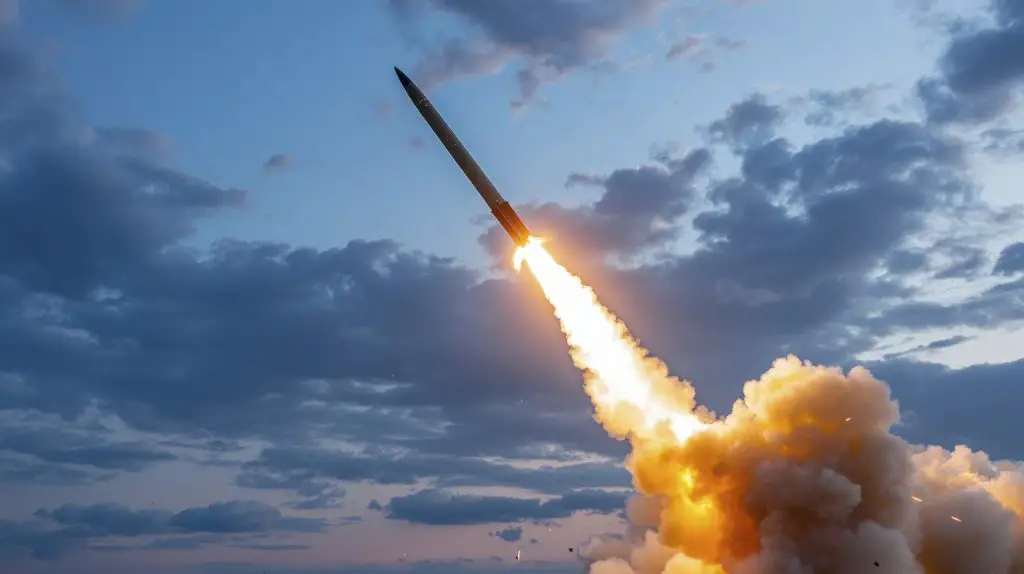
Tehran has launched waves of missile strikes affecting at least 11 countries, including the United States indirectly via Kuwait, and Britain indirectly through its RAF base at Akrotiri in Cyprus.
An Iranian-made drone struck the Akrotiri base early on a Monday morning, bringing the conflict uncomfortably close to British soil.
Israel has simultaneously intensified its bombardments in Lebanon, while Iranian retaliatory strikes in the Persian Gulf have sent oil prices surging — gas prices have jumped 25% and oil has hit $114 a barrel, with ordinary Britons and Americans already feeling the pain at the pump.
A fire broke out near the US consulate in Dubai amid the latest wave of strikes, underscoring just how rapidly the crisis is spreading across the region.
Iran declared 40 days of mourning following Khamenei’s death, but grief curdled quickly into fury. The country is not collapsing. It is fighting back — and the implications of that are profound.
The allies who said no
One of the most significant and underreported dimensions of the Iran conflict is how isolated the United States and Israel actually are.
A number of key allies have refused to participate in or endorse the military campaign, a stark reminder that Trump’s approach to foreign policy has burned bridges that may take years to rebuild.
The reluctance of traditional partners to fall in line reflects deep unease about the legality, the strategy, and the potential consequences of the strikes.
Several European governments have been particularly critical, with opposition also growing domestically in the United States. Democrats in Congress have raised pointed questions about the constitutional basis for the strikes, with many demanding that Trump seek congressional authorization before going any further.
The political debate in Washington has only added to the sense that America is dangerously divided at precisely the moment when unity matters most.
A world on multiple knife-edges
Even before the Iran conflict erupted, the global security environment was more fragile than at any point in decades.
Now, with the Middle East in flames, analysts and officials are desperately worried about what happens next — and not just in the Gulf.
Russia remains the dominant threat in Europe. A YouGov survey found that between 41% and 55% of Western Europeans now believe another world war is likely within the next five to ten years.
In the United States, 45% of Americans share that grim assessment. Most alarming of all: between 68% and 76% of respondents across Western nations expect that any such conflict would involve nuclear weapons.
Moscow has already begun testing NATO’s defenses with a series of airspace incursions into Estonia, Romania, and Poland. Russian balloons have entered Lithuanian and Polish airspace from Belarus.
The Institute for the Study of War has concluded that Russia is ‘intensifying its covert and overt attacks against Europe’ in preparation for a possible NATO-Russia war in the future.
In response, Estonia, Latvia, Lithuania, Poland, and Finland have all announced they are withdrawing from a landmark landmine treaty as they urgently shore up their border defenses.
In Asia, China looms large. Beijing has been watching the Iran crisis closely, and some analysts believe Xi Jinping may calculate that an America bogged down in the Middle East is an America too distracted to defend Taiwan.
The People’s Liberation Army has already conducted live-fire exercises in the Taiwan Strait, tested new landing barges that could facilitate an amphibious assault, and unveiled deep-sea cable cutters capable of severing another nation’s internet access.
Many observers anticipate that China could look to make a decisive move on Taiwan by 2027.
North Korea, meanwhile, continues to accelerate its weapons programs.
Kim Jong Un has launched ballistic missiles, overseen tests of a new nuclear-capable destroyer, and deployed thousands of North Korean troops to fight alongside Russian forces in Ukraine — a move that has raised serious concerns about what military technology Moscow might offer in return.
What the former NATO commander actually said
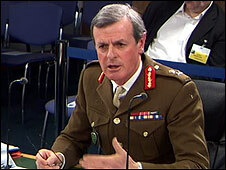
It is against this backdrop of compounding crises that Richard Shirreff, the former deputy supreme allied commander of NATO in Europe, has issued his extraordinary warning, per LBC.
Speaking publicly and writing in the Mail, Shirreff said he ‘cannot remember a more perilous moment in geopolitics in his lifetime’ — a statement that carries enormous weight coming from a man who has spent decades at the heart of Western military planning.
Shirreff was scathing about Trump’s handling of the Iran situation. He described the president’s earlier claim of total success against Iranian nuclear sites as ‘clearly an error or a lie,’ and accused him of having ’embarked on a new and far more perilous scheme of regime change with no overarching strategy to bring it to an end.’
He noted that there is ‘a growing sense in the Western military community’ that the campaign has ‘already spiralled out of control,’ and expressed alarm at the ferocity of Iran’s response, which he said had ‘shocked even hardened observers.’
Most chillingly, Shirreff outlined what he sees as the domino effect that the Iran conflict could trigger.
If the US gets ‘sucked’ into a ground war in the Middle East, he warned, China and Russia would ‘waste no time’ exploiting the situation.
Xi Jinping could ‘seize the opportunity to launch his longed-for invasion of Taiwan, perhaps as soon as 2027,’ while Putin would ‘only double down’ on Ukraine as American weapons and attention are diverted away from Europe.
His conclusion was stark and unambiguous: “Add war in Europe and war in Asia to war in the Middle East and that’s World War Three in anyone’s book — but this time, all the major powers would go into the conflict possessing weapons that could kill billions.”
Shirreff warned that the fate of the world now ‘depends on how quickly America can extricate itself from the messy and dangerous situation unfolding in the Middle East.’
And in a sentence that may well be remembered for years to come, he delivered his most haunting assessment: “The US and Israel launched these strikes to prevent nuclear proliferation. It would be the most terrible irony in history if that very action was the trigger for a nuclear war that destroyed civilisation as we know it.”
Related Article: Surprising Loophole That Could Make Barron Trump Exempt From A Military Draft If WW3 Breaks Out
Related Article: Melania Trump Warned People Responsible For Barron Trump Photo Would Face ‘Immediate Consequences’
Want more stuff like this?
Get the best viral stories straight into your inbox!
