
Credit: Alamy & Sky Sports
Six Olympic Events That No Longer Exist Today
With the 2026 Winter Olympics fully underway, let’s take a look at the six games from its past that no longer exist – and find out the reason why.
This year’s Winter Olympics are taking place in Italy, co-hosted for the first time by two cities, Milan and Cortina d’Ampezzo, utilizing venues across northern Italy.
The games began on February 6 and will run until February 22 of this month, featuring more than 2,900 athletes competing in 16 disciplines from over 90 countries.
Did you know that out of those sixteen sports, eight are being played on ice and the other eight on snow! Of course you did. But what I’m about to tell you next, I bet you never knew.
The Olympics haven’t always looked like this.
Likely, you’ve never heard of the six medal events that have been permanently banned from the Olympics forever.
Before high-tech performance suits, ultra-HD broadcasts, and billion-pound infrastructure, the games were experimental. Sometimes chaotic. Occasionally bizarre. And in a few cases… wildly questionable.
But before we get caught up in historical dramas, let’s jump into what’s happening in today’s Winter Games so you realize the contrast couldn’t be sharper.
Olympic drama
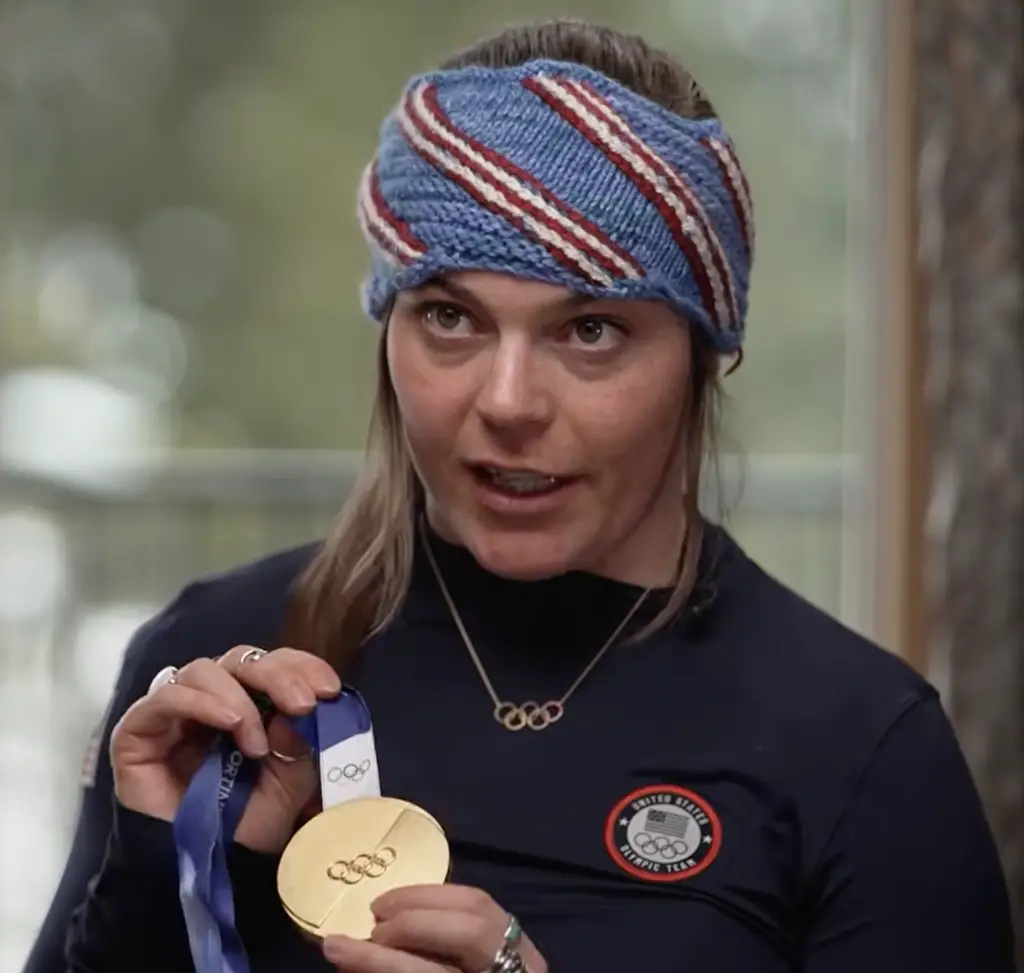
One of the most viral moments at this year’s Olympics was when a skier accidentally broke her own gold medal while jumping up and down in celebration.
“It’s definitely heavy. Heavier than I expected,” Breezy Johnson told USA Today, following the incident.
“I think that’s maybe why it broke.” She clarified that it wasn’t ‘crazy broken, but it’s a little broken.’
But wait a minute, apparently, she isn’t the only one to have broken her gold! So what’s happening with the Olympic medals?
Alysa Liu won a gold as part of the US figure skating team’s victory, and soon posted on Instagram about her Olympic hardware meeting a similar fate.
Don’t fret, they have now received replacements.
Then there’s the Norwegian biathlete who didn’t break his medal, nor any record yet, but his heart. And if experts are to be believed, his social s**cide on the Olympic podium shortly after winning his first individual bronze also broke his teammates’ hearts.
Norwegian biathlete Sturla Holm Laegreid’s public confession about a personal relationship mid-Olympics raised quite some eyebrows.
He chose his post-podium interview to apologize to his former girlfriend for cheating. In doing this, he has also managed to shift the limelight from his team’s victory celebration to his personal scandal.
Unfortunately, and perhaps as expected, his former partner said his action is ‘hard to forgive.’
Meanwhile, another athlete went viral for asking her university professor for an assignment extension, citing Olympic participation as proof she deserved one.

Canadian figure skater Maddie Schizas shared her own cutely relatable drama on Instagram. The 22-year-old is currently pursuing her Sociology degree at McMaster University.
“I am a student in your Sociology 2FF3 course and am wondering if I could get a short extension on this week’s reflection,” she wrote in the letter.
Some proof that no one can escape deadlines, be it a world-renowned figure skater or the humblest yours truly!
Although she later updated: “I was competing in the Olympic Games yesterday and thought the reflection was due on Sunday, not Friday.
“Since it seems everyone was quite invested, I did get my extension lol. I can’t believe anyone cared so much.”
Well it seems being an Olympian helps dodge deadlines after all!
So back in the day, the Olympics were obviously not so much of a global media phenomenon as it is now, but it had its own peculiarities.
In many ways, that’s the biggest shift of all – so let’s take a look at the six games of the Olympics that no longer exist.
1. Tug of war – When the Olympics looked like sports day
Yes. Actual tug of war.
From 1900 to 1920, teams lined up, grabbed a rope, and pulled with all their might. It was officially part of athletics. Medals were awarded. National pride was on the line.
The twist? Sometimes club teams, even police departments, represented entire countries. Imagine explaining that selection process in today’s elite, hyper-regulated sporting world. It was competitive, dramatic, and oddly charming.
As the Olympics evolved into a showcase of individual athletic skill, tug of war quietly slipped off the program.

2. Live pigeon shooting – The most controversial ever
At the 1900 Paris Games, competitors shot live pigeons released into the sky. Nearly 300 birds were killed during the competition.
Even at the time, the event raised eyebrows. It remains the only Olympic event in history to involve live animals as targets.
Public discomfort ensured it never returned, with clay targets replacing feathers in future shooting competitions.
If ever there was proof that sporting ethics evolve, this is it.
3. Plunge for distance – The art of doing almost nothing
Introduced in 1904, this ‘swimming’ event required competitors to jump into a pool and float underwater without moving. No strokes allowed. No splashing. Just drifting. Whoever traveled the furthest within 60 seconds won. Unsurprisingly, it only lasted one year.
Turns out, spectators prefer visible effort. Floating quietly under the surface didn’t quite deliver edge-of-your-seat drama.
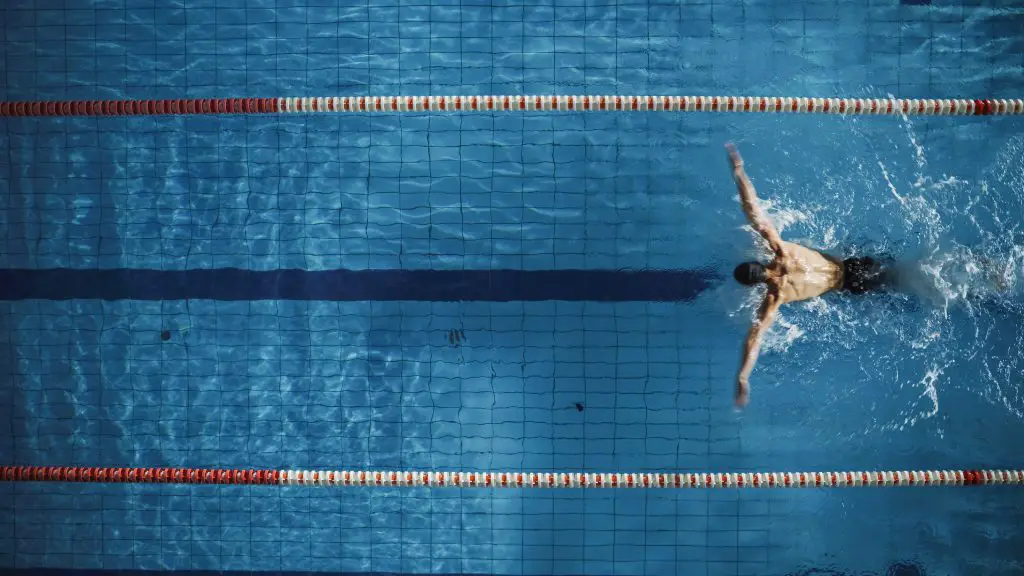
4. Solo synchronized swimming – Synchronized… with yourself?
For years, solo synchronized swimming was an Olympic medal event. Which naturally raises the question: synchronized with whom? Answer: The music.
Athletes performed choreographed routines alone, judged on artistic performance and technical precision. Although undeniably skilful, the concept confused audiences.
Eventually, the games moved toward duet and team formats, where synchronization actually involves more than one person.
5. Ski ballet – Grace on a gentle slope
In the 1980s and early 90s, freestyle skiing included ski ballet. Competitors performed spins, flips, and choreographed routines to music on a mild slope. Think figure skating, but strapped to skis.
It was elegant. It was theatrical. It was also incredibly difficult to judge consistently.
By the mid-1990s, ski ballet had been removed in favor of faster, more adrenaline-fueled freestyle disciplines that better appealed to global audiences.

6. Running deer shooting – A different era entirely
This early 20th-century event involved shooting at a moving deer target gliding across a track, designed to simulate hunting conditions. Practical? Perhaps. Olympic-level spectacle? Debatable.
As the games moved towards globally accessible, standardized and spectator-friendly events, niche competitions like this faded into history.
So, as you watch the action unfold across the ice rinks and snow-covered slopes of northern Italy this year, remember this: the Olympics once included rope-pulling, pigeon shooting, and underwater drifting.
Related Article: People Threaten To Boycott World Cup As Trump Bans 15 Countries From Entering US
Related Article: Teenager Dies After Doing ‘Run It Straight’ Trend That ‘Should Be Banned’
Want more stuff like this?
Get the best viral stories straight into your inbox!
