
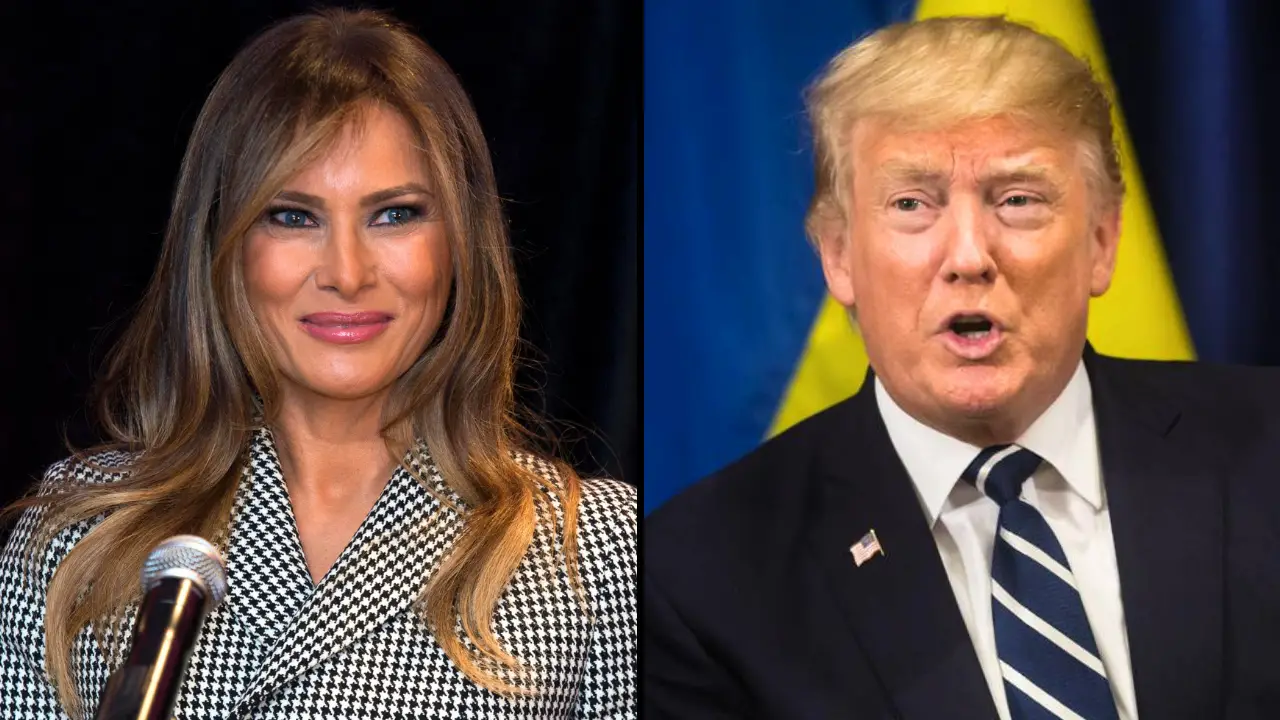
Credit: Alamy
What Would Happen To Melania If Donald Trump Died In Office
The internet is discovering what would happen to Melania if Donald Trump died while in office.
Speculation about the health of Donald Trump has become a recurring feature of his second term in the White House.
At 79, the oldest person ever elected to the presidency, every public appearance — from visible bruising on his hands to moments critics describe as rambling speeches — has been dissected online and across media.
Rumors have periodically spiraled, including one episode in 2025 when his brief absence from public view sparked unfounded claims of his death before he reappeared to shut them down.
Against this backdrop, attention has increasingly shifted toward a quieter, more elusive figure: Melania Trump.
Unlike many of her predecessors, she has maintained a notably low profile during this term, reportedly spending limited time at the White House and continuing to divide her time between New York and Florida. Reports and commentary have suggested that she and the president live largely separate lives, adding further intrigue to questions about what would happen if the unthinkable occurred.
If a sitting president were to die in office, the constitutional, political, and personal consequences would unfold rapidly — and for Melania, they would be profound, complex, and in many ways unpredictable.
Immediate constitutional shockwaves
The moment a sitting president dies, the US Constitution leaves no ambiguity about what happens next. Under the 25th Amendment, the vice president is sworn in almost immediately to ensure continuity of power.
In this case, JD Vance would become president within hours, stepping into the role with full authority. That transition would not only reshape the administration — it would instantly redefine Melania’s position.
Her title as First Lady would end at that exact moment. The role would pass to Usha Vance, who would become the new First Lady, inheriting the platform, staff, and expectations tied to it.
For Melania, the shift would be abrupt: from one of the most visible — if selectively engaged — roles in the world, to none at all.
A state funeral and national mourning
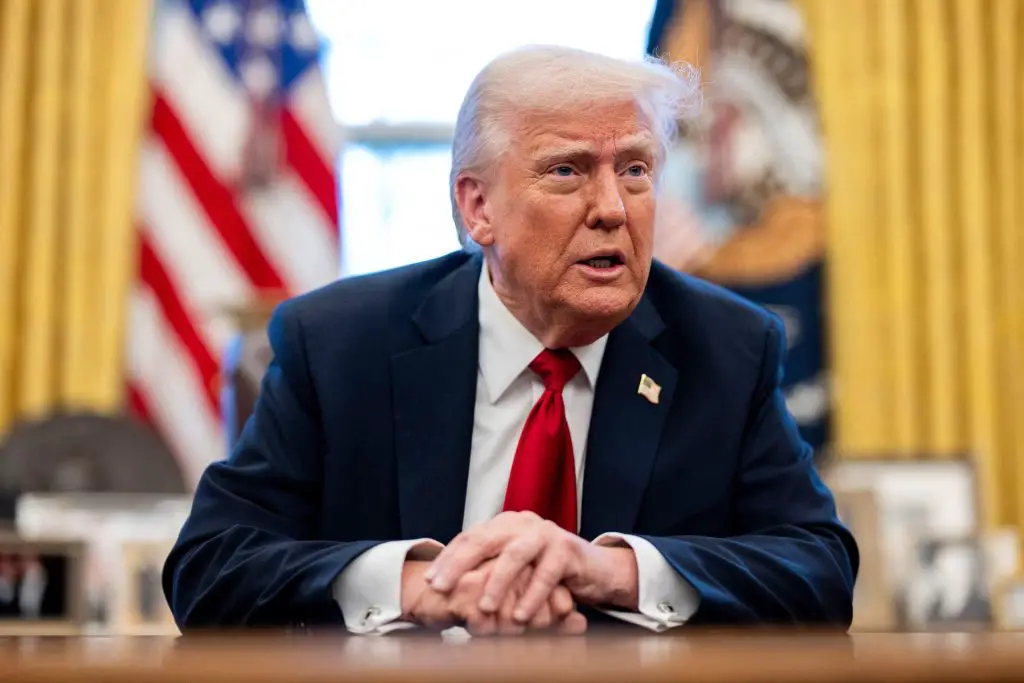
If a president dies in office, the United States enters an official period of mourning marked by a state funeral — an elaborate, highly symbolic event watched by millions globally, per the List.
There is historical precedent here. When John F. Kennedy was assassinated in 1963, his widow Jacqueline Kennedy Onassis played a central role in shaping the ceremony, drawing on historical traditions and carefully curating the symbolism that defined the moment.
Melania would likely face similar expectations. She would attend every stage: the transfer of remains, the lying in state at the Capitol, and the funeral service itself, likely held at Washington National Cathedral.
She could be consulted on key decisions — burial location, ceremony details, guest lists — but whether she would actively shape the proceedings is far less certain.
Those familiar with her approach to public life suggest she does not feel bound by traditional expectations. That unpredictability means she might either step forward in a defining moment — or remain distant, participating only as required.
The end of her role
Beyond symbolism, the practical consequences would be immediate. Melania would no longer be First Lady, and with that, she would lose access to the infrastructure that supports the role, per Grunge.
Her White House staff, already relatively small compared to previous administrations, would transition to the new First Lady. The residence itself would also no longer be hers.
Historically, transitions happen quickly — after Kennedy’s assassination, his family vacated the White House within weeks to make way for Lyndon B. Johnson.
Melania, however, may face fewer logistical challenges than her predecessors. She has never fully centered her life in Washington during this term, instead maintaining homes in New York and at Mar-a-Lago in Florida.
It is widely expected she would return to one — or both — of those locations.
Public grief — or private distance?
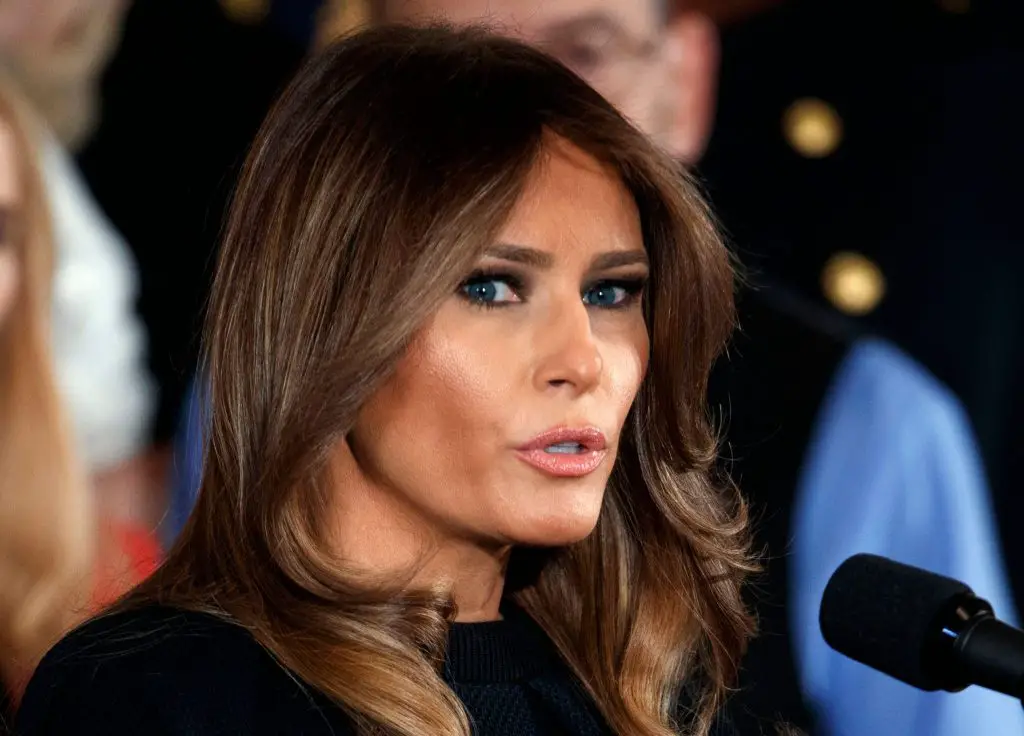
One of the most unpredictable elements of this scenario is how Melania would respond emotionally, at least in public.
Throughout her time in the spotlight, she has often defied expectations of how a First Lady ‘should’ behave.
Her reaction to major events — including a 2024 assassination attempt on her husband — was notably restrained, with limited public statements and delayed appearances.
That pattern suggests her mourning process, if faced with such a loss, might not align with public expectations. While figures like Jacqueline Kennedy became enduring symbols of national grief, Melania may choose a far more private path.
This difference would almost certainly spark commentary, particularly in an era dominated by social media, where public figures are scrutinized in real time.
Financial security — with complications
Financially, Melania would likely remain secure, though the details would depend on private legal arrangements.
Donald Trump has long been associated with complex financial structures, including trusts, real estate holdings, and longstanding questions about debts and liabilities.
Any inheritance would be governed by his will and the couple’s prenuptial agreements, which have reportedly been renegotiated multiple times.
Melania could inherit significant assets — but potentially also exposure to financial obligations tied to his estate. At the same time, she has her own independent wealth, built through modeling, business ventures, and media deals.
Additionally, she would be eligible for certain federal benefits available to presidential widows, including a modest pension and allowances for office space and travel.

Lifetime protection — with one condition
Even after leaving the White House, Melania would not lose all official support.
Under US law, spouses of presidents receive lifetime protection from the Secret Service. This security detail would remain in place indefinitely — unless she chose to decline it.
There is one exception: remarriage. If she were to marry again, those protections would be withdrawn, a provision rooted in longstanding federal policy, Nicki Swift reports.
A media storm unlike any other
If a sitting president were to die, the global media response would be immediate and overwhelming. For Melania, this would mean an intense level of scrutiny unlike anything she has faced before.
Journalists, biographers, and broadcasters would seek insight into both the president’s final days and her private life. The pressure to speak publicly would be immense.
Historically, some presidential widows have engaged with the press selectively. Jacqueline Kennedy, for example, granted only a handful of interviews after her husband’s death, carefully controlling the narrative that would shape his legacy.
Melania, known for her guarded nature, might go even further — declining most opportunities and maintaining strict control over any public statements or projects.
Her son would likely come first
Amid all the speculation, one constant is clear: her son, Barron Trump, would almost certainly be her top priority.
Melania has long been described as fiercely protective of him, consistently shielding him from media attention even during highly public moments. In the event of a presidential death, that instinct would likely intensify.
The surge in media interest would inevitably extend to Barron, and managing that attention would become a central focus of her decisions in the aftermath.

A future entirely on her terms
Perhaps the most defining aspect of this hypothetical scenario is the freedom it would bring.
For years, Melania’s public identity has been tied to her husband’s political career. His death would sever that connection in an instant, leaving her with complete autonomy over her future.
She could retreat entirely from public life, continuing her preference for privacy. Alternatively, she might choose to engage on her own terms — through another memoir, media projects, or selective public appearances.
There is also the possibility, as history has shown with figures like Jacqueline Kennedy, that she could remarry and reshape her life in a completely different direction.
From First Lady to historical figure
Ultimately, if Donald Trump were to die in office, the immediate focus would be on constitutional stability and national mourning. But for Melania Trump, the transformation would be deeply personal as well as public.
She would move from First Lady to presidential widow — a rare and historically significant position held by only a handful of women in American history.
What she does next would not be dictated by law or precedent, but by choice. And given her history of defying expectations, it is that uncertainty — more than anything else — that would define her next chapter.
Related Article: Shocking Ratings Show What America Really Thinks Of Melania Trump
Related Article: Melania Trump’s ‘Furious’ Response To Leaked Barron Trump Phone Call
Want more stuff like this?
Get the best viral stories straight into your inbox!
