
Credit: Adobe Stock
Every Green-Eyed Person Has One Thing In Common
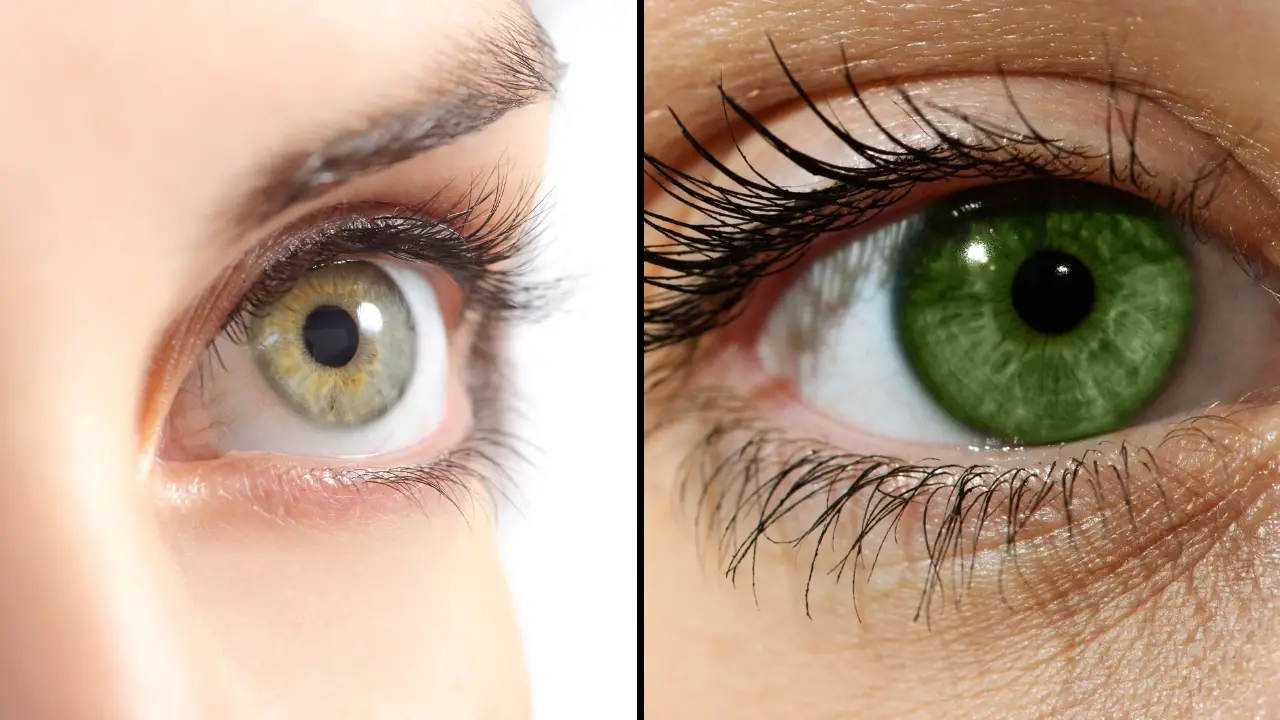
Green eyes have long been considered one of the most striking physical features a person can have, and all green-eyed people have this one thing in common.
From Scarlett Johansson and Emma Stone to Rihanna and Tom Cruise, some of the world‘s most recognizable faces share the unusual eye color, yet relatively few people actually do.
Scientists estimate that only around two percent of the global population naturally has green eyes, making them the rarest naturally occurring eye color in the world.
Brown eyes account for the vast majority of people, while blue eyes are found in roughly eight to ten percent of the population.
But researchers say green-eyed people have something else in common besides their unusual appearance.
Although there isn’t a single ‘green eye gene,’ scientists have discovered that almost everyone with green eyes shares a fascinating genetic history that stretches back thousands of years, and it all begins with a handful of ancient mutations that spread across Eurasia.
Green eyes are much rarer than most people realize
Eye color is determined primarily by the amount and type of melanin found in the iris.
Brown eyes contain large amounts of melanin, while blue eyes contain very little.
Green eyes sit somewhere in between.
Rather than being produced by a green pigment, the color actually results from a combination of relatively low melanin levels, a yellowish pigment called lipochrome, and the way light scatters through the layers of the iris.
Researchers have found that this combination creates the green appearance people recognize.
Because so many genetic factors have to align for this to happen, green eyes remain exceptionally uncommon worldwide.
According to multiple population studies, only around two percent of people naturally have green eyes, with the highest concentrations found in Northern, Central and Western Europe.
Ireland and Scotland are widely regarded as having some of the highest proportions of green-eyed people anywhere in the world, while the trait is also relatively common in Iceland and the Netherlands.
That rarity has helped fuel centuries of myths about green-eyed people possessing everything from magical powers to mysterious personalities.
Modern science, however, tells a far more interesting story.
It’s far more complicated than one single gene
For years, many people believed eye color was inherited through a simple dominant-versus-recessive system, with brown eyes dominating over blue and green.
Scientists now know the reality is much more complex.
Rather than one gene deciding eye color, researchers have identified several genes that all contribute to the final result.
Among the most important are OCA2 and HERC2, both located on chromosome 15.
The OCA2 gene helps regulate melanin production, while HERC2 acts almost like a control switch, determining how strongly OCA2 is expressed.
Different combinations of variants in these genes influence whether someone develops brown, hazel, green or blue eyes, although other genes—including SLC24A4, TYR, IRF4 and SLC45A2—also play important supporting roles.
Recent research published in Scientific Reports in 2026 further reinforced that eye color is a polygenic trait, meaning numerous genetic variants work together rather than one single mutation determining the final outcome.
Researchers found that even people carrying the same HERC2 variant can still end up with different eye colors because additional genes influence pigmentation.
That explains why siblings can sometimes have completely different eye colors despite sharing the same parents.
Scientists believe all green-eyed people have one thing in common
While blue-eyed people are often linked to a single ancient founder mutation near the Black Sea, green eyes appear to have emerged slightly differently.
Instead of one identifiable ancestor, scientists believe green eyes developed through a combination of genetic variants that became established in ancient Eurasian populations thousands of years ago.
Ancient DNA studies suggest some of the earliest known evidence for light-colored eyes, including green eye-associated genetic markers, has been found in human remains dating to the Bronze Age in southern Siberia.
Researchers believe those variants later spread westward through population migrations across Eurasia before becoming concentrated in areas around the Caucasus Mountains, the region stretching between modern-day Russia, Georgia, Armenia and Azerbaijan.
The European Journal of Human Genetics has previously reported that certain genetic combinations associated with green eyes are significantly more likely to occur in people with ancestry from the Caucasus than in individuals from Central Asia.
Researchers suggested this is likely due to population-specific genetic variations interacting with the OCA2 and HERC2 genes over thousands of years.
In other words, while not every green-eyed person descends from one single ancestor in the way blue-eyed people may, scientists believe they all inherited combinations of genetic variants that originated within the same broad region of Eurasia before spreading across Europe through migration.
Evolution may have helped keep the rare eye color alive
Exactly why green eyes survived, and remained so rare, continues to fascinate researchers.
Unlike skin pigmentation, where natural selection provided clear survival advantages depending on sunlight exposure, eye color appears to have been shaped by several different evolutionary pressures.
Researchers have suggested that everything from environmental adaptation to sexual selection may have contributed.
One theory proposes that unusual eye colors became attractive simply because they were uncommon.
The European Journal of Human Genetics noted that eye color may have evolved under multiple ‘sexual, cultural, and environmental’ selection pressures rather than one single biological advantage.
That could explain why lighter eye colors became increasingly common across parts of Europe despite offering no obvious survival benefit.
Unlike brown eyes, which dominate globally because they contain more protective melanin, green eyes appear to have persisted largely because the underlying genetic combinations continued being passed down through generations.
Green eyes aren’t the only color with an unusual genetic story
Scientists have uncovered equally fascinating histories behind several other eye colors.
Brown eyes are considered the ancestral human eye color.
Evidence suggests the earliest modern humans all had brown eyes because higher melanin levels offered greater protection from ultraviolet radiation in Africa.
Blue eyes, meanwhile, tell perhaps the most famous genetic story.
Researchers at the University of Copenhagen previously concluded that almost every blue-eyed person alive today inherited the same ancient mutation affecting the HERC2 gene, which reduced melanin production by switching down activity in OCA2.
Professor Hans Eiberg, who led the research, famously explained: “Originally, we all had brown eyes. But a genetic mutation affecting the OCA2 gene resulted in the creation of a switch which literally turned off the ability to produce brown eyes.”
Although newer ancient DNA research has refined exactly when that mutation first appeared, scientists still agree that virtually all naturally blue-eyed people inherited variations of the same founder mutation.
Green eyes, by contrast, appear to result from several interacting genetic variants rather than one single mutation.
So what do all green-eyed people actually have in common?
Despite persistent myths claiming green-eyed people are more intelligent, more emotional or possess unique personality traits, scientists say none of those claims are supported by evidence.
Instead, what genuinely links almost every green-eyed person is genetics.
Their eye color exists because of a rare combination of inherited variants affecting pigmentation genes, particularly OCA2 and HERC2, that researchers believe originated thousands of years ago among ancient Eurasian populations before spreading across Europe through migration.
That shared ancestry is why green eyes remain concentrated in particular parts of the world today, despite being found in people from many different countries and ethnic backgrounds.
So while celebrities like Emma Stone, Scarlett Johansson, Rihanna and Tom Cruise may have very little else in common, they do share one remarkable biological connection with millions of other green-eyed people around the world.
Behind those unusually colored irises lies a genetic story stretching back thousands of years, one that scientists are still continuing to unravel.
Related Article: Scientists Discover Missing Continent After 375 Years
Related Article: NASA Explains Why You Can Sometimes See The Moon During The Day
Want more stuff like this?
Get the best viral stories straight into your inbox!
