

Credit: Adobe Stock
People Shocked After Learning What ‘O’ In ‘O’Clock’ Actually Means
People are stunned after discovering what the ‘o’ in ‘o’clock’ really stands for.
It’s a word most people say every single day without giving it a second thought, yet a viral online discussion has left countless people questioning something they’ve been using their entire lives.
The surprising revelation began after one simple question sparked a flood of theories across social media, with many admitting they had never stopped to consider where the familiar phrase actually came from.
A simple question that left the internet baffled
The debate started when one user took to Threads with a straightforward question that quickly captured people’s attention.
They wrote: “What’s the meaning of ‘o’ in o’clock???”
It didn’t take long for the post to gain traction, with thousands of people weighing in to share their own interpretations of the mysterious letter.
Some were convinced it stood for ‘zero,’ while others suggested it represented ‘Omega.’
There were even more unusual ideas, including one user who proposed it referred to ‘oida,’ a Viennese slang term meaning ‘old person.’
The variety of responses highlighted just how little many people actually know about one of the most common expressions in the English language.
For plenty of users, the discussion raised a question they had never even considered before.
One commenter summed up the reaction perfectly, writing: “Now I want to know its origin,” reflecting the curiosity shared by many others reading through the thread.
Why so many everyday phrases have hidden histories
As the conversation gathered momentum, people began pointing out that the English language is full of familiar words and phrases whose original meanings have gradually been forgotten.
Expressions that feel completely ordinary today often have fascinating backstories rooted in history, culture, or changing technology.
Over time, language evolves, spellings shift, and shortened versions replace longer expressions until the original meaning fades from everyday memory.
That’s why discussions like this often spread so quickly online, they remind people that even the most ordinary words can have unexpectedly rich histories.
The conversation about ‘o’clock’ also prompted comparisons with several other everyday expressions that many people use without knowing where they originated.
One notable example is the word ‘OK,’ which has a surprisingly unusual story of its own.
According to Merriam-Webster, the now-universal expression dates back to the early 19th century, when American writers enjoyed deliberately misspelling words as part of a humorous trend.
The dictionary explains: “‘All right’ became ‘O.W.,’ as an abbreviation for ‘oll wright.’ And ‘all correct’ became o.k., as an abbreviation for ‘oll correct.’”
Although those intentionally incorrect spellings were originally intended as jokes, one abbreviation ultimately stuck and went on to become one of the most widely recognized words in the world.
It serves as a reminder that language is constantly changing, and many familiar expressions have origins that are far stranger than people realize.
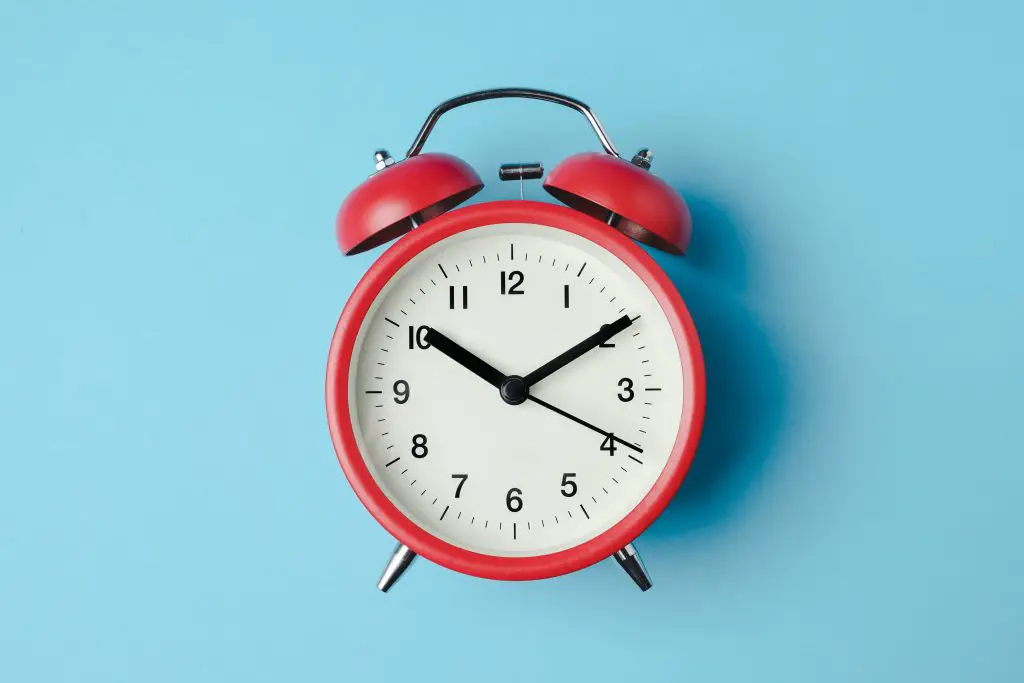
Social media users uncover the historical explanation
As speculation continued to build, several users stepped in with a more historically accurate explanation that quickly began gaining support.
Rather than representing a standalone word or symbol, they suggested the mysterious letter was actually part of a much older phrase.
One user explained: “At the invention of the clock, many people used the sundial, so to make the distinction, many people using the clock would state it’s ‘of the clock.’”
The explanation caught many readers by surprise because it tied the phrase directly to a period when mechanical clocks were still relatively new.
Before clocks became commonplace, people commonly estimated the time using sundials or by observing the position of the sun.
As mechanical timepieces became more widely available, it became useful to distinguish between an estimated time and one being read directly from a clock.
John Brown, posting under the username @johnbrown2812, echoed the same explanation.
He wrote: “The phrase ‘o’clock’ is a contraction of ‘of the clock,’ which was historically used to specify the time according to the clock.”
His response helped reinforce the historical context behind the phrase, giving people a clearer understanding of why the expression exists in the first place.
Many users admitted they had never heard this explanation before despite using the phrase virtually every day.
Others joked that they would never hear someone say the time in quite the same way again.
What the ‘o’ in ‘o’clock’ actually means
The mystery ultimately has a remarkably simple answer.
The ‘o’ in ‘o’clock’ is actually a shortened form of the word ‘of.’
Centuries ago, saying ‘three o’clock’ literally meant ‘three of the clock,’ specifying that the time was being read from a mechanical clock rather than estimated by other methods, such as a sundial.
Over time, the longer phrase was shortened into the version people still use today.
The Britannica Dictionary also supports this explanation, noting that the apostrophe in the word reflects the missing letters.
“An apostrophe is used in o’clock because the word is a contraction of the phrase ‘of the clock,’” they explain.
So while the phrase has become so familiar that few people ever stop to question it, every time someone says it’s “5 o’clock” or “8 o’clock,” they’re unknowingly using a centuries-old expression that dates back to the early days of mechanical timekeeping.
For many people following the viral discussion, the discovery was another reminder that even the most ordinary words often have fascinating histories hiding in plain sight.
Related Article: People Are Only Just Realizing What The Fourth Side Of The Cheese Grater Is For
Related Article: People Are Only Just Realizing What WC Toilet Sign Actually Stands For
Want more stuff like this?
Get the best viral stories straight into your inbox!
