
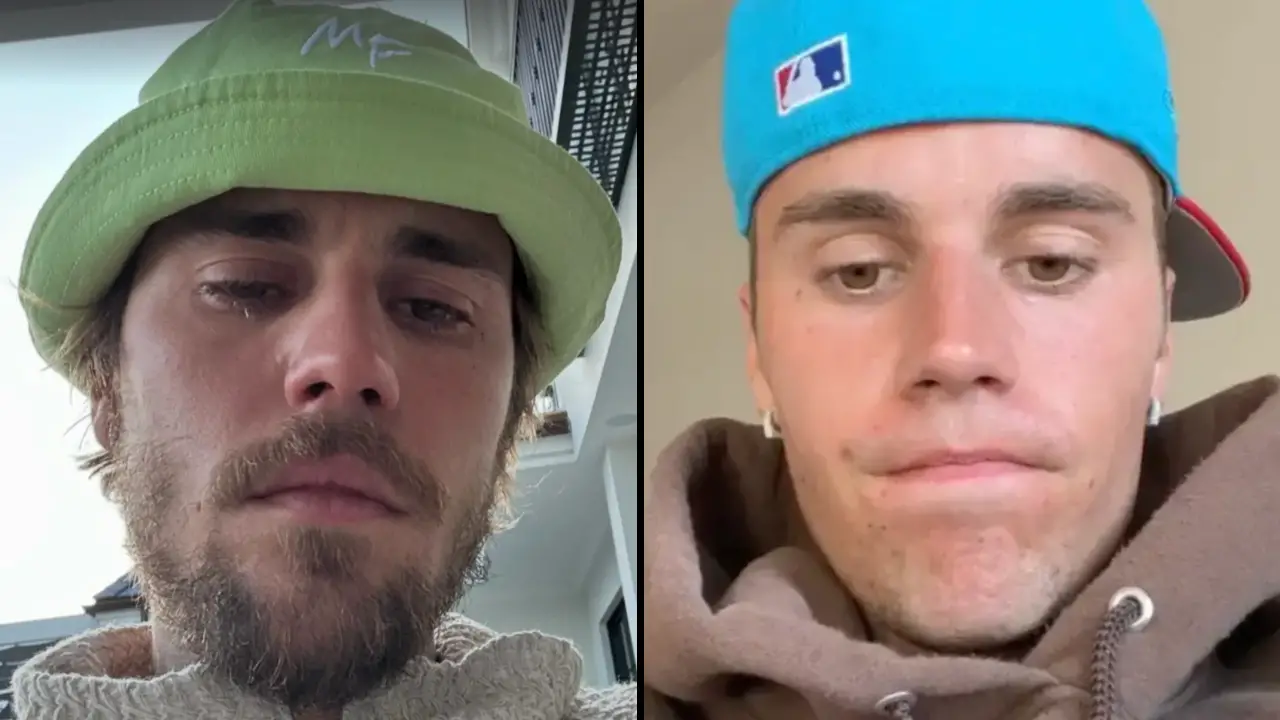
Credit: @lilbieber/Instagram
Justin Bieber Makes Heartbreaking Confession And Leaves Fans Devastated
Justin Bieber has made a heartbreaking confession to his fans that has left the world devastated.
There are few stories in modern pop music as complicated as that of Justin Bieber. Discovered on YouTube at 13, he was launched into a level of global fame most adults couldn’t navigate — let alone a child from a small town in Ontario.
The screaming fans, the sold-out arenas, the chart-topping hits: from the outside, it looked like a fairy tale.
From the inside, it was something far more difficult to live through. And now, at 31, Bieber has opened up about what that experience truly cost him — in a series of emotional posts that have left fans around the world heartbroken.
A career unlike any other
To understand what Bieber is processing, you have to understand the extraordinary arc of his life. Discovered by manager Scooter Braun after posting covers on YouTube, he signed with RBMG Records at just 13 and released his debut EP My World in 2009.
It went platinum in the US. Within months, he was one of the most recognizable teenagers on the planet — a status that came with adulation and with hatred in roughly equal measure.
The years that followed brought extraordinary highs and public lows. In 2014, at the height of his fame, he was arrested on suspicion of driving under the influence and later convicted of a reckless driving charge.
His mental health became the subject of constant tabloid speculation. He was photographed looking gaunt and disheveled.
He spoke publicly about addiction and depression. He described battling imposter syndrome. He was, by his own account, struggling in ways the world preferred to reduce to punchlines.
The turning point, by many accounts, came with his marriage to Hailey Baldwin in 2018 and a deepening commitment to his Christian faith.
He released Changes in 2020 and Justice in 2021, signaling what felt like a genuine return.
Then, in June 2022, came another setback: Bieber revealed he had been diagnosed with Ramsay Hunt syndrome, a rare neurological condition causing partial facial paralysis.
The remaining dates of his Justice World Tour — 130 shows in total, of which only 49 had been completed — were ultimately canceled in early 2023. He cited exhaustion and ongoing health issues.
The business behind the music
The tour’s collapse had significant financial consequences. The full run had been expected to gross hundreds of millions of dollars.
Instead, it brought in closer to $75 million, and some reports estimated Bieber could have lost up to $20 million on the venture after unrecoverable costs. His team disputed the figures, but the whispers persisted.
They were amplified further when, in January 2023, Bieber sold his entire publishing and recorded music catalog to Hipgnosis Songs Capital for a reported $200 million.
On paper, a strong return — years of future royalties converted into a substantial lump sum. But the timing, coming so soon after the tour’s collapse, struck observers as significant.
At 28, he was selling the rights to Baby, Love Yourself, Peaches, and dozens of other defining songs — something artists typically do decades later, if at all. The question of whether it was a savvy financial move or a necessary lifeline has never been fully answered, Forbes reports.
Not long after, he ended his partnership with Scooter Braun, the manager who had discovered him as a teenager and shaped virtually every chapter of his career. No detailed public explanation was given.
Braun has since faced his own industry controversies. Bieber replaced his business manager with Edward White, an advisor previously associated with Johnny Depp’s financial affairs.
His wife Hailey, was reported to be taking a more active role behind the scenes. He distanced himself from Drew House, the streetwear brand he had long championed, and quietly began moving toward a new lifestyle venture, SKYLRK.

A quiet return
Despite the turbulence, Bieber has not disappeared. In 2025, he returned to music with two albums — Swag and Swag II — signaling an appetite to create again. His profile on Spotify has remained remarkable throughout his silence, a testament to the enduring reach of his catalogue even without new releases.
He was announced as a headliner for Coachella 2026, one of the most prestigious bookings in live music.
But his relationship with performing remains clearly complicated. In a Halloween Twitch livestream, he was candid about the toll touring takes.
“Touring takes so much out of you, and I’ve done it since I was a kid,” he said. “Even the idea of touring sounds super daunting. I always start out really loving it and then it gets to a point where I am super burnt out.”
Rather than committing to another grueling world tour, he described a different vision — picking a single city, doing two nights, and returning home.
“I really wanna do a spot-date where I pick a city and do a couple of shows and not commit to a whole two years,” he said.
For someone who spent much of his childhood and adolescence on the road, the desire to protect his time with wife Hailey and their young son Jack feels less like retreat and more like hard-won wisdom.
Fans left devastated by Justin Bieber’s confession
It was against this backdrop — the health struggles, the business changes, the quiet albums, the cautious reemergence — that Bieber posted a series of messages on Instagram in late December that stopped his fans in their tracks, per Vice.
He wrote with a directness and emotional honesty that clearly resonated. He spoke of carrying anger, of asking God why, of wounds that don’t show on stage. He described learning to forgive — not to excuse what happened to him, but to prevent it from continuing to define him.
He spoke of healing in terms that felt genuine and specific rather than performative. Fans flooded the comments with tears, support, and their own reflections on what his music had meant to them through hard times of their own.
For many longtime supporters, it was both devastating and cathartic — the latest chapter in a story they have followed for more than fifteen years, watching a child become a global phenomenon, then watch that phenomenon almost unravel, and now, perhaps, begin to find something more solid.
But Bieber’s message was not only about himself.
“I grew up in a system that rewarded my gift but didn’t always protect my soul,” he wrote. “There were moments I felt used, rushed, shaped into something I didn’t fully choose. That kind of pressure leaves wounds you don’t see on stage.”
He was clear that he was not speaking from a place of ongoing victimhood. “I’m not speaking as a victim still bleeding — I’m speaking as someone restored,” he wrote. “Because I’m healed, I can forgive. Not to pretend injustice didn’t happen, but so it doesn’t keep living through me.”
And then came the passage that resonated most widely. “I don’t want revenge. I want redemption. I don’t want to destroy the industry. I want it transformed. What happened to me was real but it doesn’t get the final word. Jesus didn’t help me cope, he restored my identity. I’m not a product. I’m not what the industry demanded. I’m a son.”
His conclusion was both a personal declaration and an industry-wide appeal: “I don’t want to burn the music industry down. I want to see it made new — safer, more honest, more human.”
Related Article: Justin Bieber Sells Rights To His Songs For $200 Million
Related Article: Hailey Bieber Faces Backlash Over Dress She Wore To Friend’s Wedding
Want more stuff like this?
Get the best viral stories straight into your inbox!
