
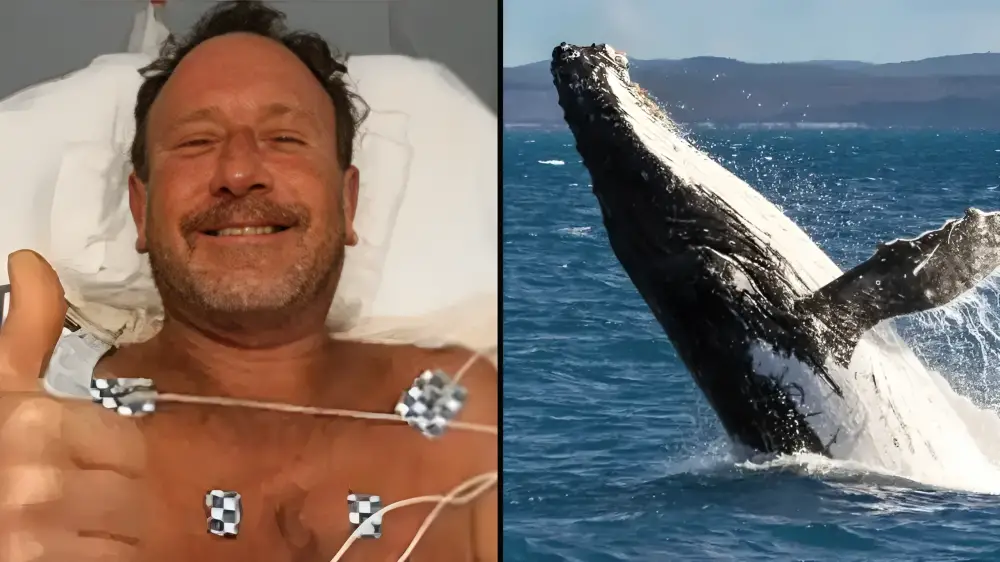
Credit: Packard Family & Alamy
Man Swallowed Whole By Whale Says It Wasn’t Even The Scariest Thing To Happen To Him
A man who was swallowed whole by a whale says it wasn’t even the scariest thing to happen to him.
Some people live cautiously, avoiding risk wherever possible. Others seem to attract danger in ways that defy explanation. For commercial diver Michael Packard, life has been anything but predictable—and certainly not safe.
Long before his now-famous encounter with a whale, Packard had already faced a life-threatening ordeal that would leave most people shaken for years. In fact, by his own account, being swallowed whole by a massive sea creature wasn’t even the most terrifying experience he’s endured.
It’s this perspective that makes Packard’s later story all the more extraordinary.
A routine day turns unthinkable
The day of the whale encounter began like countless others. Packard, an experienced lobster diver, set out early in the morning off the coast of Cape Cod. The conditions were normal, and his first two dives went smoothly.
There was no indication that anything unusual, let alone life-altering, was about to happen.
On his third descent, however, everything changed in an instant.
Without warning, Packard felt an immense force slam into him. “It was like a freight train,” he recalled to Cape Cod Times. One moment, he was diving peacefully; the next, everything went dark.
Water rushed violently around him. He could feel intense pressure across his entire body as he was propelled through the water at high speed. Disoriented and unable to see, his first instinct was fear—and confusion.
At first, he thought he might have been attacked by a shark.

Realizing the impossible
As the seconds passed, Packard began to understand what had actually happened, and the realization was almost harder to process than the impact itself.
He had been swallowed. Not by a shark, but by a whale.
Inside the creature’s mouth, everything was pitch black. Water churned around him, and the pressure made it difficult to think clearly. His breathing regulator had been knocked loose in the chaos, forcing him to quickly grab it and get it back into place.
In that moment, survival instincts took over.
Still, the situation felt hopeless. Packard was convinced he wasn’t going to make it out alive. “This is it,” he remembered thinking. “This is how you die.”
His thoughts turned immediately to his family, his wife and children, highlighting just how real the danger felt.
Trapped in darkness
Time seemed to stretch as Packard remained inside the whale. Though the entire ordeal lasted less than a minute, it felt much longer.
The whale thrashed and moved erratically, likely just as confused and distressed as the diver trapped inside its mouth. Packard struggled to orient himself, unsure of what would happen next.
Despite the chaos, there was a strange clarity to his thoughts. He understood the gravity of the situation and accepted, at least momentarily, that this might be the end.
Then, just as suddenly as it began, everything changed again.
A sudden escape
Without warning, the whale surged upward toward the surface. Packard could feel the movement as the animal accelerated and began shaking its head.
Then came the moment he would later describe in unforgettable terms.
“Boom—I just flew out of its mouth,” he said.
In an instant, he was no longer trapped in darkness but floating on the ocean’s surface, gasping for air and trying to comprehend what had just happened.
The transition was surreal. One second, he was certain he was going to die; the next, he was alive, staring up at the sky.
Back on the surface
As Packard floated in the water, he became aware of his inflated dry suit, which had expanded and made him buoyant, almost like a human life raft.
Though he had escaped the whale, he wasn’t entirely out of danger. Rapid changes in depth can lead to decompression sickness, commonly known as ‘the bends,’ a potentially serious condition for divers.
Still, in that moment, survival felt like a miracle. “I’m messed up, I know,” he thought, “but I think I’m going to live.” And he did.
Rescue crews eventually brought him back to safety, and aside from some injuries and bruising, he survived the ordeal remarkably well, especially considering the circumstances.
Packard’s experience quickly captured global attention. The idea of a person being swallowed by a whale and living to tell the tale sounds like something out of fiction, more akin to a scene from an animated movie than real life.
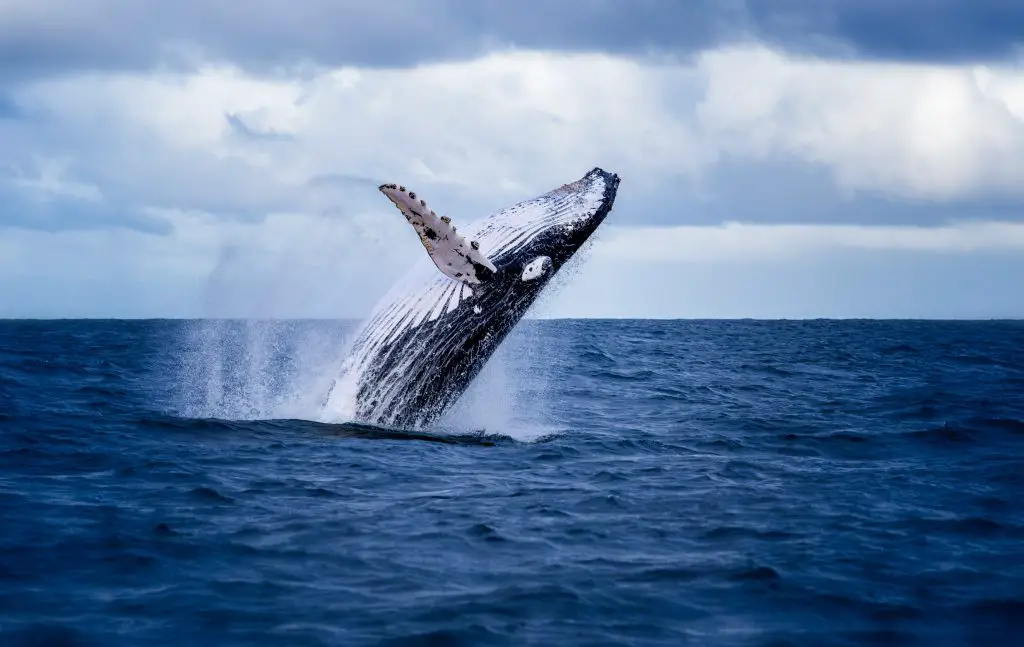
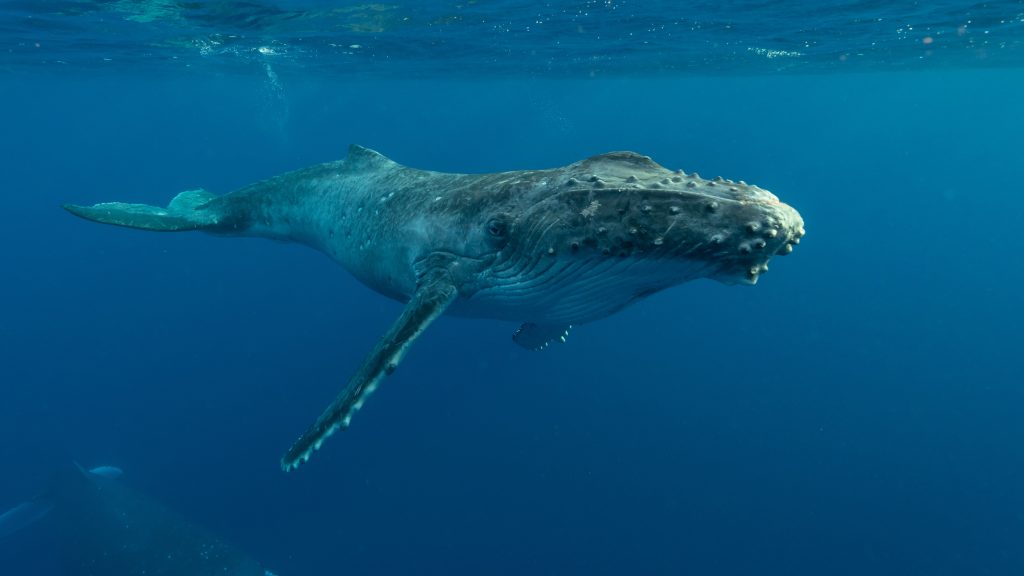
Yet marine experts confirmed that while extremely rare, such an event is not entirely impossible. Humpback whales, the species believed to be involved, are not capable of swallowing large objects like humans into their stomachs, but they can accidentally engulf them while feeding.
In Packard’s case, he was likely caught in the whale’s massive mouth as it lunged for fish, only to be expelled moments later when the animal realized its mistake.
Given the sheer improbability of surviving such an encounter, many would expect Packard’s outlook on life to change dramatically.
But his response has been surprisingly grounded.
“I’m still the same old guy doing my same old stuff,” he said with a touch of humor.
That doesn’t mean the experience didn’t leave an impact. It’s difficult to go through something so extreme without gaining a new appreciation for life. But for Packard, it simply became another chapter in a life already defined by resilience.
Why wasn’t it the scariest?
Despite the shock and danger of being swallowed by a whale, Packard maintains that it wasn’t the most frightening thing he’s been through.
That title, he says, belongs to the plane crash.
Packard once survived a crash that left him stranded in the jungle with severe injuries. He suffered a punctured lung, four broken ribs, a severed Achilles tendon, and required 180 stitches to his head.
Alone and badly hurt, he waited three days before rescue arrived. With limited hope of survival, he had ample time to reflect on his mortality.
“I probably would have lasted another day,” he later said, describing the psychological toll of the experience. The prolonged isolation and pain left deeper emotional scars than anything that would come later.
Compared to that drawn-out brush with death, even the unimaginable experience of being swallowed by a whale felt, remarkably, less traumatic.
The difference lies in the nature of the experiences. The whale encounter was intense but brief—over in less than a minute. The plane crash, on the other hand, left him stranded, injured, and facing the slow uncertainty of whether he would survive.
It was that prolonged confrontation with death—the waiting, the pain, the isolation—that made it far more psychologically harrowing.
Compared to that, being swallowed and then quickly released by a whale felt almost… manageable.
Related Article: Teenager Dies After Dropping Her Phone In Bathtub While On A Call With Her Friend
Related Article: Chilling Details Emerge About Missing Teen Who Jumped Off Boat For A Dare
Want more stuff like this?
Get the best viral stories straight into your inbox!
