
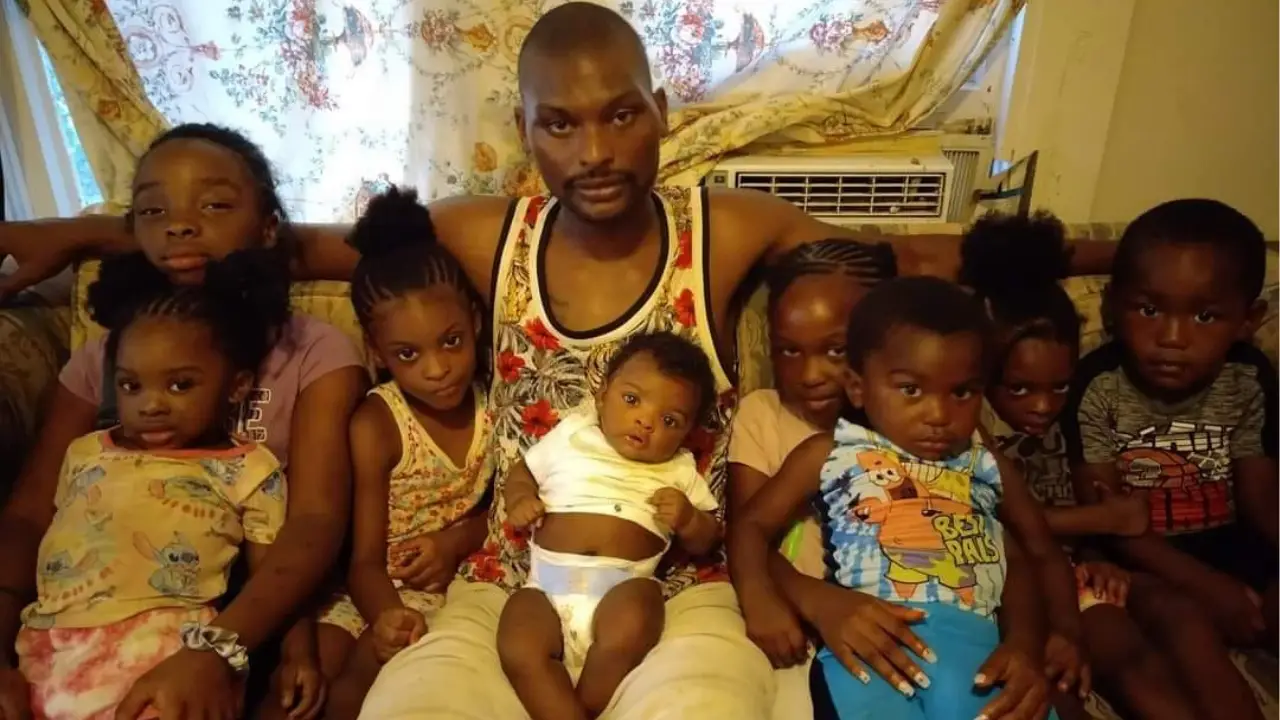
Credit: Facebook
Dad’s Haunting Final Message Before Killing Eight Children As Devastating Details Emerge
The dad who killed eight children shared a haunting final message before the tragedy.
In the early hours of Sunday, April 19, a city woke to a tragedy so profound that even seasoned officials struggled to put it into words.
What unfolded across multiple homes in Shreveport, Louisiana, has since been described as one of the darkest days in the city’s history — a domestic mass shooting that left eight children dead and a community searching for answers.
The man responsible, 31-year-old Shamar Elkins, was not a stranger to the area. He had grown up in Shreveport, served in the Louisiana Army National Guard, and, by many outward appearances, lived the life of a working father. But in a matter of hours, that image collapsed into something unthinkable.
Before the violence began, there were signs — fragments of a life under strain, glimpses into a troubled state of mind. In the aftermath, investigators, neighbors, and grieving families have tried to piece together how such devastation could occur.
And at the center of it all is one chilling detail that continues to haunt those who have followed the case: a final message shared in the days before the killings, one that now carries an entirely different weight.
A night of unimaginable violence
According to Shreveport Police, the sequence of events began shortly before dawn. Officers were first called to a home on Harrison Street, where a woman believed to be Elkins’ girlfriend had been shot. From there, the violence escalated rapidly.
Elkins drove to a second location on West 79th Street, entering two separate homes. Inside, children were asleep — unaware of what was about to happen. Authorities say he opened fire, moving through the homes with devastating precision.
Eight children were killed. Seven were his own. Their ages ranged from just three to eleven years old.
Most were shot while they slept.
One child attempted to escape, climbing onto the roof in a desperate bid for safety. He did not survive. Another, a teenage boy, managed to flee by jumping from a rooftop, suffering serious injuries but living through the ordeal.
Two women were also shot during the attacks — one believed to be Elkins’ wife, the other the mother of one of the children. Both were left critically injured.
After leaving the scene, Elkins carjacked a vehicle and fled, leading police on a pursuit into neighboring Bossier Parish. The chase ended when officers confronted him. He was shot and killed at the scene.
By sunrise, the scale of the tragedy had begun to emerge.
A community in shock
Shreveport is a city of around 180,000 people — a place where, like many communities, residents are not unfamiliar with violence. But officials were quick to stress that this incident stood apart.
“This is a tragic situation, maybe the worst we’ve ever had,” Mayor Tom Arceneaux said during a press conference, visibly shaken.
Police Chief Wayne Smith echoed that disbelief, per the Sun.
“My heart is just taken aback,” he said. “I just cannot begin to imagine how such an event can occur.”
Neighbors described an eerie normalcy in the hours before the attack. One man, who lived across from one of the homes, recalled seeing Elkins outside the previous day.
“He waved at me, and I waved back like normal,” he said. “There was nothing that seemed off.”
Another resident said he hadn’t even heard the gunfire. It wasn’t until he stepped outside the next morning and saw police vehicles lining the street that he realized something was wrong. “There is no sense in this,” he said quietly.
As the names of the victims were released — Jayla, Shayla, Kayla, Layla, Markaydon, Sariahh, Khedarrion, and Braylon — the weight of the loss became even more real. These were not statistics. They were children known to their schools, their families, their neighborhoods.
Who was Shamar Elkins?
In the days following the shooting, attention turned to understanding the man behind it.
Elkins had served in the Louisiana Army National Guard from 2013 to 2020. He worked as a signal support specialist and later as a fire support specialist, leaving the service at the rank of private. He never deployed overseas.
His record, however, included troubling incidents.
In 2019, he was arrested after firing a weapon near a high school, shooting at a moving vehicle just hundreds of feet from campus. He later pleaded guilty to illegal use of a weapon and was placed on probation.
That conviction likely barred him from legally owning firearms — yet police confirmed he was armed during Sunday’s attack.
Those who knew him described a complex picture. Some coworkers said he appeared devoted to his children, often speaking about them with pride. Others noted signs of stress, recalling moments where he seemed overwhelmed.
Family members have since revealed that he had been struggling in the weeks leading up to the shooting. During a phone call with relatives, he reportedly spoke about “dark thoughts” and feeling consumed by internal battles.
“Some people don’t come back from their demons,” he told them.
It was a statement that, in hindsight, has taken on a deeply unsettling significance.
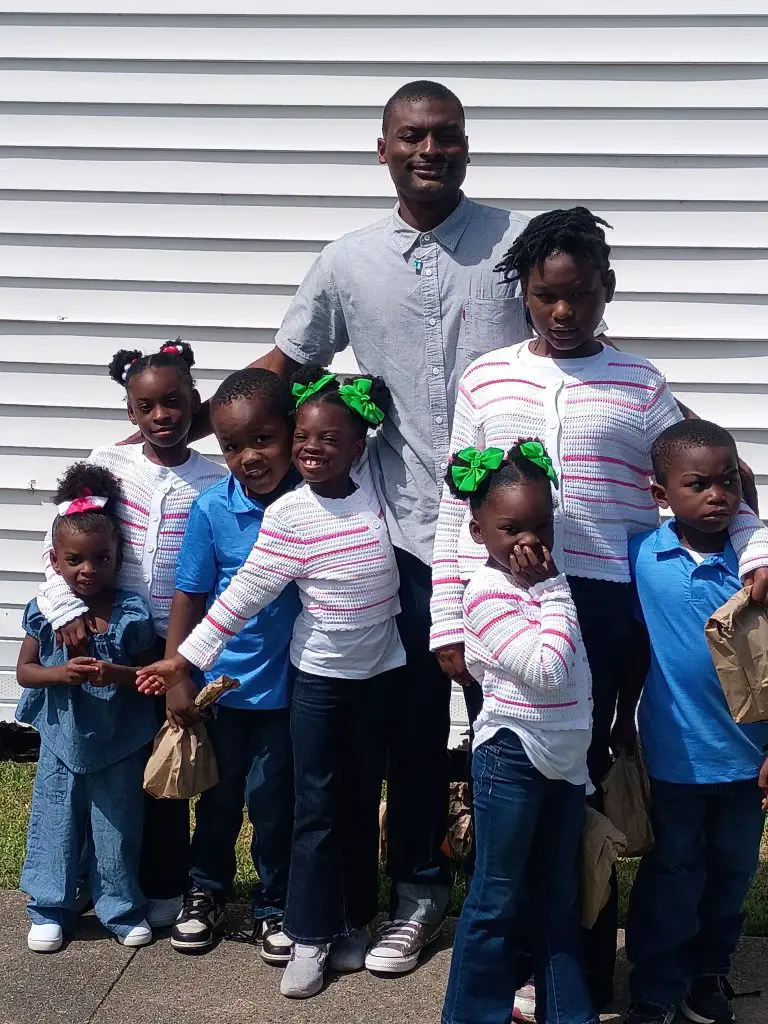
Warning signs that now feel impossible to ignore
As investigators continue to examine what led up to the tragedy, a number of warning signs have emerged — moments that, at the time, may not have seemed extraordinary but now appear deeply concerning.
Among them was a social media post Elkins shared on April 9, just ten days before the attack. Written as a prayer, it asked for help managing overwhelming emotions.
“Dear God, Today I ask You to help me guard my mind and my emotions,” it read. “When depression tries to settle in, when anger rises… give me the awareness to recognize what is not from You.”
To some, it reflected a man seeking spiritual guidance during a difficult period. To others, it hinted at a deeper struggle — one that may not have been fully understood by those around him.
There were also reports of tension in his personal life. According to multiple accounts, his relationship with his partner had been deteriorating, with discussions of separation or divorce.
Experts often note that domestic mass violence can be preceded by a convergence of stressors — emotional, relational, and psychological. But even with those insights, predicting such an act remains extraordinarily difficult.
For the community, these fragments have become part of a painful attempt to make sense of the senseless.
The final haunting message
In the weeks before the shooting, Elkins made a phone call to his mother and stepfather that has since taken on chilling significance.
During the conversation, he broke down in tears, telling them he was struggling with “dark thoughts” and felt overwhelmed by what he described as internal demons. His stepfather later recalled trying to reassure him, urging him that whatever he was facing could be overcome.
But Elkins’ response lingered long after the call ended.
“Some people don’t come back from their demons,” he said.
In the background, his children could reportedly be heard playing — unaware of the fate that awaited them. Before hanging up, he said he would pass along a message, telling the kids their grandparents had said hello.
It was, in many ways, an ordinary ending to a difficult conversation. Now, it stands as the final message referenced by those trying to understand what happened — a moment that feels impossible to reconcile with the violence that followed.
A city left searching for answers
In the aftermath, Shreveport has been left grappling with grief on a massive scale.
Local officials have called for increased access to mental health resources, urging the community to come together in support of those affected. Schools have mobilized counselors. Churches have opened their doors.
But even with those efforts, the central question remains unanswered: how could this happen?
There is no single explanation.
What remains instead is a collection of lives cut short, families forever altered, and a city trying to process a tragedy that defies easy understanding.
Eight children went to sleep on Saturday night and never woke up. And for those left behind, the echoes of that final call — words about demons, despair, and a struggle unseen — continue to linger long after the violence itself has ended.
If you are experiencing domestic violence, call the National Domestic Violence Hotline at 1-800-799-7233, available 24/7, or visit thehotline.org.
Related Article: Police Issue Update After Woman Was Shot Dead After Attacking Child In Cart With Knife
Related Article: Dad’s Haunting Final Words After Shooting Daughter Dead Over Trump Row
Want more stuff like this?
Get the best viral stories straight into your inbox!
