
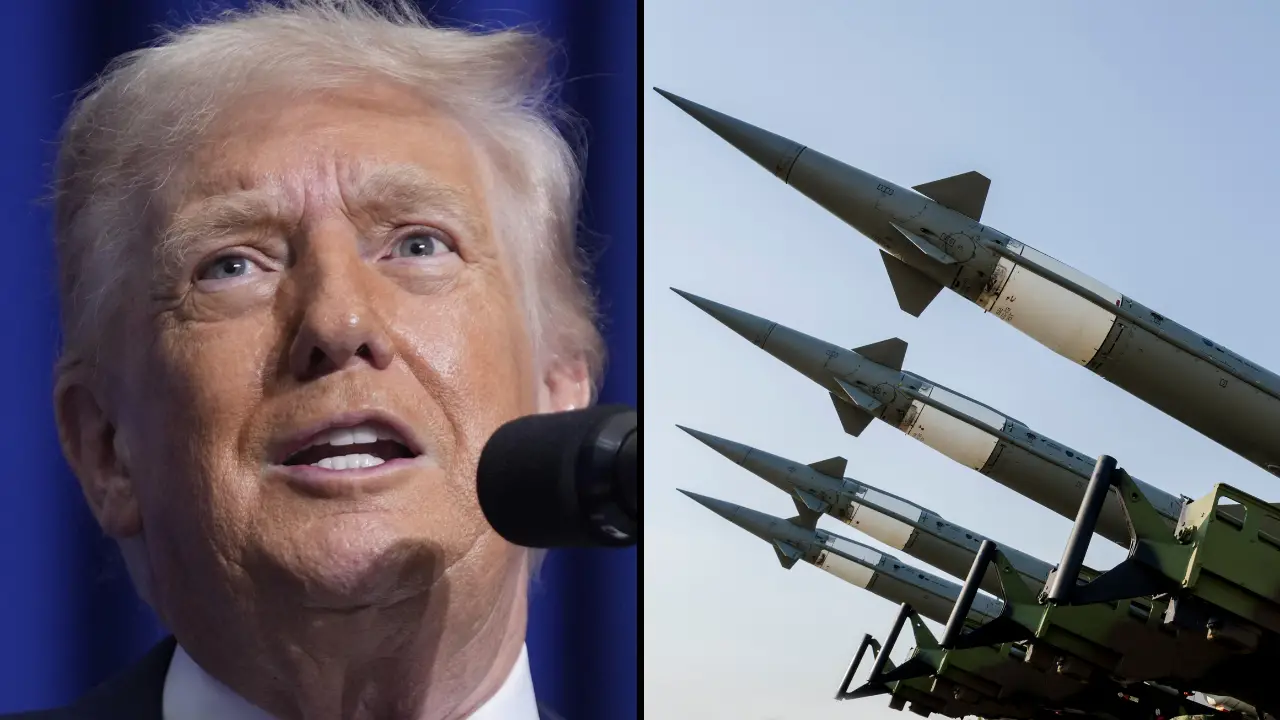
Credit: Alamy & Adobe Stock
US State Department Issues Worldwide Security Alert As WW3 Fears Grow
The US State Department has issued a worldwide security alert amidst terrifying WW3 fears.
The world is watching with growing unease as a cascade of military escalations, fractured alliances, and increasingly bellicose rhetoric from world powers has pushed global tensions to levels not seen in decades.
Against a backdrop of an active US-Iran war, a grinding conflict in Ukraine, and mounting anxiety over China’s ambitions in the Pacific, the United States State Department has now issued a worldwide security alert urging American citizens everywhere to exercise heightened caution — a move that has amplified fears that the world may be edging closer to a third world war.
How we got here
The roots of the current crisis stretch back to February 28, 2026, when the United States and Israel launched a sweeping coordinated military strike against Iran.
The stated objectives were extraordinary in their ambition: eliminate Supreme Leader Ayatollah Ali Khamenei and permanently dismantle Iran’s nuclear program and long-range missile capabilities.
President Trump confirmed the outcome of the mission on Truth Social, announcing Khamenei’s death and declaring that ‘monumental damage’ had been done to Iranian nuclear sites.
What followed was not the swift, decisive resolution the administration appeared to anticipate. Iran’s response has been ferocious, with Tehran launching waves of missile strikes affecting at least 11 countries.
The conflict has reached British soil, with an Iranian-made drone striking the RAF base at Akrotiri in Cyprus. Oil prices have surged dramatically — hitting $114 a barrel — with gas prices jumping 25% and ordinary Americans and Britons already feeling the squeeze at the pump.
The Strait of Hormuz, one of the world’s most critical shipping lanes, has been severely disrupted, with analysts warning that several countries could run short of oil within weeks if the conflict continues at its current pace.
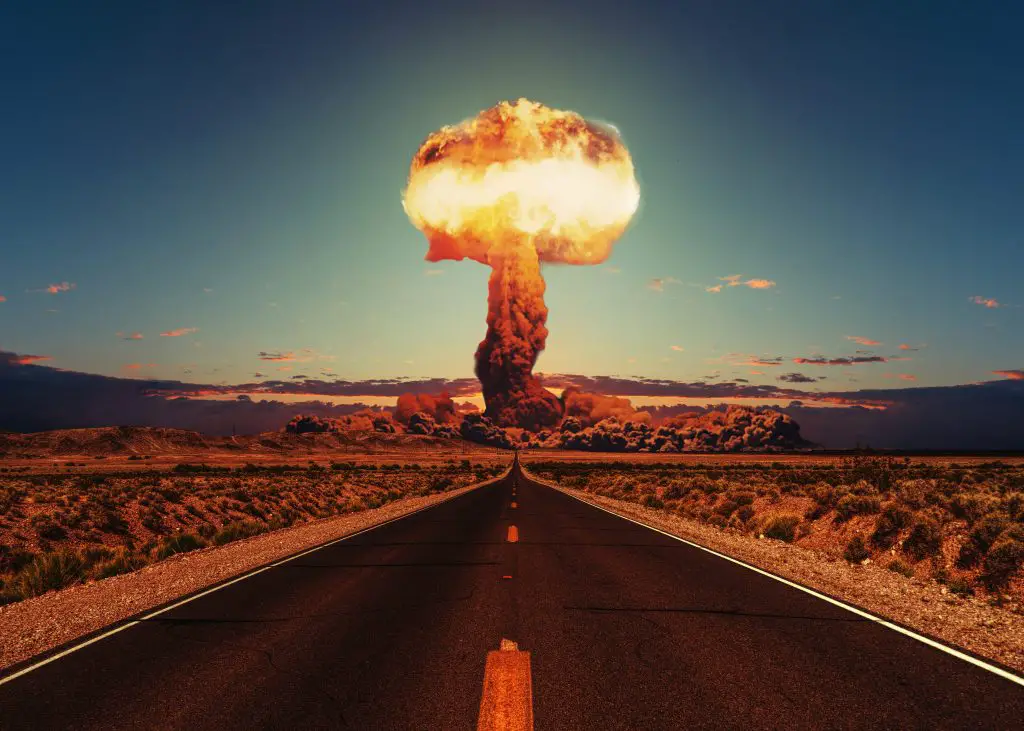
Now into its fourth week, the US-Iran war shows no signs of winding down. Trump issued a fresh 48-hour ultimatum on March 21, threatening to ‘hit and obliterate’ Iran’s power plants if the Strait of Hormuz was not fully reopened, per the Guardian.
Iran’s military command fired back immediately, warning that all US energy, IT, and desalination infrastructure in the region would be targeted if Iranian energy infrastructure was struck.
Trump subsequently announced he was postponing the threatened strikes on the Iranian power plant, but the situation remains on a knife-edge.
A world of multiple flashpoints
The Iran conflict does not exist in isolation. It is unfolding against a global security environment that was already more fragile than at any point in recent memory.
In Europe, Russia remains the dominant threat. Moscow has been testing NATO’s defenses with a series of airspace incursions into Estonia, Romania, and Poland, while Russian balloons have entered Lithuanian and Polish airspace from Belarus.
The Institute for the Study of War has concluded that Russia is intensifying both covert and overt attacks against Europe in preparation for a possible future NATO confrontation. In response, Estonia, Latvia, Lithuania, Poland, and Finland have all withdrawn from a landmark landmine treaty as they urgently shore up their border defenses.
NATO Secretary General Mark Rutte has already warned that the West ‘must be prepared for the scale of war our grandparents and great-grandparents endured,’ while UK Prime Minister Keir Starmer declared at the Munich Security Conference that Europe ‘must be ready to fight’ Russia if necessary.
Russia’s deputy security council chairman Dmitry Medvedev has gone further still, characterizing Trump’s actions as a war by the US and its allies to preserve global dominance and warning that World War Three could follow if the current course continues.
In Asia, China is watching the chaos closely. The People’s Liberation Army has conducted live-fire exercises in the Taiwan Strait, tested new landing barges designed for amphibious assaults, and unveiled deep-sea cable cutters capable of severing another nation’s internet infrastructure.
Many analysts now believe Xi Jinping could make a decisive move on Taiwan by 2027, calculating that an America bogged down in the Middle East is too distracted to mount an effective defense of the island.
Meanwhile, North Korea continues to accelerate its weapons programs, having deployed thousands of troops to fight alongside Russian forces in Ukraine — raising grave concerns about what military technology Moscow may offer in return.
Public opinion reflects the deepening dread. A YouGov survey found that between 41% and 55% of Western Europeans now believe another world war is likely within the next five to ten years.
In the United States, 45% of Americans share that assessment. Most alarming of all, between 68% and 76% of respondents across Western nations expect that any such conflict would involve nuclear weapons.
The warning from a former NATO commander
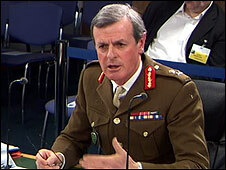
Perhaps the starkest assessment of the current moment has come from Richard Shirreff, the former deputy supreme allied commander of NATO in Europe.
Speaking publicly, Shirreff said he ‘cannot remember a more perilous moment in geopolitics’ in his lifetime — a statement that carries enormous weight from someone who has spent decades at the center of Western military planning.
Shirreff was scathing about Trump’s handling of the Iran situation, describing the president’s claims of total success as ‘clearly an error or a lie’ and accusing him of having ’embarked on a new and far more perilous scheme of regime change with no overarching strategy to bring it to an end.’
He noted a ‘growing sense in the Western military community’ that the campaign has ‘already spiralled out of control.’
His warning about the domino effect was chilling. If the US gets drawn into a ground war in the Middle East, he argued, China and Russia would ‘waste no time’ exploiting the situation — with Xi Jinping potentially launching an invasion of Taiwan and Putin doubling down on Ukraine as American attention and weapons are diverted away from Europe.
“Add war in Europe and war in Asia to war in the Middle East,” he concluded, “and that’s World War Three in anyone’s book — but this time, all the major powers would go into the conflict possessing weapons that could kill billions.”
The State Department steps in
It is against this alarming backdrop that the US State Department issued its worldwide security alert on March 22, per the International Business Times.
The advisory urged American citizens across the globe to ‘exercise increased caution’ — a warning that carries particular weight precisely because it applies not just to those in the Middle East, but to Americans everywhere.
The Department acknowledged that US diplomatic facilities outside the Middle East have already been targeted, and warned that groups supportive of Iran may pursue other US interests, locations, and individuals worldwide.
Americans already abroad were urged to closely monitor guidance from their nearest embassy or consulate. Those planning international travel were told to read the latest advisory for their destination before departing.
Periodic airspace closures, the alert noted, could cause significant travel disruption, potentially leaving some passengers stranded.
For Iran itself, the guidance could not be more severe. The State Department’s Level 4 advisory — its highest possible ranking — remains firmly in place.
“Do not travel to Iran for any reason,” it states bluntly, adding that US citizens currently in the country “should leave immediately.”
With no US Embassy operating inside Iran, any American who finds themselves in difficulty there has no direct consular support to turn to.
Whether the worldwide alert represents prudent precaution in a volatile moment, or a signal that decision-makers believe the situation is more dangerous than official statements have let on, is a question that Americans — at home and abroad — are now urgently asking themselves.
Related Article: Surprising Loophole That Could Make Barron Trump Exempt From A Military Draft If WW3 Breaks Out
Related Article: Melania Trump Warned People Responsible For Barron Trump Photo Would Face ‘Immediate Consequences’
Want more stuff like this?
Get the best viral stories straight into your inbox!
