
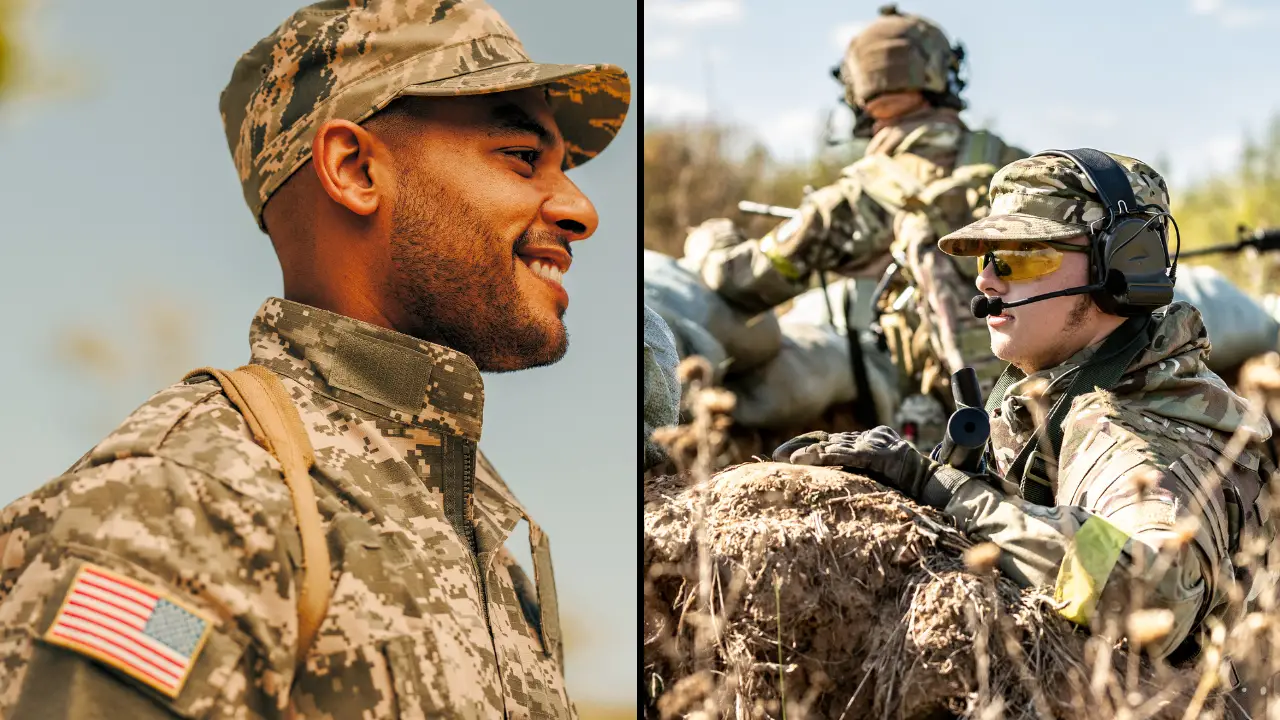
Credit: Adobe Stock
Young Men Will Soon Be Automatically Registered For The US Draft – Here’s Who Would Be Exempt
As young men are set to be automatically registered for the US draft, people are wondering who would be exempt.
The United States government is moving forward with a major overhaul of its military registration system, confirming that young men will soon be automatically enrolled in the draft database.
The change, which will be implemented by the Selective Service System by the end of 2026, has sparked widespread concern—particularly as global tensions continue to rise.
Approved as part of the 2026 National Defense Authorization Act, the new rule shifts responsibility away from individuals and onto the government.
While officials have stressed that there is no active draft planned, the timing of the announcement has intensified public anxiety, especially with ongoing conflict involving Iran and Israel dominating headlines.
What the new rule actually means
Despite the alarm surrounding the announcement, the reality is that draft registration is already mandatory for most young men in America.
Under current law, all male U.S. citizens and many male immigrants between the ages of 18 and 25 must register with the Selective Service within 30 days of turning 18.
The key difference under the new system is that this process will now happen automatically. Instead of requiring individuals to sign up themselves, the government will use existing federal data—such as driver’s license records and other official databases—to enroll eligible men.
This effectively removes the burden of registration from individuals while ensuring that nearly everyone who is required to register is accounted for.
At present, failing to register can result in serious consequences, including fines, potential prison time, and restrictions on accessing federal benefits like student loans or government employment.
By automating the process, officials aim to eliminate these compliance issues while streamlining administrative costs.
Expanding the pool of potential recruits
Alongside the changes to registration, the U.S. military has also taken steps to broaden its eligibility requirements.
The Army recently increased its maximum enlistment age to 42, bringing it more in line with other branches such as the Air Force and Navy.
This adjustment reflects ongoing recruitment challenges and suggests that the military is preparing for a wider pool of potential service members.
While this does not directly indicate that a draft is imminent, it does signal a shift toward greater flexibility in how the armed forces maintain their numbers.
A system prepared – but not activated
The renewed focus on the draft system has understandably caused concern, particularly among younger Americans who may feel directly affected by the changes.
However, experts consistently emphasize that a draft would only be considered under extreme circumstances.
The United States currently relies on an all-volunteer military force, supported by reserves and the National Guard. A draft would only be implemented if those forces proved insufficient during a major national crisis or large-scale war.
For now, the introduction of automatic registration should be viewed as a modernization effort rather than a sign of imminent conscription. It ensures that, if needed, the government can act quickly, but it does not mean that action is inevitable.
Why the change is happening now
One of the primary reasons behind the shift is a steady decline in registration rates in recent years.
Officials have raised concerns that fewer eligible men are signing up, which could weaken the system’s effectiveness in the event of a national emergency.
However, the broader geopolitical climate also plays a role. With tensions escalating globally and uncertainty surrounding potential military conflicts, the government appears to be ensuring that its infrastructure is fully prepared.
Statements from figures such as Donald Trump have added to this unease, particularly after remarks suggesting that military options—including conscription—are not entirely off the table.
Although the White House has emphasized that a draft is not currently being considered, the refusal to completely rule it out has left many Americans questioning what could happen if global conflicts intensify.
What would happen if a draft was reintroduced
It is important to note that being registered does not mean someone will automatically be called to serve.
The United States has not implemented a draft since the Vietnam War draft, and bringing it back would require both congressional approval and the president’s signature.
If a draft were authorized, it would likely begin with a lottery system. Birthdates would be randomly selected to determine the order in which individuals are called, with those turning 20 typically prioritized first.
From there, the process would expand to other age groups depending on military needs.
Those selected would undergo a series of medical and psychological evaluations. Only individuals deemed fit for service would proceed to induction, where they would be assigned to a branch of the military and begin training.
The system is designed to ensure that only those capable of serving are ultimately enlisted.
Who would be exempt from serving
Even if a draft were reinstated, not everyone who is registered would be required to serve.
Certain groups are fully exempt from registration altogether, including non-immigrant visa holders such as international students and diplomats, as long as they maintain their legal status.
Active-duty military personnel and individuals training at official military academies are also excluded from the process.
Beyond these full exemptions, there are several categories of deferments for those who are registered but may not be required to serve immediately—or at all.
Religious ministers and divinity students may qualify for exemptions based on their roles, while individuals who are the sole financial providers for dependents can apply for hardship deferments.
Conscientious objectors—those who oppose war due to deeply held moral, ethical, or religious beliefs—may also be excused from combat roles, often being assigned to alternative forms of service instead.
Additionally, individuals with significant medical conditions, disabilities, or psychological disorders would likely be deemed unfit for service following evaluation.
Ultimately, the shift to automatic draft registration reflects a government preparing for uncertainty in an increasingly unstable world.
While the idea of conscription may feel alarming, the reality is that multiple layers of legal, political, and practical barriers stand between registration and actual military service.
Still, as global tensions continue to evolve, the conversation around the draft is no longer just historical: it is once again part of the present.
Related Article: New Website Demands Barron Trump Is Drafted As People Learn He Can’t Join Military
Related Article: Severe Punishment You Could Face If You Refuse The Draft Amid WW3 Fears
Want more stuff like this?
Get the best viral stories straight into your inbox!
