
Credit: X
Trump Slammed For Making ‘Disgusting’ Pearl Harbor Joke In Front Of Japanese PM
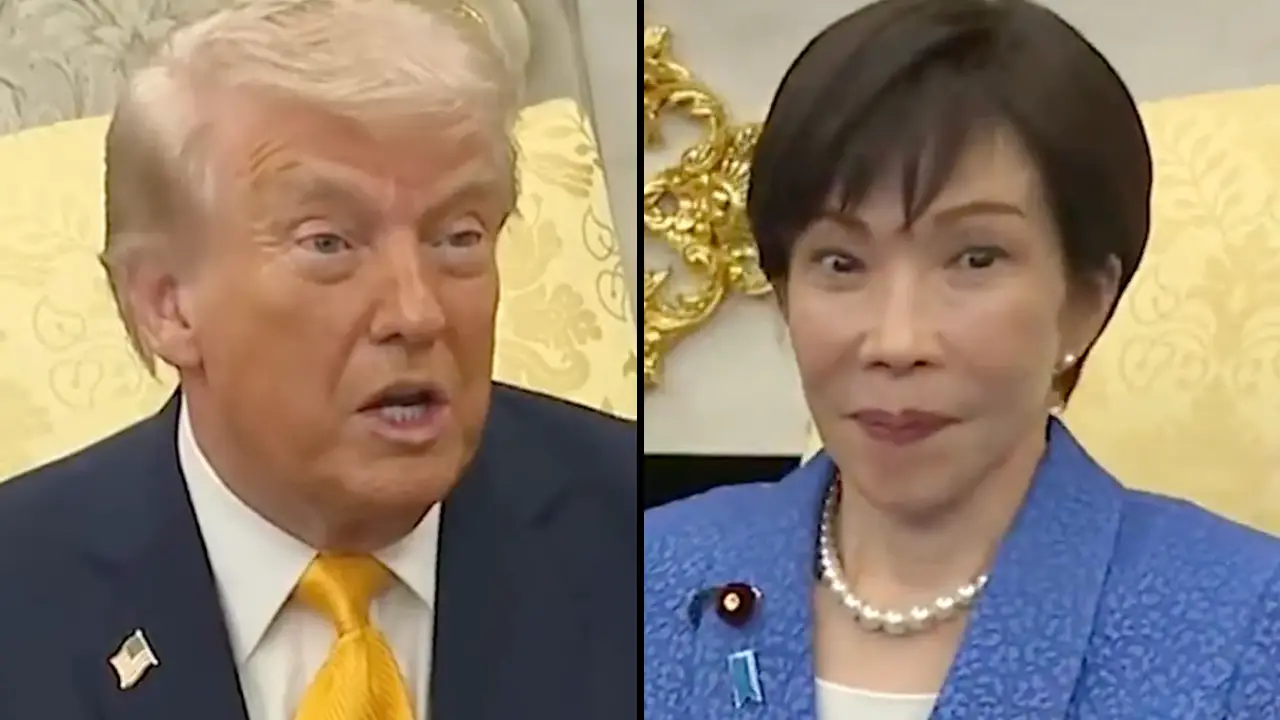
President Donald Trump managed to mortify an entire room by delivering a Pearl Harbor ‘joke’ directly to the face of Japan’s Prime Minister.
In what has quickly become one of the most cringe-inducing moments of his second term, the comment, made during what was supposed to be a display of allied unity, left onlookers audibly groaning and the Japanese leader visibly wincing.
The visit by Japanese Prime Minister Sanae Takaichi to the White House on Thursday, March 19, was no casual diplomatic drop-in.
It came at a moment of serious international tension, with the United States and Israel having launched bombing operations against Iran and the Strait of Hormuz — one of the world‘s most critical oil shipping lanes — effectively shut down by Iranian forces.
Trump had already been publicly venting frustration that key allies weren’t doing enough to help reopen the strait, calling out Japan specifically through posts on Truth Social and pointing out just how dependent the country is on Middle Eastern fuel. The message was clear: step up, or face scrutiny.
Takaichi arrived in Washington with what she described as ‘specific proposals to calm down the global energy market,’ per the Express.
She was, by all accounts, there to smooth things over, demonstrate solidarity, and reassure the American president that Japan was a reliable partner.
She even opened the meeting with warm, almost effusive praise, declaring that she believed ‘only you, Donald, can achieve peace across the world.’ The diplomatic groundwork was carefully laid. Then Trump opened his mouth.
The question that set it all off
The trouble began when a Japanese reporter in the room pressed Trump on a sensitive issue: why hadn’t the United States warned its allies — including Japan — before launching the attack on Iran?
It was a fair and pointed question. Allies generally expect a heads-up before their partner nation starts bombing a third country, particularly one whose actions have direct consequences for their own economies and security.
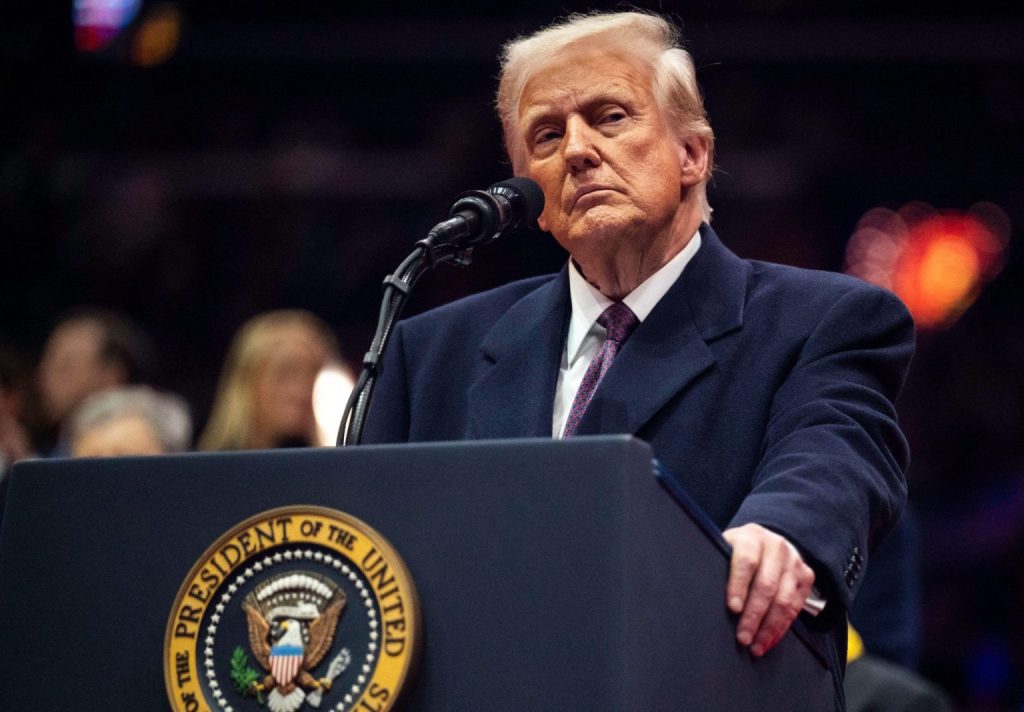
Trump’s response started off with a somewhat coherent strategic rationale. “It’s one thing you don’t want to signal too much,” he said, explaining that the element of surprise was essential to the operation. So far, so defensible. But rather than leave it there, the president decided to illustrate his point with what he apparently considered a clever historical callback.
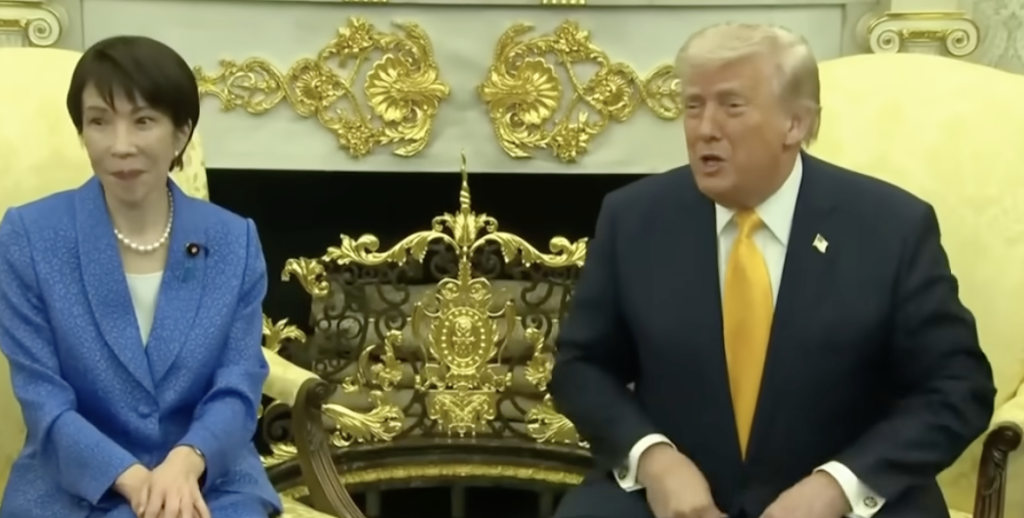
The room went silent. A groan was audible. Prime Minister Takaichi, seated right beside him, visibly cringed.
Allies, agreements, and an uncomfortable silence
To fully appreciate the awkwardness of the moment, it helps to remember what the two leaders were actually there to discuss.
Japan and the United States are among the closest allies in the world. Their security partnership has been a cornerstone of Pacific stability for decades.
Takaichi had traveled to Washington specifically to reaffirm that relationship at a moment of global crisis, to offer cooperation and signal trust.
Instead, the sitting President of the United States reached back 84 years to invoke the deadliest surprise attack ever carried out on American soil — and used it as a punchline, directed at Japan’s head of government, while cameras rolled and journalists watched.
The broader meeting did cover substantive ground. Trump praised Japan for ‘really stepping up to the plate’ in contrast to NATO allies, whom he took a pointed swipe at.
The two leaders discussed energy security, the closure of the Strait of Hormuz, and Iran’s nuclear ambitions.
Takaichi stated firmly that Iran must never be allowed to obtain a nuclear weapon and condemned the attacks on commercial vessels in the Gulf. She and Trump were, in most respects, broadly aligned.
None of that, however, is what people are talking about.
The internet loses its mind
The clip spread across social media with the kind of velocity reserved for moments that are, as one commenter put it, simply too much to process. Reactions ranged from disbelief to dark humor to straight-up despair.
Journalist Jim Acosta summed it up in four words, per Yahoo: “The Art of the Cringe.”
Another widely shared post noted: “He knows like four things about Japan and he’s not going to leave any of them on the table.”
One user observed that Trump was negative four years old when Pearl Harbor happened, making the implied grudge particularly strange. Another wrote: “If your dad or grandfather said this, you’d put him in a memory care unit.”
“The silence after the joke,” penned another. “Trump’s a disgusting, careless man. It’s all about humiliation and domination, especially with women. What a disgrace.”
Political commentator Mehdi Hasan captured a sentiment many seemed to share: that if Trump were simply a television character rather than the actual president, people could laugh freely — but the reality makes it impossible to find it fully funny.
Not everyone was horrified. Eric Trump, the president’s son, posted a string of laughing emojis and called it “one of the great responses to a reporter in history.” He appeared to be alone in that assessment, at least among those willing to say so publicly.
The ‘joke’ in question? “We didn’t tell anyone about it,” Trump said. “We wanted to surprise them. And who knows surprises better than Japan? Why didn’t you tell me about Pearl Harbor?”
Watch Japanese PM's reaction when Trump makes Pearl Harbor joke https://t.co/FIPBowuCy1 pic.twitter.com/OgRClpcXz6
— New York Post (@nypost) March 19, 2026
Diplomacy, despite everything
In a remarkable display of professionalism, Takaichi soldiered on.
That evening, at a White House state dinner, she gave warm remarks congratulating the United States on its approaching 250th anniversary and even extended birthday wishes to Barron Trump, who was turning 20 the following day.
“I know he has grown up so much into a very tall, good looking gentleman,” she told the room, adding that it was “very clear where he got it from his parents.”
Whether this grace under pressure reflects genuine warmth, practiced diplomatic composure, or simply the recognition that Japan needs the American alliance too much to make a fuss (probably some combination of all three) it stood in notable contrast to the moment earlier in the day when the most powerful man in the world looked at his country’s most important Pacific ally and asked her why Japan hadn’t warned him about Pearl Harbor.
Some jokes land. Some don’t. And some land in the kind of silence that echoes.
Related Article: Households Urged To Keep One Crucial Item Ready At Home In Case WW3 Breaks Out
Related Article: Safest Position To Get In If Nuclear War Hits As 10 Minutes Can ‘Save Your Life’
Want more stuff like this?
Get the best viral stories straight into your inbox!
