
Credit: Alamy
Savage Meaning Behind New Chinese Nickname Trump’s Being Called Behind His Back
There’s a savage meaning behind Donald Trump‘s new Chinese nickname.
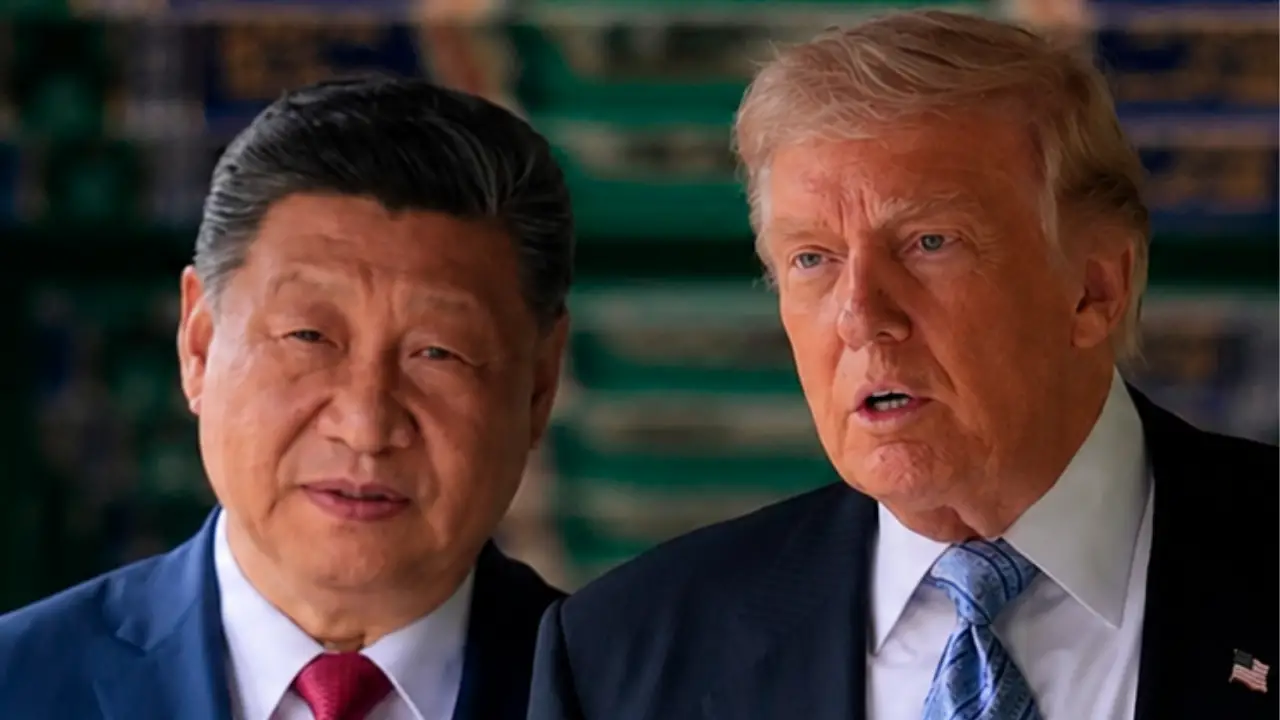
Trump’s high-stakes visit to China was supposed to be a carefully controlled display of diplomacy between the world’s two most powerful economies.
Instead, the trip quickly became surrounded by viral commentary, awkward behind-the-scenes clashes, and a sharply mocking nickname spreading across Chinese social media.
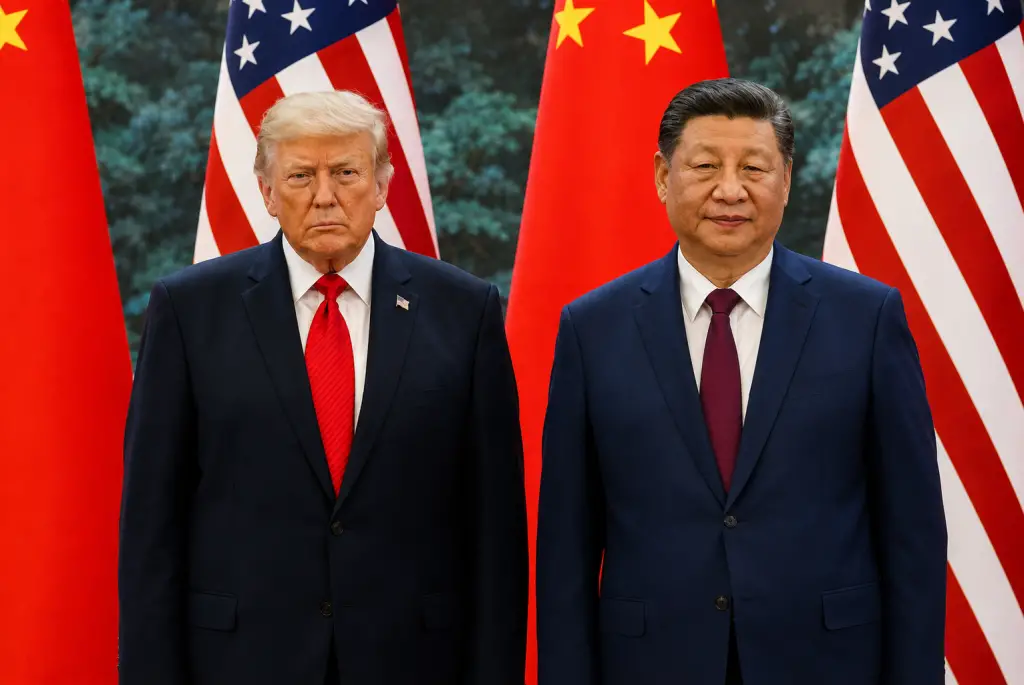
Trump arrived in Beijing for major talks with Chinese President Xi Jinping at a tense moment in US-China relations. The two leaders were expected to discuss trade, tariffs, Taiwan, military tensions, and the widening global fallout from conflict in Iran.
His arrival was marked by a full ceremony, with Chinese officials rolling out the red carpet and welcoming the American delegation ahead of the summit. But online, the mood was far less formal.
Even before the two leaders sat down for talks, Chinese social media users were already mocking Trump with a nickname that appeared polite on the surface but carried a much more savage meaning underneath.
Trump arrives in Beijing for tense summit
Trump’s visit came during a period of renewed strain between Washington and Beijing.
Trade remained one of the biggest issues on the agenda, especially after years of tariffs, economic restrictions, and disputes over technology, manufacturing, and supply chains.
Trump has long argued that tough action against China is necessary to protect American workers and industries. His administration’s aggressive tariff strategy was designed to pressure Beijing and reduce US dependence on Chinese imports.
But critics argue the strategy has produced mixed results, raising costs for American consumers while pushing China to become more self-reliant.
That tension formed the backdrop to Trump’s meeting with Xi.
The summit also came as concerns over Taiwan continued to loom over the relationship. Beijing views Taiwan as part of China, while Washington continues to maintain unofficial ties and provide military support to the self-governed island.
According to reports, Xi used the meeting to warn Trump that Taiwan remained one of the most sensitive issues in US-China relations.
The Iran crisis also added pressure to the visit. Trump was expected to urge Xi to use China’s influence with Tehran to help ease tensions and encourage Iran to reopen the Strait of Hormuz, a key route for global oil shipments.
On paper, the summit was about diplomacy. Online, however, many Chinese users were focused on something far more cutting.
Public welcome masks online mockery
Despite the diplomatic tension, Trump’s arrival generated huge attention on Chinese social media.
The hashtag #WelcomeTrumpToChina reportedly became one of the top trending topics on Weibo as the US president landed in Beijing, the Mirror reports.
Some users posted polite messages welcoming the visit and echoing official language about cooperation, stability, and “win-win” relations.
But beneath the formal greetings, another conversation was taking place.
Chinese internet users began circulating a satirical nickname for Trump that had appeared before but gained fresh attention as he returned to China.
The joke played directly into a broader Chinese view of Trump’s foreign policy — that his attempts to weaken Beijing may have ended up helping China instead.
The nickname mocked the idea that Trump, while publicly claiming to put America first, may have accidentally strengthened China’s economy, independence, and global influence.
It was especially pointed because Trump’s political identity has been built around the slogan ‘Make America Great Again.’
The Chinese joke flips that idea on its head.
Rather than making America stronger, the nickname suggests Trump’s policies have helped ‘make China great’ by forcing Beijing to adapt, innovate, and find new markets beyond the United States.
Tariff wars fuel the insult
The nickname’s hidden meaning is rooted largely in Trump’s trade war strategy.
During his presidency, Trump repeatedly imposed steep tariffs on Chinese goods, arguing they were necessary to rebalance trade and punish unfair economic practices.
But the policy also pushed China to accelerate domestic production in critical industries.
Beijing has increasingly emphasized self-sufficiency in technology, energy, agriculture, and manufacturing — areas where it once depended more heavily on foreign suppliers.
The tariffs also encouraged China to deepen trade relationships with Southeast Asia, Africa, and other regions as it looked to reduce reliance on American markets.
That is why the nickname has become so biting.
It suggests Trump’s pressure campaign may have done exactly the opposite of what he intended.
Rather than weakening China, critics argue his policies pushed Beijing to strengthen itself.
The phrase also carries a personal sting because it frames Trump not simply as a rival of China, but as someone who has inadvertently served Chinese interests.
In other words, the joke is not just that Trump failed to stop China’s rise.
It is that he may have helped build it.
The timing of the nickname’s renewed popularity made it even more embarrassing for the White House.
As Trump arrived in Beijing seeking leverage over Xi, many Chinese social media users were already portraying him as a leader whose own policies had given China an advantage.
Nickname reveals brutal hidden meaning
The nickname now going viral is ‘Chuan Jianguo.’
On the surface, it translates roughly as ‘Trump the Country Builder’ or ‘Trump the Nation Builder.’
But the meaning is deeply sarcastic.
Chinese users are not suggesting Trump is building America. They are mocking him as someone who has helped build China.
The name comes from ‘Chuan,’ a Chinese rendering linked to Trump’s name, and ‘Jianguo,’ a common Chinese given name meaning ‘build the country.’
Together, the phrase turns Trump into a fictional patriotic Chinese figure, almost as if he were secretly working to strengthen Beijing from within.
The joke has sometimes been expanded into the idea of Trump as ‘Comrade Jianguo,’ implying that his actions have been so useful to China that he deserves to be treated like a loyal contributor to the country’s rise.
It portrays Trump not as the tough China hawk he presents himself as, but as an accidental asset for Beijing, a leader whose tariffs, diplomatic chaos, and isolationist instincts may have done more to advance China’s position than America’s.
For Trump, the insult is especially sharp because it turns his own nationalist branding against him.
He came to China promising to defend American power.
But behind his back, many Chinese internet users were calling him ‘Chuan Jianguo,’ the man who helped build China.
Related Article: Lip Reader Reveals Donald Trump’s Devastating Confession To Son Eric
Related Article: Bill Filed To Invoke One Rule That Could Remove Trump As US President
Want more stuff like this?
Get the best viral stories straight into your inbox!
